
Yasin Asharaf P | Published on 19/12/2025
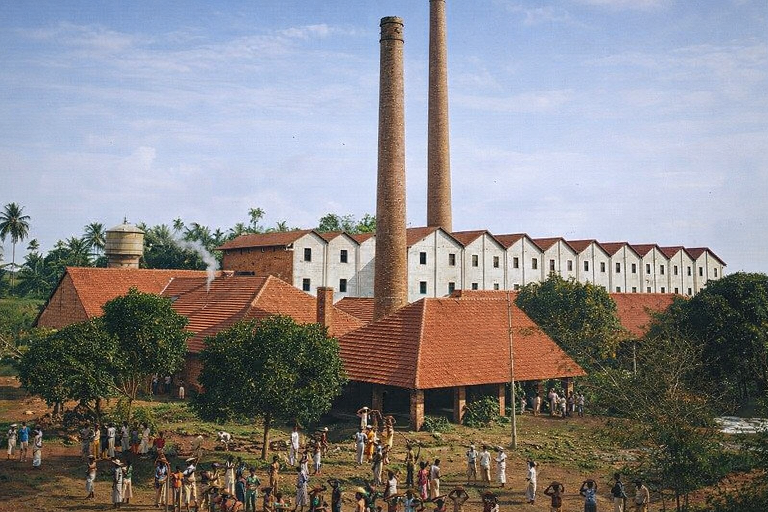
Have you ever thought about how we moved from living in simple thatched huts to sturdy, tiled homes? In an era of concrete structures, tile is reclaiming its place as a top design trend. This is the story of the ‘Commonwealth Tile Factory’ in Feroke—a place where 100-year-old German machines still hum to life every day, carrying a legacy started by Christian missionaries.
On the Banks of the Chaliyar: A Gateway to the World
The Chaliyar River flows from the Mountains of Nilgiris to the Arabian Sea, bearing a history that spans centuries. For over two millennia, the teak used to build Uru ships (Dhow) in Beypore was floated down from Nilambur via the Chaliyar. This same river also carried spices and other commodities from the resource-rich Western Ghats to the ships of the world anchored at Beypore's ancient port.
In the early 20th century, the Basel Evangelical Mission chose this strategic spot—situated perfectly between the river and the Feroke Railway Station—to build a tile factory. The river wasn’t just a view; it was a highway. Boats brought in different types of clay from across the region, and the nearby port & railway ensured that Farok’s tiles could be exported to many parts of the world.
Inside the Factory: Where History Still Works
If you visit the factory today, locals simply call it "The Company." It feels like stepping back in time. While many modern factories are silent and automated, here, the rhythm of German engineering remains alive. Making a tile is an art of balance. Since local clay is now scarce, soil is brought in from Karnataka. Workers mix yellow and black soil in a precise ratio of 60:40 in giant pits. Huge machines churn the mud into a smooth consistency, which then travels through tunnels and emerges as clay slabs. These slabs are molded into various designs as they pass through different machines. Tens of thousands of tiles are then lined up on wooden pallets that move along internal rails, looking like a miniature train system.
During a Heritage walk conducted by ‘City Heritage’, for a group from Belgium, a long-time factory worker provided an in-depth knowledge of the site. He gestured toward a hundred-year-old bungalow overlooking the Chaliyar River. Though it formerly housed company officers, the structure now lies derelict and overgrown with vegetation.
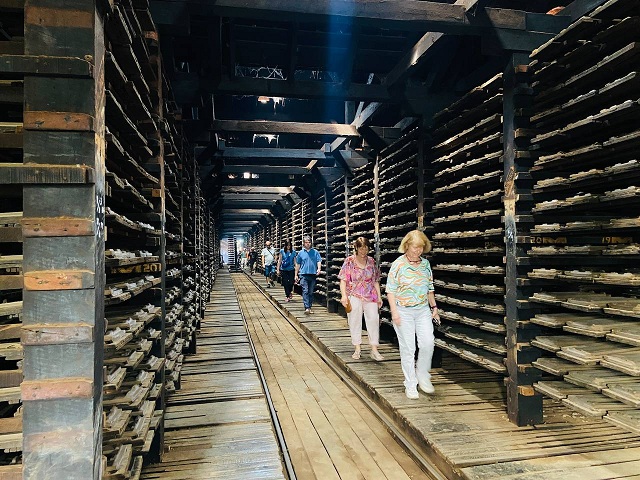
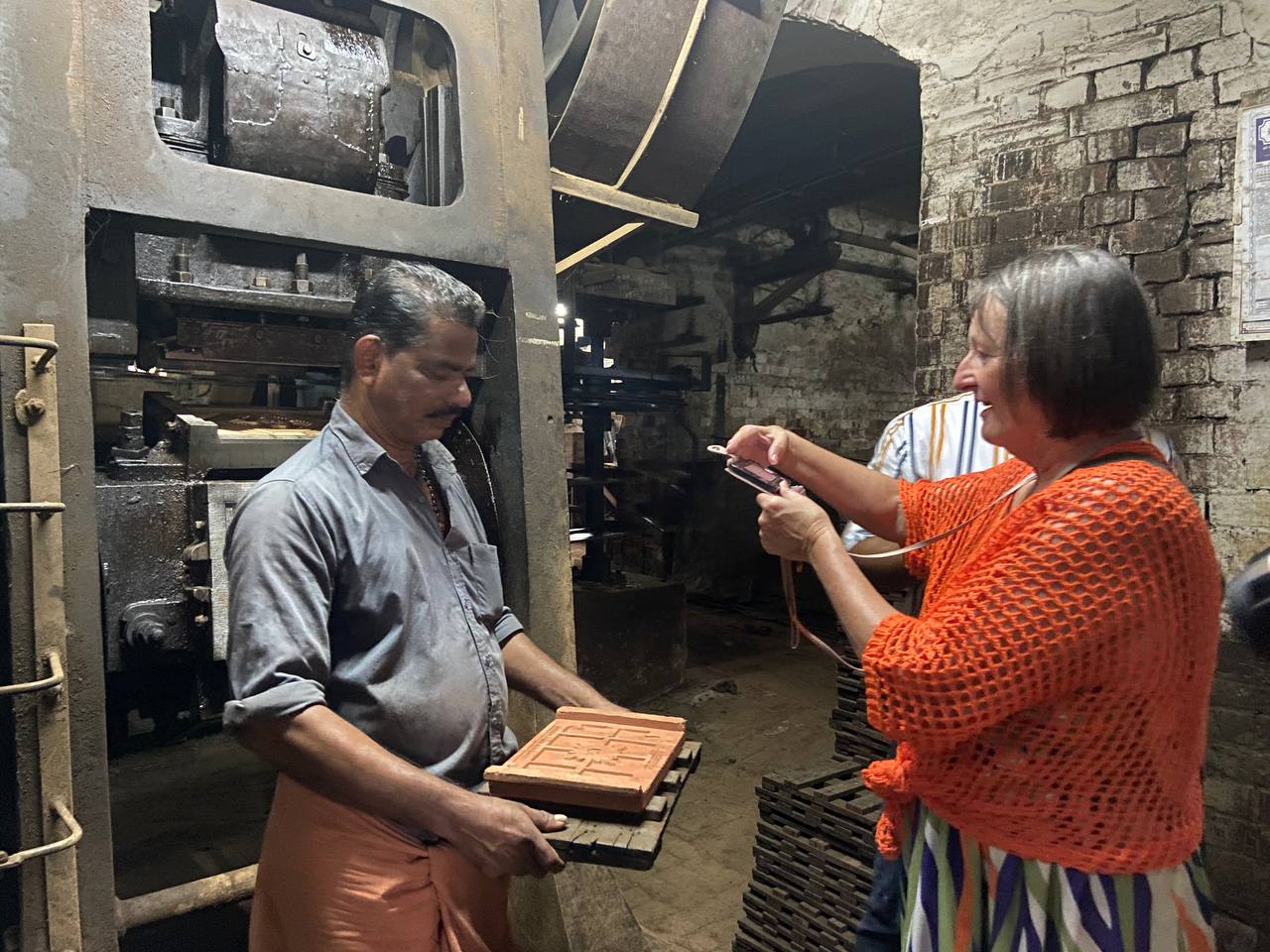
A team from Belgium explores the inner workings of the tile factory
The heart of the factory is the furnace, which burns at a staggering 900°C. Workers endure this intense heat to bake the tiles to perfection. Once cooled, every single tile is tested for quality. A worker taps each one with a special metal; the specific "ring" it makes tells him if the quality is high enough for export or if it should be sold at a lower price.
More Than Just Tiles: The Mission’s Vision
Why did a group of missionaries from Europe start making tiles?
The conversion to Christianity presented significant challenges for the missionary groups arriving in Malabar during the nineteenth century. They encountered a society deeply entrenched in the caste system and rigid clan occupations. For many, converting meant immediate expulsion from their families and the loss of their traditional livelihoods. To address this, the missionaries established factories, educational institutions, and hospitals. These initiatives were designed to provide converts with employment and ensure their children received an education, effectively offering a complete social safety net.
The Arrival of the Basel Mission
Founded in Europe in 1815 with a global evangelical mission, the Basel Evangelical Mission reached India in 1834. With the approval of the British government, these Christian missionaries from Basel (in present-day Switzerland), expanded their reach far beyond religious teaching. They established weaving mills and tile factories to provide sustainable employment for those marginalized by the traditional caste structure.
By the early twentieth century—a period when the underprivileged were largely excluded from social advancement—these schools and factories became vital gateways to opportunity. By providing education and jobs where none existed, the mission significantly influenced the social and religious landscape of the region.
Today, the physical legacy of the Basel Mission remains visible across Kozhikode. While some institutions have closed due to management issues or changing times, many continue to serve the community: The BEM Schools & Malabar Christian College continue to provide education, the Leprosy Hospital at Chevayur remains a landmark in healthcare, and the Feroke Tile Factory continues its industrial operations.
In contrast, the Comtrust Weaving Mill at Mananchira—established in 1844—now stands silent and overgrown, a fading monument to a transformative era in Malabar’s history.
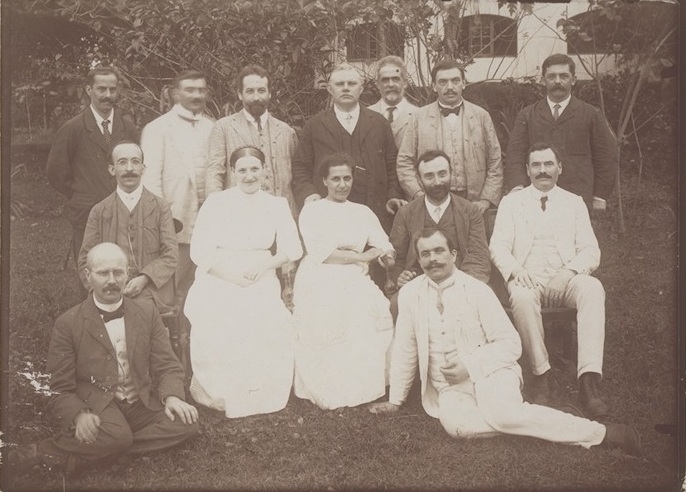
Tile workers' conference in Ferok, on 22nd August 1913. (Image: BM Archives)
Construction of the Factory in Feroke
Faroke emerged as a prominent trading center centuries ago. In the 18th century, Tipu Sultan declared the area his capital, naming it Farookhabad and constructing a fort there. Following Tipu’s defeat in the Third Anglo-Mysore War, the British seized control of Malabar and renamed the settlement ‘Feroke’.
Long before Faroke became an industrial hub, the region was known for its traditional roofing. However, by the late 19th and early 20th centuries, several tile factories were established along the banks of the Chaliyar River. Among the most notable was the factory founded by a Christian missionary group. This industrial shift began when George Plebst, a member of the Basel Mission, realized that weaving factories were not yielding expected profits. In 1864, he established the mission's first tile factory in Mangalore. Recognizing the logistical advantages of the region, the Mission later expanded, building factories near railways and ports.
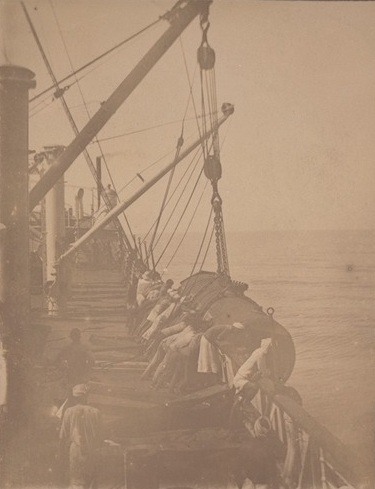
Landing a heavy boiler at Beypore Port for installation at the Feroke Tile Factory (Image: BM Archives)
In 1905, the arrival of the mission's tile company in Feroke catalyzed a transformation in local life and architecture. Beyond providing mass employment, the factory revolutionized housing; traditional thatched roofs in Feroke and its surroundings were rapidly replaced with durable clay tiles. A similar transition had already occurred in Valiyangadi, Kozhikode, under the direction of Malabar Collector H.V. Conolly. To prevent the frequent, devastating fires that plagued the commercial district, Conolly ordered all buildings in Valiyangadi to be converted from thatch to tile.
During World War I, following the defeat of the German alliance, the British government seized the factory. Under British management, labor conditions grew increasingly difficult, and workers were subjected to constant surveillance and industrial oppression.
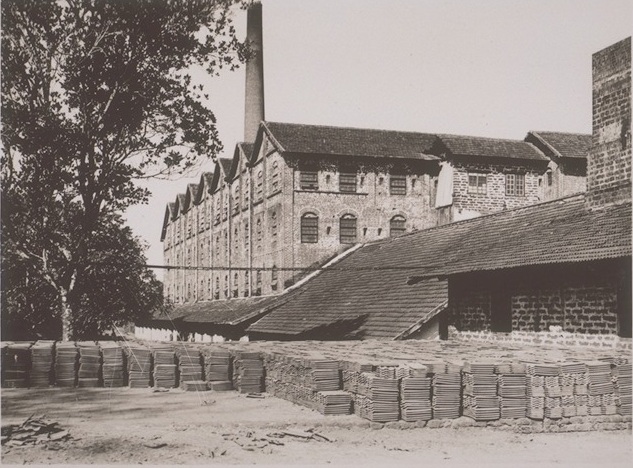
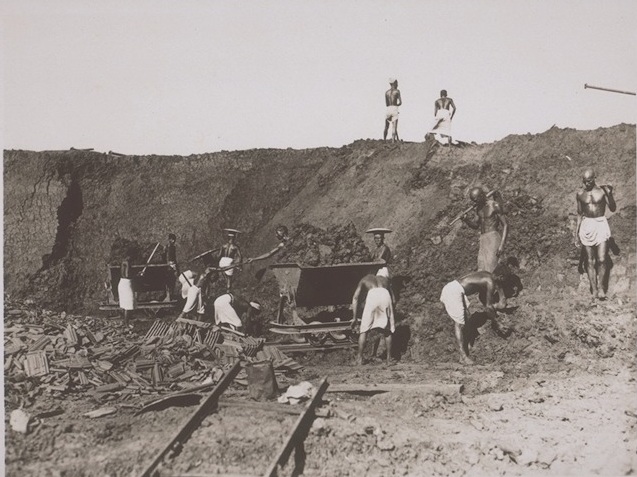
A photograph of the tile factory and its workers in the field (Image: BM Archives)
Under the Commonwealth Trust
Following India’s independence in 1947, ownership of the factory was transferred to the Commonwealth Trust. The Trust continued to pay annual royalties to the British until 1970. While several other tile factories once flourished in Faroke, the industry eventually faced a decline.
Due to the increasing scarcity of quality clay and labor shortages, more than 14 factories in Faroke have since closed their doors. Despite these challenges, the Commonwealth Tile Factory remains a standing testament to the region’s industrial heritage.
Feroke BEM UP School
The Basel Mission established a primary school near the local tile factory to ensure that the children of workers received an education rather than being left unattended while their parents were at work. This initiative was part of a broader movement by the mission in the early 20th century to establish educational institutions across Malabar, guided by the principle of "non-discriminatory education."
During this era, the mission also founded iconic institutions such as the BEM School in Kozhikode and Malabar Christian College. These schools provided a vital opportunity for underprivileged communities who had long been denied formal schooling. By offering access to knowledge and social mobility, these institutions not only fostered educational progress but also naturally drew many toward the values and faith of the missionary team. Today, the Feroke BEM UP School continues to operate as a testament to this legacy, remaining a cornerstone of the region's academic development.
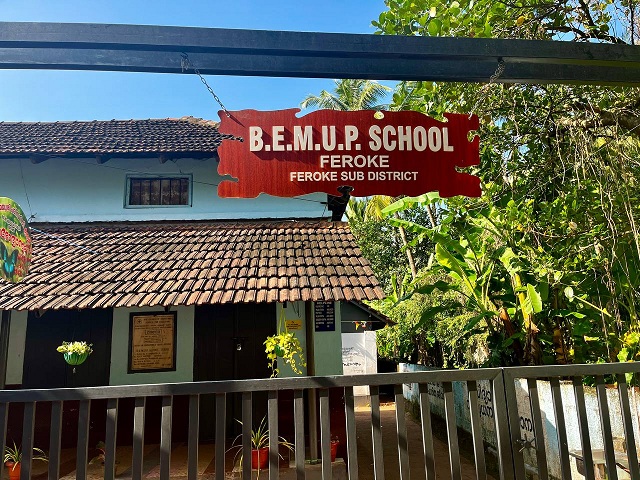
B.E.M U.P. School at Feroke near the Tile Factory. (Image: Janal Archives, 2024)
The Factory Today: A Living Museum
The tile factory in Feroke stands as a remarkable testament to industrial heritage, seamlessly blending a storied past with a functional present. While it once buzzed with over 800 employees, the factory now maintains a dedicated workforce of 196 people who operate in three continuous shifts at a minimum wage of twenty-one thousand rupees. Although the work has been passed down through generations, the new, educated generation is increasingly reluctant to join the trade, yet the company continues to operate 24 hours a day without interruption.
The landscape of the factory has evolved over time; the towering chimney that once symbolized its past glory is now inoperative, having been replaced by a modern electric version. Remarkably, the original machines and kilns brought from Germany by ship through the Beypore port in the early days are still functioning today.
The company currently manufactures a diverse range of products including roof tiles, ceiling tiles, base tiles, bricks, and hollow bricks, reaching a daily production capacity of 20,000 units. While these products were once exported to the United States and Singapore, distribution is now limited to the domestic market. This shift is largely due to a shortage of construction soil, which has significantly reduced production levels. Officials note that the current monthly income is primarily consumed by worker wages and the essential costs of soil, oil, and electricity.
Beyond its industrial role, the factory has transformed into a global destination for heritage tourism. Tourists and researchers from many parts of the world, particularly from European countries like Switzerland, Belgium, Germany, and France, visit to study and experience the factory's unique construction methods. Many are also drawn by the opportunity to explore the historical legacy of the Christian missionary groups that helped establish this enduring landmark in Feroke.
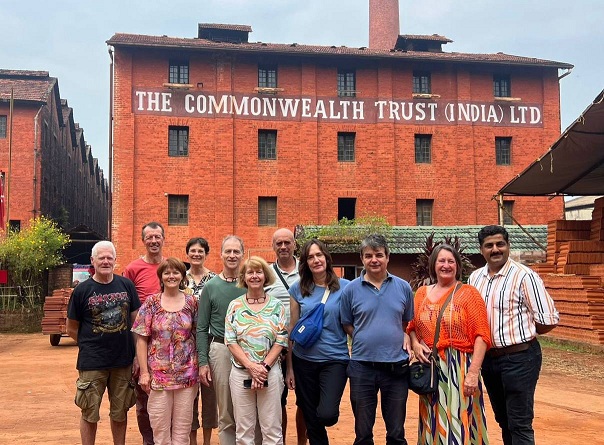
A team from Belgium visited the Commonwealth Trust Tile Factory with City Heritage
Visit us and contact:
Explore the fascinating history of the Christian Missionaries in Calicut. Contact us for an unforgettable heritage walk to 'Commonwealth Tile Factory'.
Get in Touch:
Visit: www.cityheritage.in
Email: mail@cityheritage.in
Instagram: cityheritage.in
Phone: +91 7356569573, +91 8377024979




 (1).png)
© Copyright 2026 City Heritage. All rights reserved.
Website designed by TNM Online Solutions.
If you have any enquiry, feel free to ask, and we'll provide you with a prompt and concise response.