
Muhammed Shihad & Yasin Asharaf P| Published on 27/03/2026
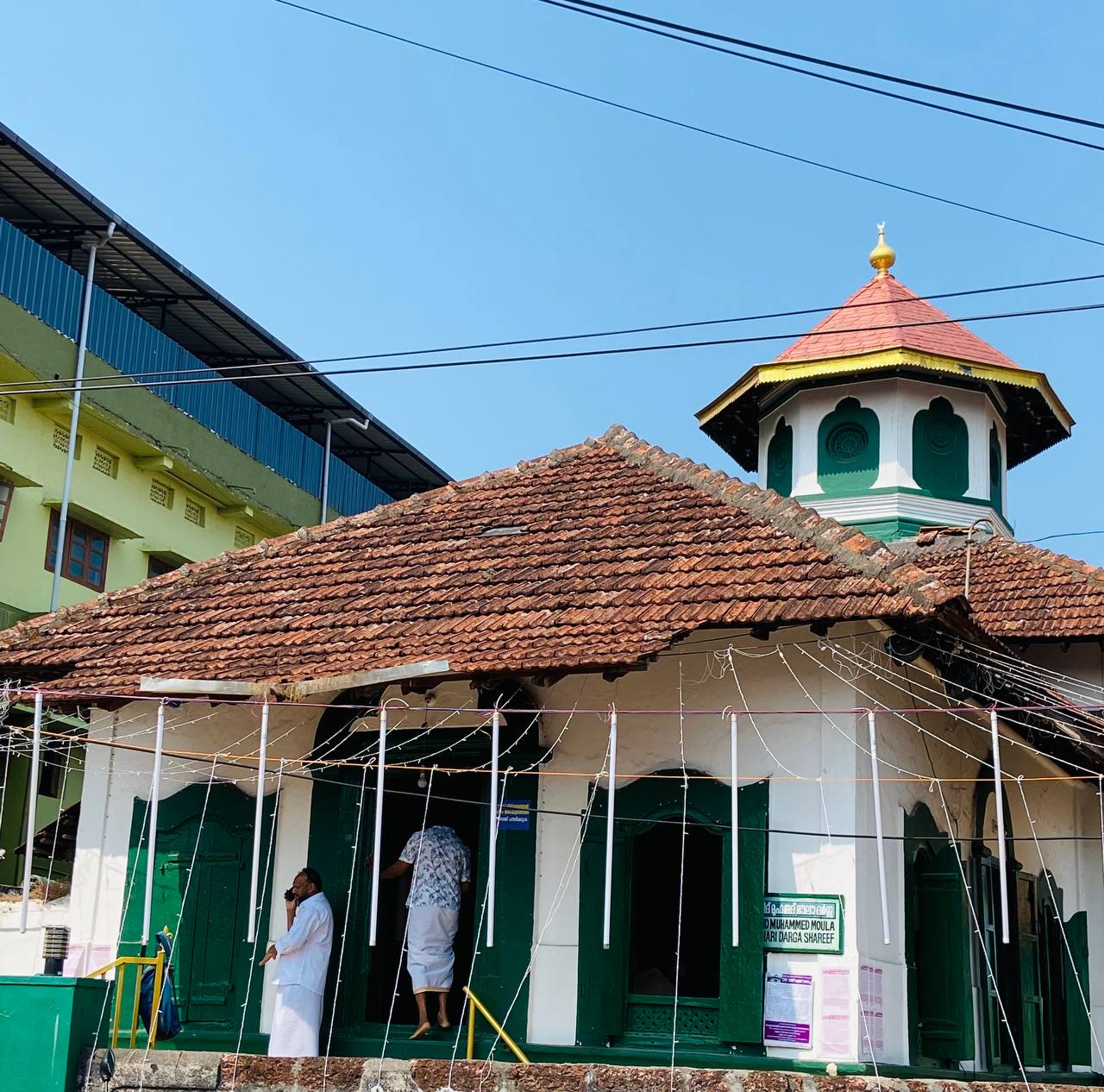
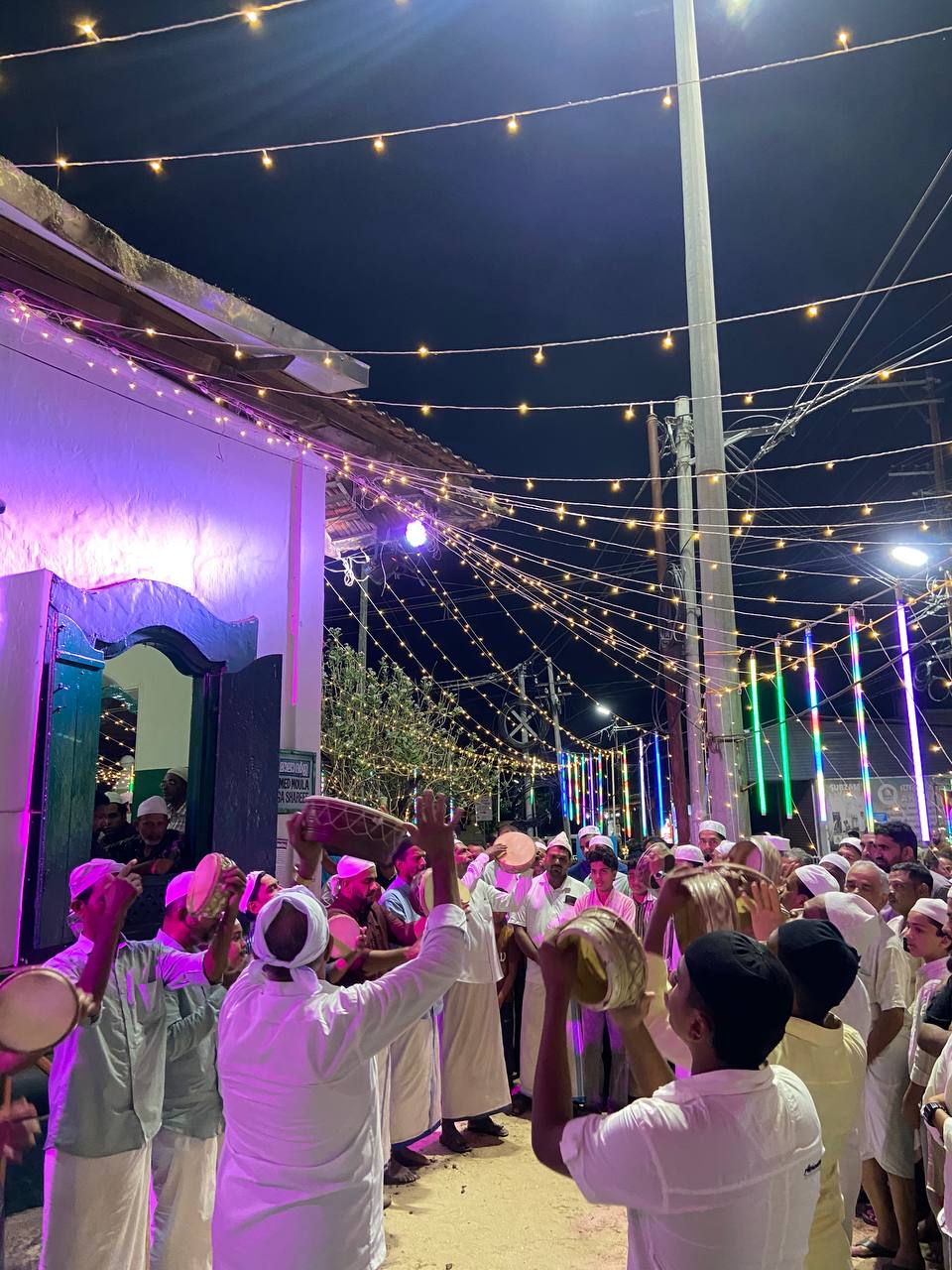
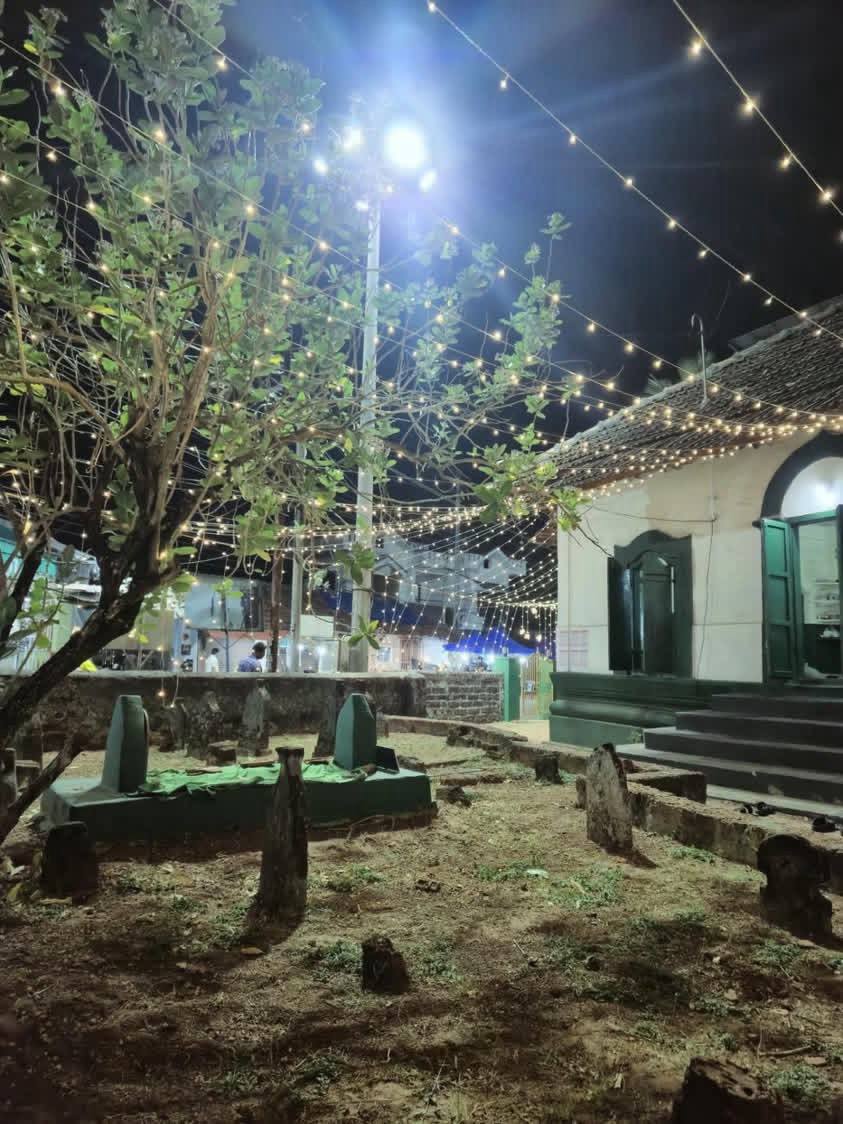
To the rhythmic beat of duff muttu, a procession moved along the road and arrived at the dargah. People gathered from different directions, forming circles around it. The dargah stood illuminated, its lights glowing warmly as the sun had completely disappeared and the night sky wrapped everything in darkness. Against that deep darkness, the multicolored lights around the shrine shimmered with a striking beauty—as though the spiritual radiance of the Maula who once illuminated the land was still alive in the air.
The duff troupe, more than ten in number, entered the courtyard in two lines with a sense of urgency. Leading them was an elderly man, passionately chanting the Ratheeb, his voice echoing with devotion. The group followed in unison, striking their duffs with rising energy. Around them gathered a crowd—children, youth, and elders—encircling the performers, drawn into the growing spiritual intensity. Meanwhile, from within the dargah, another group led prayers, deepening the sacred atmosphere.
There was a quiet anticipation in the air. People seemed to sense that something profound was about to unfold. What began as a soft rhythm of duff and song gradually grew in intensity—both in sound and spirit.
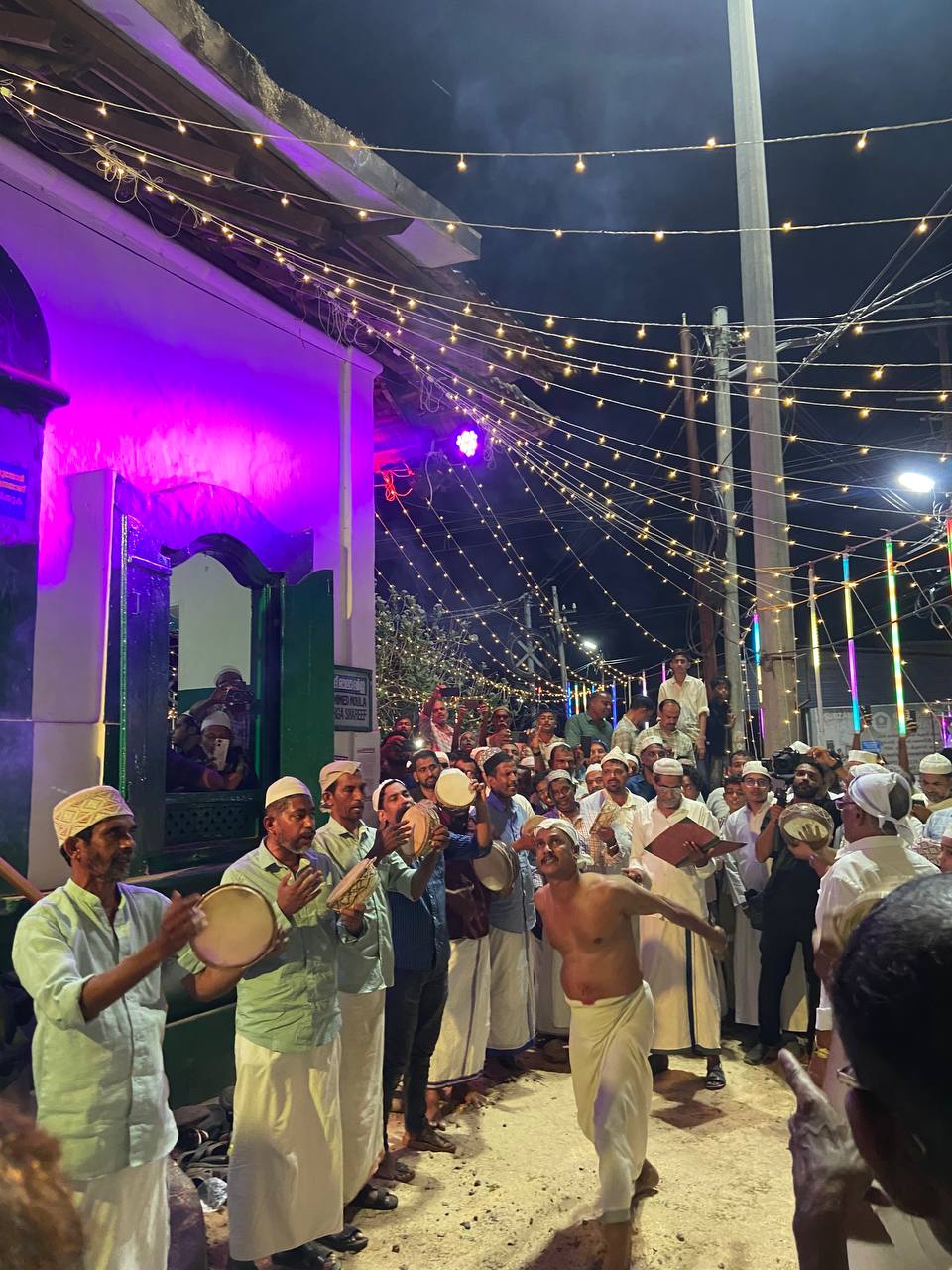
Suddenly, one among the group removed his upper garment. Near the entrance of the dargah, knives and swords appeared. The elderly leader stepped forward, selected a small knife, and handed it to the man. It felt as though the space itself was preparing for a sacred act. Prayers were recited; the knife was received with reverence.
Then, everything happened in a moment.
Amid the thunderous rhythm of duff muttu and the echo of Ratheebs, the man who had removed his shirt, with intense devotion, began to strike his own body with swords. Blood flowed, yet it was wiped away as he continued—immersed in a trance-like state, his mind fixed upon the revered Maula.
Thus began the ritual of Kutharatheeb—a powerful expression of faith, devotion, and surrender, unfolding in the heart of the night.
Our journey began at Kannur and it traced layers of history—past the sacred calm of Muhyudhin Masjid, alongside the regal echoes of Arakkal Palace—until we arrived at the heart, the revered Kannur City Juma Masjid.
Near its towering twin minarets stands another—solitary, yet deeply significant. It rises not merely as a structure of stone, but as a memory in the skyline, dedicated to Sayyid Muhammad Maula Bukhari. A man who journeyed across oceans from distant lands, carrying not wealth or conquest, but knowledge, devotion, and a way of life.
On this day, marking 240 years since his passing, Kannur felt like a gathering point of time itself. From early morning, vehicles streamed in—from Kasaragod to the Lakshadweep islands. Families arrived in quiet devotion: elders leaning on memory, children stepping into inheritance. The dargah courtyard slowly filled—not with noise, but with presence.
In his lifetime, Sayyid Maula was not confined to a single spiritual path. He was revered as a Shaikh or guide across multiple Sufi Tariqats (Sufi Orders), especially the Rifa'i Order, Qadiriyya, and Shadhili Order. That legacy unfolded vividly here, turning the day into more than a commemoration—it became a living convergence.
The dargah transformed into a meeting point of these three ṭarīqahs. Followers from different parts of India gathered, each carrying their own rhythms of devotion. Outside, the powerful cadence of Kuthratheeb and Dhaff Ratheeb—offered by the Rifa‘i followers—rose into the air. Inside, Mawlids were recited in soft, continuous harmony by different groups.
It was a rare and beautiful moment - diverse expressions of faith unfolding simultaneously, distinct in form yet united in purpose. Around Maula’s resting place, devotion did not divide—it converged. And in that convergence, his legacy lived on—not as history, but as a shared and breathing tradition.
Some stood in silent prayer. Others gathered in circles, speaking of Maula—not just as a saint, but as a scholar whose intellectual legacy still echoes. The elders spoke with a certain urgency, sharing handwritten notes, old books, fragments of history—as if preserving him once more through words.
Sayyid Muhammad Maula Bukhari Tangal: Life, Lineage, and Mission
Sayyid Muhammad Maula Bukhari Tangal—revered as Qutb al-Zaman, and considered as Shaikh of multiple Sufi Tariqats such as Rifa'i, Qadiriyya, and Shadhili—was born in 1144 AH (1731 AD) on the island of Kavaratti in the Lakshadweep archipelago, off the Malabar Coast. He belonged to the noble lineage of the Ahl al-Bayt, tracing his ancestry to the Prophet Muhammad (S). In Kerala, the honorific title “Thangal” is traditionally used for such blessed descendants.
He was a distinguished member of the Bukhari lineage, a noble branch within the renowned Sadaat (Sayyid) family. His ancestry traces back to As-Sayyid Ahmad Jalaluddin Bukhari of Valapattanam—one of the earliest spiritual pioneers to arrive in Kerala. In the 15th century CE, this great ancestor journeyed thousands of miles by sea from Bukhara in Persia to the Malabar coast, settling in Valapattanam, one of the oldest Muslim centers in the region. Belonging to the 28th generation of the Prophet (S), he arrived with his family, attendants, and disciples, dedicating his life tirelessly to the mission of religious propagation. His efforts not only strengthened the Muslim community but also attracted people of other faiths toward Islam. Sayyid Muhammad Maula thus stands in the fourth generation of this lineage in Kerala—continuing a sacred journey that had begun centuries before him.
From an early age, Maula Thangal displayed deep spiritual inclination. In his childhood, he was brought from Kavaratti Island to Valapattanam by his elder brother, Sayyid Ibrahim Khali. Under his brother’s care and supervision, he received his foundational religious education and spiritual training. This nurturing environment shaped his character and prepared him for a life of service.
After completing his studies, he dedicated himself to the mission of religious preaching. He traveled extensively across Kerala—from its northernmost regions to its southern edges—spreading the message of faith and guiding communities. He directly received the Qadiri ṭarīqah from his father, Muhammad al-Ponnani. His preaching era was marked by a powerful wave of Islamic revival and spiritual awakening that left a lasting imprint on the region.
As a Sufi, he stood within a long and influential tradition—one that played a vital role in the spread of Islam across the Indian subcontinent. The legacy of Sufi saints is deeply woven into the cultural and spiritual fabric of India, their presence felt in countless towns and communities. Many of these saints journeyed from the Middle East, bringing with them not only faith, but a message of compassion, learning, and spiritual refinement.
In regions like Kerala and Tamil Nadu, their influence was especially profound, shaping local religious life through teaching, guidance, and lived example. In this wider tradition, Maula emerged as one among those luminous figures—travelling across the landscapes of South India and beyond, carrying the message of Islam with wisdom, humility, and a unifying spirit.
This mission gained even greater significance during the turbulent period following the fall of Tipu Sultan. At a time when hostility from local chieftains and feudal powers was often directed toward innocent Muslim communities, Maula Thangal stood as a source of strength and guidance. Moving across the land in the face of such challenges, he continued his work with resilience, compassion, and unwavering commitment.
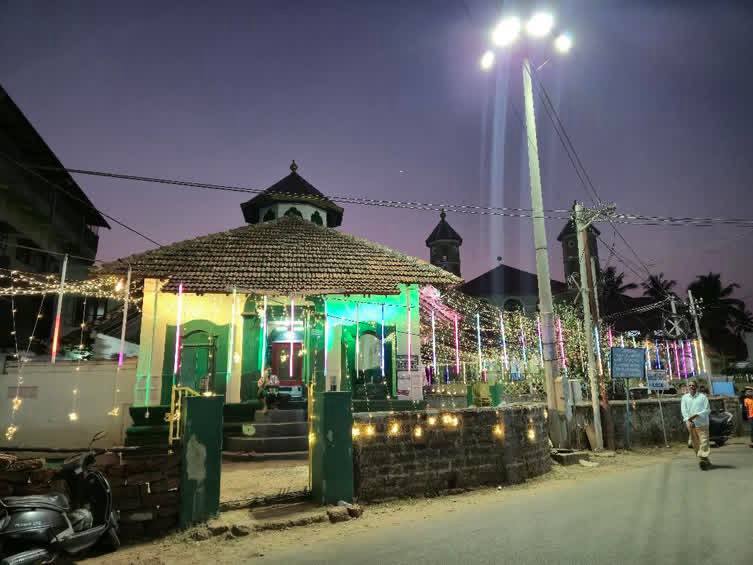
- Sayyid Muhammed Maula Bukhari Darga Shareef
In his personal life, Maula Thangal was married four times. His first marriage was to a noble woman named Shaikha from Kavaratti, with whom he had two daughters, Fathima and Sayyida. His second marriage was to Sayyidath Madaniyya of Nettur, and they were blessed with two daughters, Zainab and Aisha—of whom all except Aisha had descendants. His third and fourth marriages were from Mysore and Thalassery respectively.
Though he had no male heirs, his spiritual legacy continued to flourish through his disciples, their generations, and the enduring institutions and traditions he established—making his life not merely a chapter in history, but a continuing source of inspiration.
Travels and Missionary Work
He travelled widely across the Malabar Coast and beyond, spreading Islamic teachings and moral guidance. His approach attracted people from different faiths and communities.
He studied in Valapattanam, travelled through Cochin, South Kerala. Wherever he traveled, he not only preached but also established centers of worship and devotion, shaping the religious landscape of the region. Among the most prominent of these are the Chembittapalli in Kochi, the Thiruvithamcode Mosque, and the Kottur Mosque in Vaduthala. At Cochin he made Chembittapalli as his centre. He renovated the mosque with the help of one Jew called Shanjur, who happened to listen to the speech of Maula at Cochin. The jew was very much pleased with the story of Prophet Moses revealed by Maula in his speech and donated a large teak tree for the renovation of the mosque.
And it is recorded in history that for the construction of the Thiruvithamcode Mosque, Maula Thangal personally arranged for teak wood to be transported by sea from Tanur—reflecting both his dedication and organizational vision.
Sayyid Maula also preached at Thiruvithamcode in Tamilnadu and it is said that the place got the name from Thiru Vamcode where Maula performed Azan (Vanku). Shaikh Umar al Qahiri, a saint and a scholar from Kayalpatanam, Tamilnadu was his disciple and a large number of people from Tamilnadu accepted him as their guide (Murshid).
It is believed that the first Hebrew translation of the Qur’an was undertaken by a Jewish scholar from Kochi, inspired by the vision and proposal of Sayyid Muhammad Maula Bukhari. This Hebrew translation is said to be preserved today in the Library of Congress at Washington DC. These initiatives reflect his deep insight into the importance of making the Qur’anic message accessible across linguistic and religious boundaries..
His influence did not stop at the shores of Kerala and Tamil Nadu. Through disciples and seekers, his teachings travelled across South Asia—flowing like the monsoon winds that once carried traders and ideas across oceans.
Bukhari Tangal rose to be recognized as a Qutb (spiritual pole of his age), guiding seekers across regions. Among his notable disciples were Shaikh Umar al-Qahiri, Shaikh Abdul Qadir of Malacca, and Hyder Ali, the ruler of Mysore—who became devoted to him despite his political and military power.
Influence Through His Disciples and Spiritual Lineage
Thousands of people from different regions were visited by Sayyid Muhammad Maula Bukhari Thangal accepted him as their spiritual guide. His influence extended beyond Kerala into Tamil Nadu and across the seas. The renowned scholar Umarul Kahiri Thangal of Kayalpattinam regarded Maula Thangal as his ustad (spiritual teacher). It is said that he presented his well-known work ‘Allaful Alif’ before Maula Thangal, reciting it in his presence. After listening, Maula Thangal approved and finalized the work for wider circulation.
A well-known account further illustrates Maula Thangal’s spiritual stature. During a journey in search of a great saint, Umarul Kahiri traveled to Mecca. Upon meeting a revered saint there, he was told: “Why have you come here, when ‘Muhammed Maula’ is already in your own land?” He was instructed to return and take Maula Thangal as his guide. Following this counsel, Umarul Kahiri returned and met Maula Thangal in Kochi, strengthening a bond that would influence many thereafter.
Among Maula Thangal’s most prominent deputies was Shaikh Abdul Qadir Valiyullah, a dedicated missionary who carried his teachings to Southeast Asia. Widely known as the “Malacca Shaikh,” he was active across the regions surrounding the Straits of Malacca, guiding communities and spreading spiritual teachings. He is laid to rest in Malacca, in the area known as Kampung Kling, where his memory continues to be honored. He later became the maternal grandfather of Imam al-‘Arus Sayyid Muhammad Ma’apillai Lebbai Alim (Imamul Aroos).
Imamul Aroos (1232–1316 AH / 1816–1898 AD) emerged as a great inheritor of this spiritual legacy. He founded the Aroosiyyathul Qadiriyyah Sufi order, which spread widely across Sri Lanka, India, and Southeast Asia. During the 19th century, he played a pivotal role in establishing and restoring more than 355 thaqiyas (Sufi centers) in Sri Lanka, many through his own resources. He translated key religious texts into Arabic-Tamil (Arwi), making knowledge accessible to common learners. Among his notable contributions was the establishment of Arabic colleges, including ‘Madrasathul Bari’ at Weligama (1884 AD / 1302 AH) regarded as the first Arabic college in Sri Lanka after the disruptions of the colonial period.
His legacy continued through his sons—Seyyid Abdul Qadir (Khalwath Nayagam) and Shaikh Shahul Hameed (Jalwath Nayagam)—who carried forward both spiritual and social reform efforts while managing these institutions. The tradition was further strengthened by his grandson, Thaika Ahmad Abdul Qadir Valiyullah (Periya Sheikh Nayagam), and later generations who extended these efforts into more remote regions.
Through this chain of disciples and successors, the influence of Sayyid Muhammad Maula Bukhari Tangal extended far beyond Kerala, evolving into a vibrant and living spiritual tradition that continues to inspire communities across South and Southeast Asia.
Works About Maula
The legacy of Sayyid Muhammad Maula Bukhari Tangal has been preserved and celebrated through a rich body of devotional and historical literature authored by scholars and disciples across regions.
Among them, a distinguished scholar from Keelakkarai, Tamil Nadu—Mappila Labba Alim Sahib, a disciple in the intellectual lineage of Umarul Kahiri—composed a celebrated maulid titled “Minahathul Bari fī Midhahathil Bukhari.” This work was developed drawing from the earlier writings of Sayyid Muhammad Fakhruddin Koyakkutty Thangal, particularly “Faylussari.” He also authored the widely recited “Rathibul Jalaliyya,” which gained immense popularity in both Kerala and Tamil Nadu.
Another notable contribution came from Chettuva Pareekkutty, who authored a maulid work titled “Minhathul Bari,” further enriching the devotional literature centered on Maula Thangal.
In addition, several important works have been written by scholars from within his own lineage:
1. Sayyid Muhammad Fakhruddin Koyakkutty Thangal authored “Nafhatul Bari”
2. His son, Sayyid Isa Kunhi Seethi Thangal, wrote “Mukhtasaru Minhathil Bari”
3. Sayyid Muhammad Hamza Cherukunhikoya Thangal composed “Minhathul Bari fī Manaqibis Sayyidi Muhammadi Maulal Bukhari”
4. Sayyid Hamid Koyamma Thangal authored “Rathibul Bukhari”
These works collectively preserve valuable accounts of the life, virtues, and spiritual legacy of Maula Thangal, though often in partial or thematic forms.
Beyond literature, his memory continues to live through physical and spiritual spaces. In Ceylon (Sri Lanka) and other regions, numerous thaqyās (Sufi Centres) and memorial structures established in his name still stand today, serving as centers of devotion and remembrance. It was through eminent scholars like Mappila Labbā ‘Ālim that the people of Tamil Nadu came to know more deeply about the life and legacy of Maula Thangal, further extending his influence across regions.
Enduring Legacy
During his final days, Sayyid Muhammad Maula Bukhari Tangal, who had been residing in Nettur, prepared to travel to Kannur—drawn toward what would become the final chapter of his earthly journey.
His elder brother had marital ties with the revered Arakkal Royal family of Kannur. Their daughter, Ayisha, passed away at a very young age, and she was laid to rest on a piece of land granted near the Kannur City Juma Masjid. This land, through time, came to be associated with the family of Maula Thangal’s elder brother.
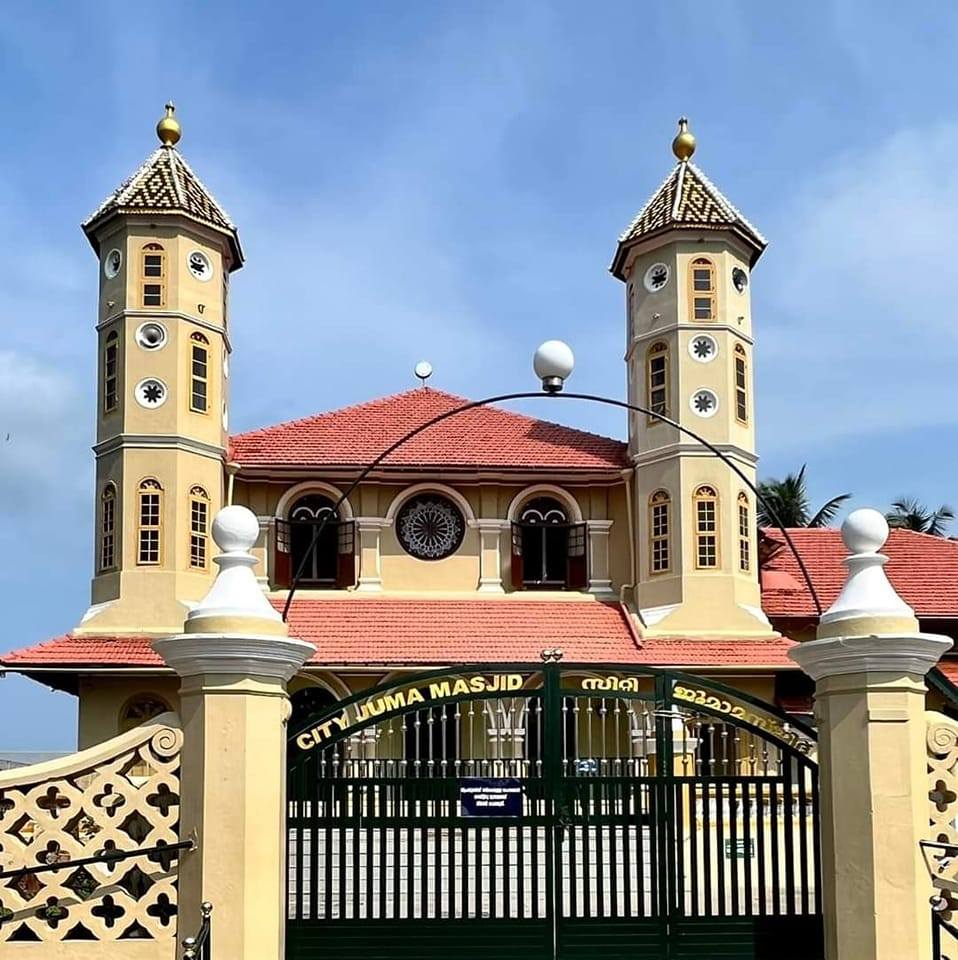
- Kannur City Juma Masjid
When Sayyid Muhammad Maula Bukhari Tangal passed away on Monday, 3rd Shawwal 1207 AH (1792 AD) at the age of 63, he too was buried in this very palce—significant for its centrality in Kannur and its growing historical importance. Over time, a dargah (shrine) was established there in his name, transforming the place into a spiritual center of reverence.
Syed Muhammad, a grandson in the Maula lineage, constructed the maqam (tomb structure) over his blessed grave. Later, his younger brother, Mastan Thangal, undertook its renovation. In subsequent years, Sayyid Muhammad Fakhruddin Koyakkutty Thangal further restored and refined the structure, shaping it into the form in which it stands today—preserved with continuity and care.
After a life devoted to faith, service, and guidance, his passing did not mark an end, but a continuation in spirit. His shrine in Kannur remains an important site of visitation (ziyara), drawing people from across regions. It is associated with a lasting phenomenon—a sweet fragrance said to emanate from the soil of his grave—symbolizing his enduring blessings.
Bukhari Tangal was known for his powerful yet gentle way of teaching. With wisdom and spiritual strength, he guided countless people toward faith and righteous living. It is said that hundreds of thousands were transformed through his teachings, deeply rooted in the Qur’an and the traditions of the Prophet Muhammad (S).
Sayyid Muhammad Maula Bukhari Tangal stands as a towering spiritual figure whose influence transcended geography and generations. Through his life, teachings, and disciples, he continues to inspire a living tradition of faith, devotion, and unity across Kerala, Sri Lanka, and Southeast Asia.
In the end, as the night settled and the crowds slowly thinned, the minaret stood still against the sky—not as a reminder of death, but as a sign of a life that never truly ended.
Experiencing the Living Legacy of Sayyid Maula in the Historic Kannur City
In the heart of Kannur City, the 240th anniversary of Sayyid Muhammad Maula Bukhari's death was remembered in a way that not only bridged the gap between 18th-century learning and modern cultural heritage but also created a new paradigm for heritage tourism. Conceived and executed by Muhammed Shihad, founder of City Heritage, and Sabith Saqafi, this expedition attracted a wide cross-section of scholars, students, and Sufi adherents to a new living story about the Malabar Coast. From the regal atmosphere of Arakkal Palace to the revered Juma Masjid at Kannur City, where the solitary minaret built to honor Maula Bukhari stands majestically in the skyline, this heritage walk successfully transformed historical data into a visceral and communal experience through the interplay of physical landmarks and the intense rhythms of the Kutharatheeb ritual and duff muttu performances.
The story of Sayyid Maula, as presented by City Heritage, is a rich tale of intellectual stature and incredible cross-cultural pluralism, which transcends geographical boundaries. Maula, born in 1731 in the Lakshadweep Islands, is a man whose voyage across the Indian Ocean was marked not by colonial ambition but by a quest for knowledge, thus cementing his position as a key figure in the Bukhari tradition that unites Central and South Asia. One of the most compelling aspects of this encounter is the recounting of Maula’s partnership with a Jewish patron named Shanjur in Cochin, where Maula’s explication of the story of Prophet Moses inspired Shanjur to contribute to the renovation of the Chembitta Palli mosque. Such stories represent a rich and powerful reminder of the historical fabric of coexistence that City Heritage is committed to presenting to a global audience.
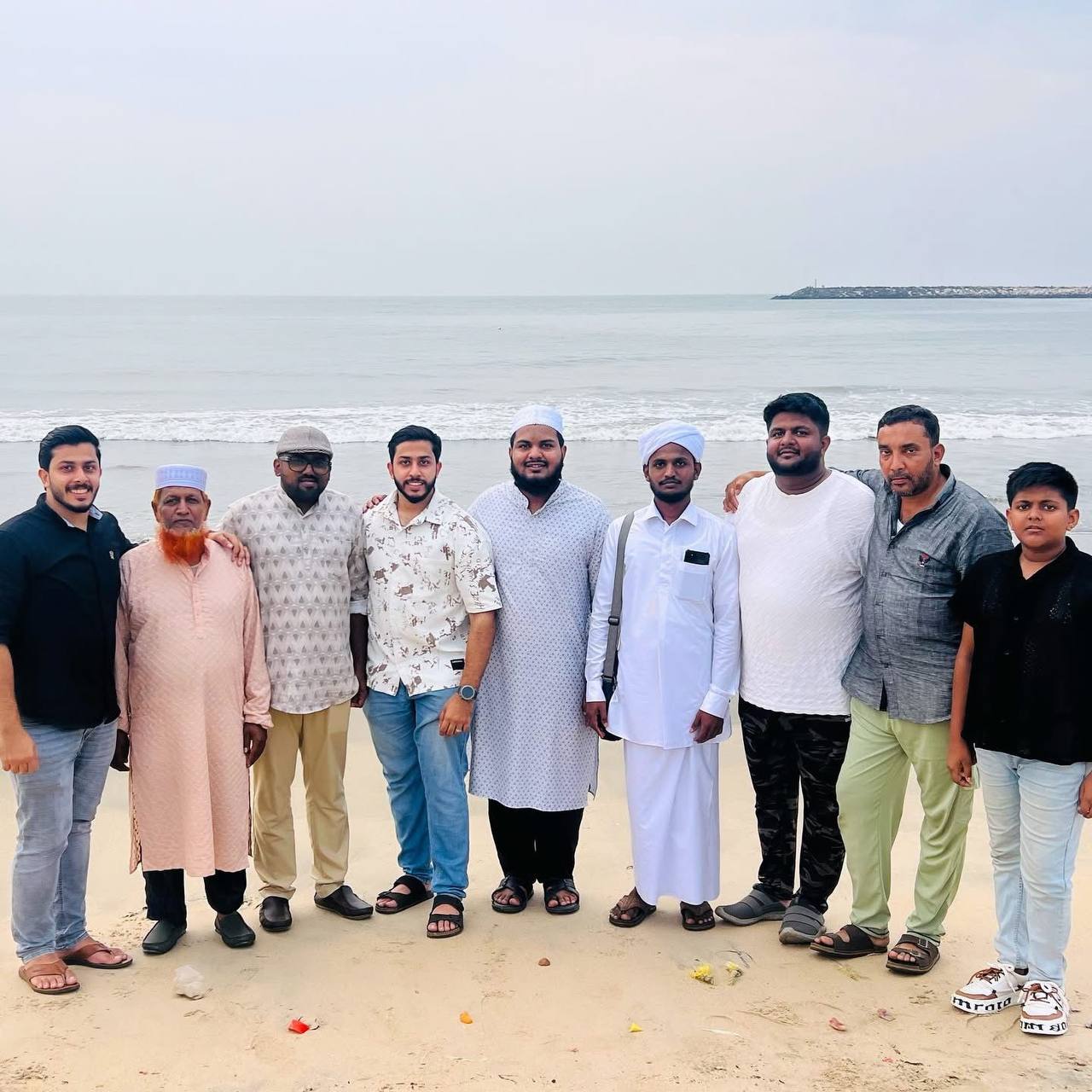
- Heritage Walk Organized by City Heritage on the day of the Death Annivaersary of Maula in 2025.
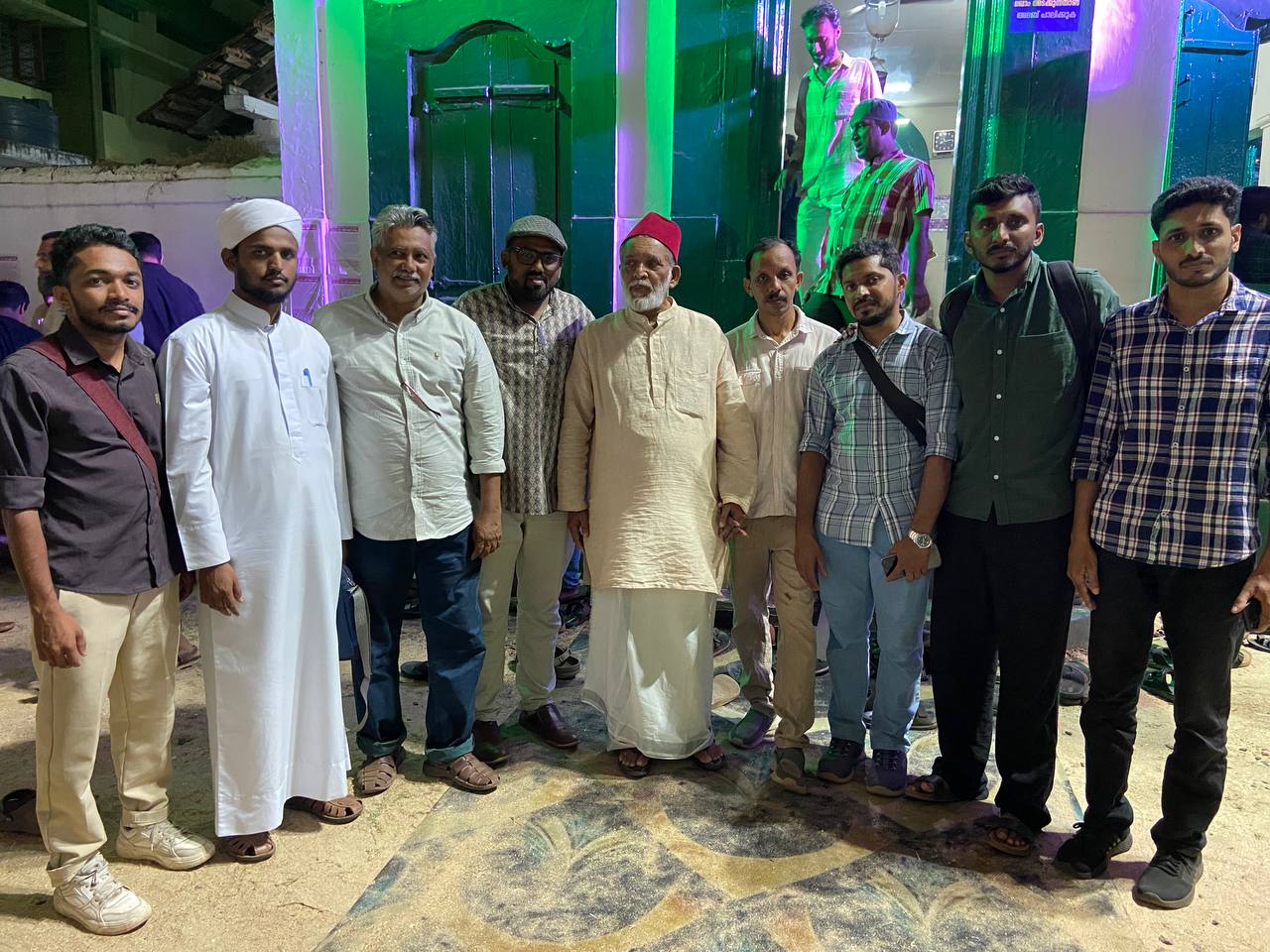
- Heritage Walk Organized by City Heritage on the day of the Death Annivaersary of Maula on 22nd March, 2026.
The walk came to its poignant end at the dargah, where history was given a personal touch through the presence of Fakrudheen Kunji Koyama Thangal, the direct descendant of the Maula family of Chavakkad. As the night fell on the illuminated dargah, the gathering of elders with their pieces of paper and the youth stepping into their cultural legacy was reminiscent of the "life that never truly ended." This initiative by the City Heritage goes beyond the scope of the walk, which is merely an attempt to explore history. It is an attempt to reclaim the scholar whose scholarship was akin to the monsoon winds, carrying the winds of knowledge across the seven seas. The organization’s attempt to document the fragments of history ensures the continued illumination of the identity of Kannur through the spiritual glow of Maula Bukhari.
References:
1. Hazrath Sayyid Muhammed Maula Bukhari - Malayalam Book by K Kunjumusliyar: (https://drive.google.com/file/d/1b_KRmn1Wo49l-s9esbMzUYZ-zjBV2xcv/view?usp=sharing)
2. Keralathile Bukhari Saadatheengal - Malayalam Book by K Kunjumusliyar: (https://drive.google.com/file/d/1ZGAoVeGMcjro86eRKCLFN3ITvAapL4Ot/view?usp=sharing)
3. The Bukhari Sayyids of Mlabar - Hussain Randathani: (https://hussainrandathani.in/assets/admin/bookpdf/1993559946.pdf)
4. Qutubu Zaman Syed Moula al Bukhari al Jalali - M. Ameen Mubarak JP (Jt. Secretary Aroosiyyathul Quadhiriyyah World Sufistic Order Sri Lanka Branch): (https://kannurstories.blogspot.com/2022/05/qutubu-zaman-syed-moula-al-bukhari-al.html)
5. Shaikh Sayyid Muhammad Bukhari Tangal: (https://arusiqadiri.wordpress.com/)
Warmly welcome to Kannur — Come & explore the living legacy of Sayyid Muhammad Maula Bukhari with City Heritage.
Visit us and Contact:
Visit: www.cityheritage.in
Email: mail@cityheritage.in
Instagram: cityheritage.in
Phone: +91 7356569573, +91 8377024979




 (1).png)
© Copyright 2026 City Heritage. All rights reserved.
Website designed by TNM Online Solutions.
If you have any enquiry, feel free to ask, and we'll provide you with a prompt and concise response.