
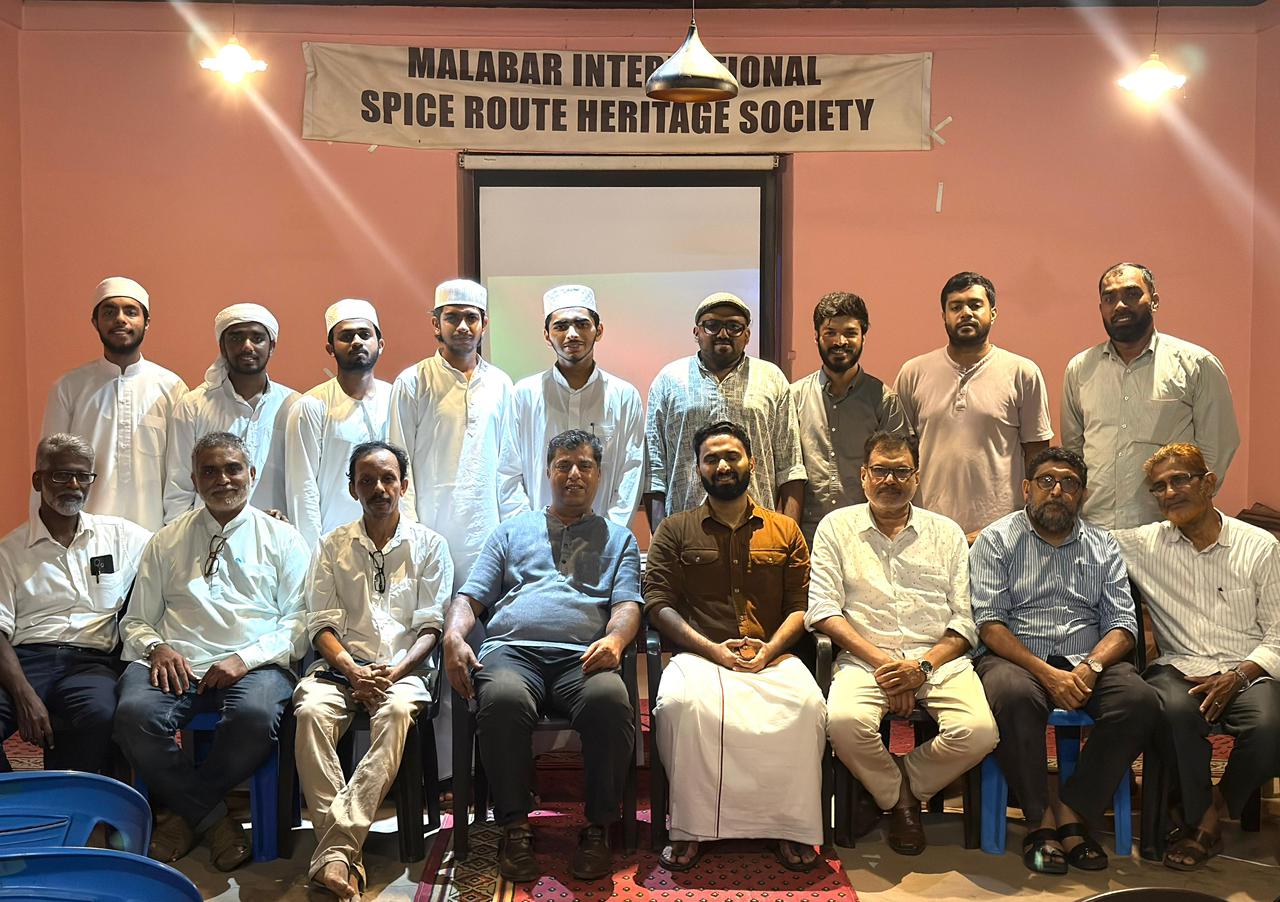
Kannur, a city shaped by centuries of maritime trade, cultural encounters, and resistance against colonial powers, became the setting for a remarkable heritage discourse titled "Meezan Stones & Minarets of Kannur" – Unveiling the Heritage and Epigraphic Legacy of Kannur City. Organized jointly by City Heritage, Malabar International Spice Route (MISR) Heritage Society, and Kannur City Heritage Foundation. the session brought together students, researchers, heritage enthusiasts, and local residents eager to explore the lesser-known historical narratives embedded within Kannur's mosques, tombstones, inscriptions, and sacred landscapes.
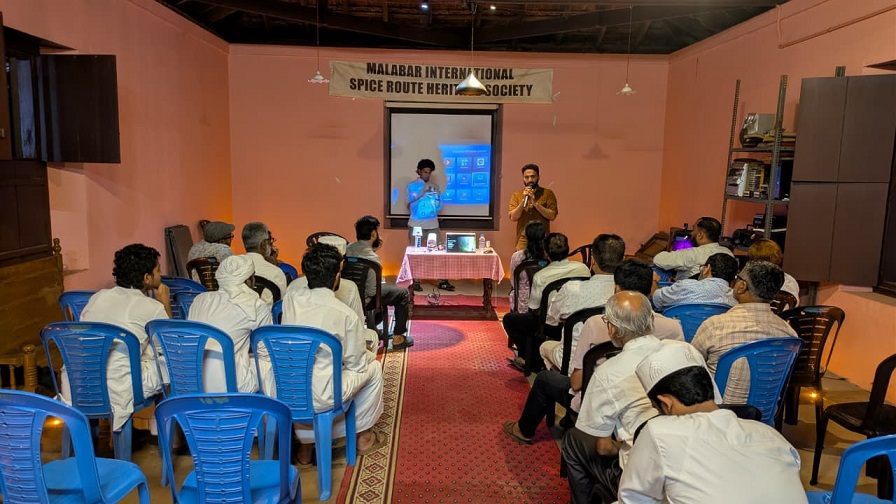
The speaker, Thoufeek Zakariya, an independent researcher, artist, calligrapher, and heritage enthusiast, delivered an insightful and deeply engaging presentation that connected architecture, epigraphy, maritime history, religious traditions, and cultural memory into a compelling narrative of Malabar's past.
A Researcher Rooted in History
Born and raised in the historic neighbourhoods of Fort Kochi and Mattancherry, Thoufeek Zakariya's journey into history began with his fascination for the multicultural legacy of Cochin. Known internationally for his expertise in Hebrew, Arabic, Syriac, Samaritan, and Semitic calligraphy, he has devoted years to studying original inscriptions, manuscripts, and historical records related to the Jewish, Islamic, and Christian communities of Kerala.
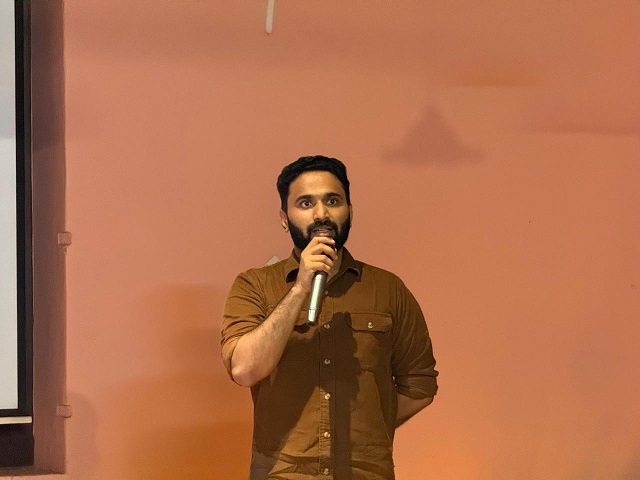
His commitment to preserving the heritage of Kerala's Jewish community and his work in Hebrew calligraphy earned him recognition beyond India, including an honorary invitation from former Israeli President Reuven Rivlin. While professionally trained as a chef, his true passion lies in uncovering forgotten histories and interpreting the past through primary sources rather than relying solely on established historical narratives.
Kannur: A City of Minarets, Meezan Stones, and Maritime Memories
Opening the session, Thoufeek reflected on his journey through Kerala's historic landscapes and explained how Kannur stands apart as one of the most significant heritage regions of the Malabar Coast.
He described Kannur as a living archive where every minaret, mosque, tombstone, and inscription narrates stories of maritime trade, cultural exchange, spiritual movements, and resistance against colonial domination. The city's history cannot be understood merely through written chronicles; it survives in stone inscriptions, architectural forms, burial markers, and oral traditions that continue to shape local identity.
Particular attention was given to the historic role of Kannur as the seat of the Arakkal Kingdom, the only Muslim royal dynasty in Kerala. The region's long-standing connections with Arab traders predated Islam itself, and these maritime networks later facilitated the spread of Islamic culture and scholarship across the Malabar Coast.
Thoufeek also highlighted Kannur's enduring legacy of resistance against European colonial expansion. From the arrival of the Portuguese under Vasco da Gama to the period of British domination, the region remained a frontier of political and economic resistance.
Reading History Through Minarets
One of the most fascinating aspects of the lecture was the discussion on the unique architectural character of Kannur's mosque minarets.
Thoufeek demonstrated how the minarets of historic mosques such as Kannur Moideen Palli and Kannur City Juma Masjid represent distinctive architectural traditions that differ significantly from those found elsewhere in Kerala. He highlighted evidence from historic mosques predating the 18th century, including the mosque at Valapattanam, examining their architectural features and tracing the evolution of minaret designs in Kannur and across the Malabar Coast over the centuries.
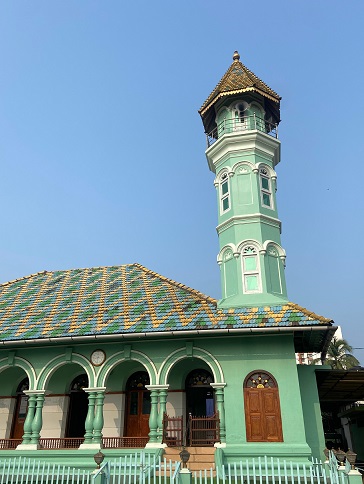
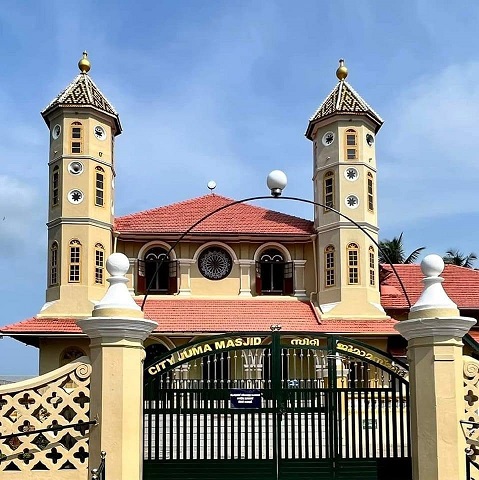
- Kannur Moideen Palli & Kannur City Juma Masjid
These structures, he argued, are not merely religious monuments but historical documents in themselves, reflecting changing artistic influences, technological capabilities, and cultural interactions across the Indian Ocean world.
The core of the lecture focused on epigraphy—the study of inscriptions—and its immense value in reconstructing Kerala's history. Drawing from inscriptions found in several historic mosques, Thoufeek presented a rich body of evidence that sheds light on social structures, religious institutions, trade networks, and cultural movements. Among the sites discussed were the Isingante Palli (Isa Mosque), Kannur Moideen Palli, dated 1704–1705, Hydrose Palli dated 1618, and the historic mosques and shrines in Kochi, including Chembittapalli, Kalvathy Juma Masjid, and the Zainudheen Thangal Maqam.
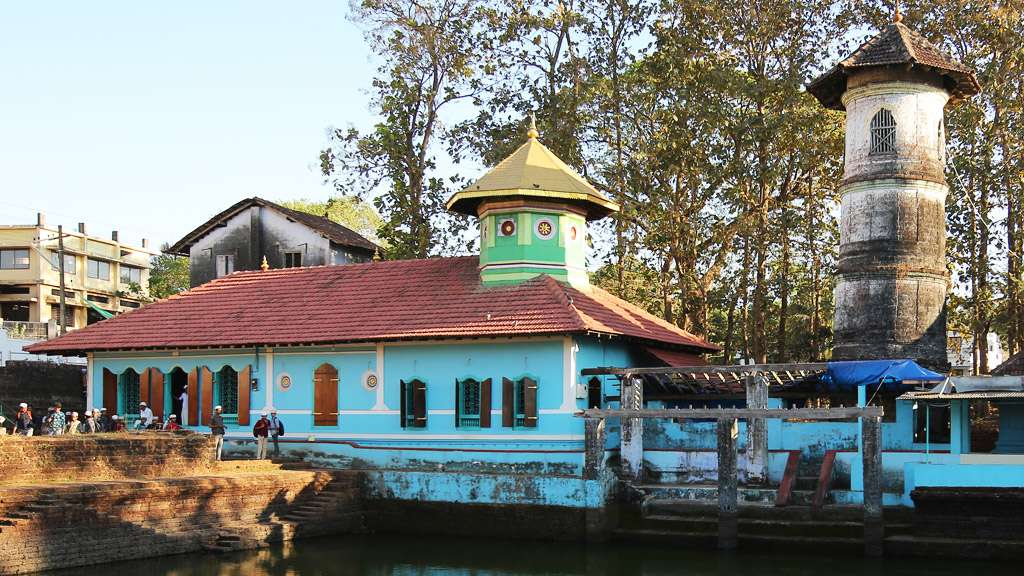
- Valapattanam Mosque, Kannur (Image: Kerala Tourism)
Through these examples, he demonstrated how inscriptions often preserve details omitted from conventional historical accounts, offering direct testimony from the communities that created them.
The presentation also highlighted the alarming disappearance of several historically valuable inscriptions in Kerala. Referring to photographs taken by noted researcher Professor Meherdad Shokoohy during his studies in Cochin during the 1980s, Thoufeek showed examples of inscriptions that have since vanished, emphasizing the urgent need for documentation and conservation.
Meezan Stones, Inscriptions, and the Sacred Landscapes of Malabar
A particularly engaging section of the lecture explored the significance of Meezan stones - Islamic tombstones that serve as invaluable historical records. Thoufeek explained how these stones preserve information about the Islamic tradition, trade, language, and social identities. Inscriptions found on Meezan stones across Malabar appear in Arabic, Tamil, Malayalam, and other scripts, offering evidence of centuries-old connections between Kerala and regions across the Arabian Peninsula and South India.
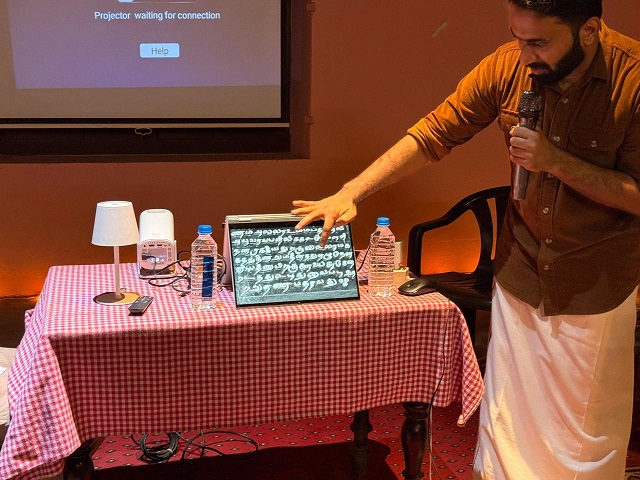
Examples from Kochi, including inscriptions at Chembittapalli and Kalvathy Juma Masjid, reveal interactions with communities from places such as Kayalpattinam and other maritime centres of the Indian Ocean. The study of these stones, he argued, has the potential to significantly reshape our understanding of the history of Mappila Muslims and the broader cultural history of Malabar.
The discussion also highlighted the importance of early mosque inscriptions as complementary historical sources. Among the most significant examples is the ancient Madayi Palli in Kannur, traditionally believed to have been established by Malik ibn Dinar and regarded as one of the earliest mosques in Kerala. The mosque houses a white marble inscription believed to have been brought from Mecca by Malik ibn Dinar himself. The Arabic inscription records a Quranic verse concerning the maintenance of mosques and bears an early Islamic date, providing valuable evidence of the antiquity of Islam on the Malabar Coast.
Madayi Palli is also renowned for its remarkable collection of Arabic manuscripts and historical documents. Among them is the important work Tarikhu Luhurul Islam Fi Diyari Malaibar, authored by Muhammad ibn Malik ibn Habib, which offers rare insights into the early history of Islam in Malabar. The mosque forms part of a wider network of early Islamic centres traditionally associated with Malik Dinar, including Kodungallur, Kollam, Kasaragod, Kannur, Dharmadam, Panthalayini, Chaliyam, Barkur, and Mangalore. Together, these mosques represent some of the oldest surviving Islamic institutions in the Indian subcontinent and testify to the deep-rooted maritime and cultural exchanges that linked Malabar with the wider Indian Ocean world.
The presentation further explored the remarkable similarities between tombstones found in Kannur and those of Lakshadweep and the Maldives. The use of coral stones and distinctive funerary forms suggests long-standing maritime and cultural connections between these regions. Such material evidence illuminates the historical influence of the Arakkal Kingdom across island territories and highlights Kannur's role within wider Indian Ocean trade networks.
These connections reveal a heritage landscape extending far beyond the boundaries of present-day Kerala and demonstrate the cosmopolitan character of historic Malabar society, where mosques, inscriptions, manuscripts, and Meezan stones collectively preserve the memory of centuries of cultural exchange, trade, scholarship, and spiritual life.
The Legacy of Sayyid Muhammad Moula Bukhari Thangal
Another important segment of the lecture focused on the life and legacy of Sayyid Muhammad Moula Bukhari Thangal (1144–1207 AH / 1731–1792 CE), a revered Sufi scholar and spiritual leader associated with Kannur.
Born in Kavaratti in Lakshadweep and belonging to the lineage of the Prophet Muhammad, Moula Bukhari Thangal played a significant role in the spiritual and intellectual history of the region. His influence extended across multiple Sufi traditions, including the Qadiriyya, Rifa'i, and Shadhili orders.
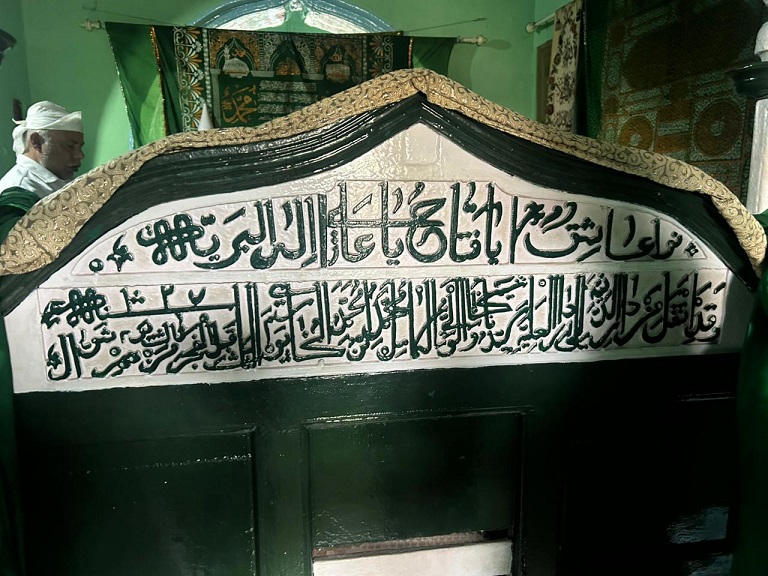
- Sayyid Muhammed Maula Thangal Maqam, Kannur
Thoufeek discussed traditions that connect the scholar with efforts to make Islamic knowledge accessible across linguistic and cultural boundaries. He also highlighted local narratives linking him to interactions with the Jewish community of Cochin and to early initiatives related to Hebrew translations of Islamic texts.
Today, his maqam near Kannur City Juma Masjid continues to serve as an important spiritual and historical landmark, preserving memories of a scholar whose influence crossed geographical and cultural frontiers.
A Vision for Heritage Conservation
Concluding the lecture, Thoufeek emphasized that heritage preservation requires far more than simply admiring historic monuments; it demands a systematic and scholarly approach to safeguarding Kannur's rich epigraphic and architectural legacy. He called for detailed epigraphic and ethnographic research, comparative historical studies, comprehensive documentation, scientific classification of heritage resources, and long-term conservation initiatives to ensure that these invaluable historical records and cultural landmarks are preserved for future generations.
He stressed that preserving heritage is a collective responsibility requiring collaboration among researchers, educational institutions, heritage organizations, government agencies, and local communities.
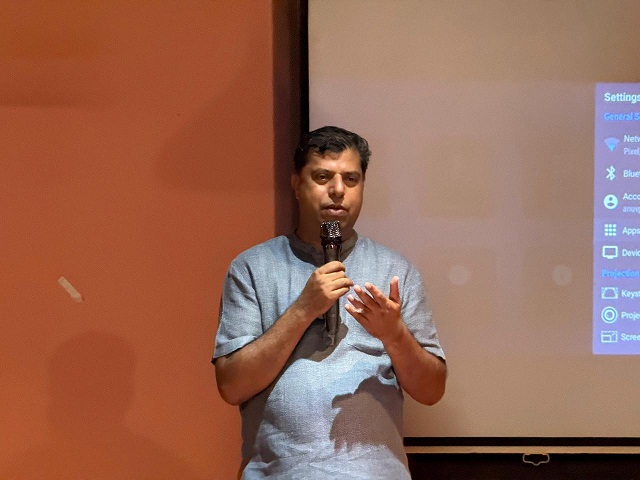
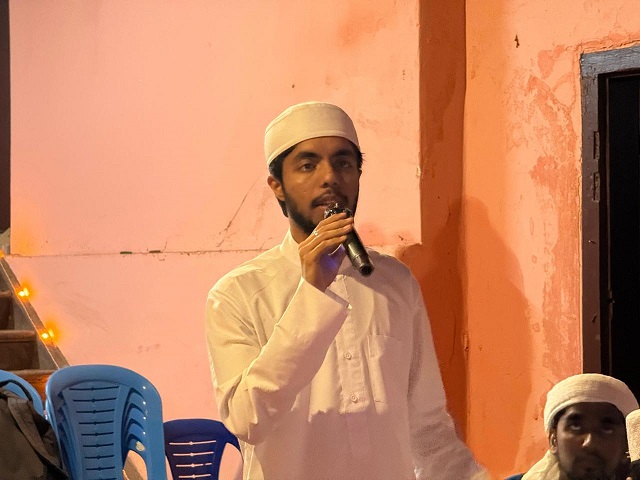
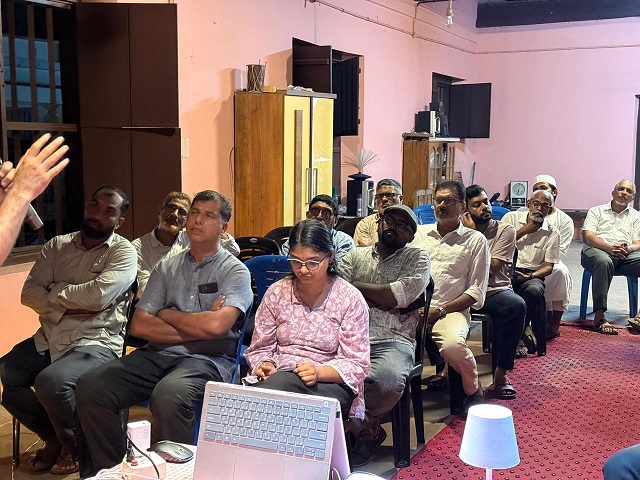
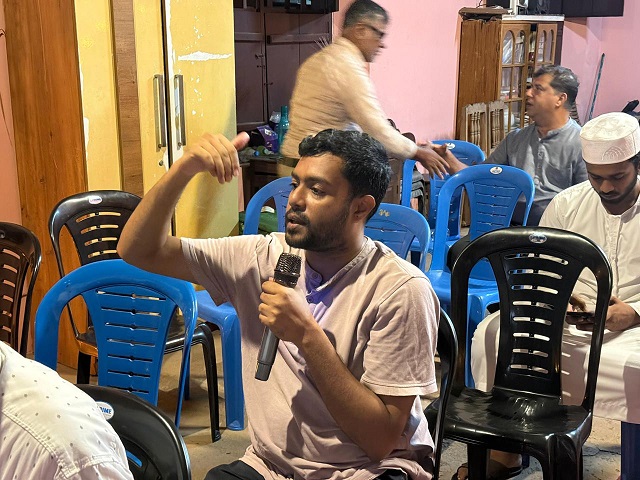
The session concluded with an engaging discussion and question-and-answer segment that reflected the audience's enthusiasm for heritage conservation. Students, researchers, and local residents participated actively, demonstrating a growing interest in documenting and protecting Kannur's rich historical legacy.
As the evening came to a close, one message remained clear: Kannur's minarets and Meezan stones are not silent relics of the past. They are living archives that continue to tell stories of trade, faith, migration, scholarship, and cultural exchange across centuries.
Through initiatives led by organizations such as City Heritage and the Malabar International Spice Route (MISR) Heritage Society, these stories are finding new audiences and inspiring renewed efforts to preserve the unique heritage of Malabar for future generations.




 (1).png)
© Copyright 2026 City Heritage. All rights reserved.
Website designed by TNM Online Solutions.
If you have any enquiry, feel free to ask, and we'll provide you with a prompt and concise response.