
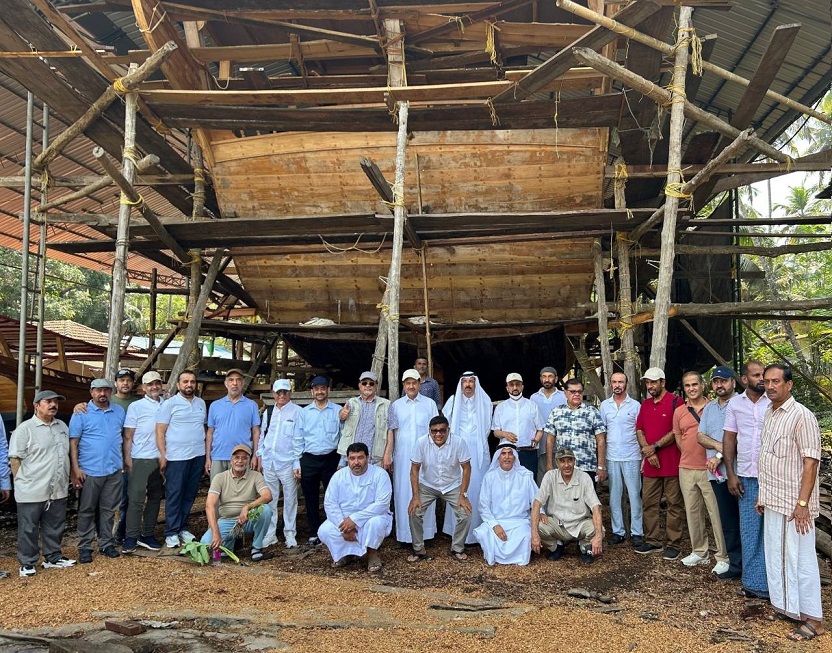
For nearly two thousand years, the shores of Kerala and the Arab world have been connected by far more than trade. Across the Arabian Sea flowed not only spices and precious goods, but also ideas, cultures, faith, architecture, food traditions, languages, and people. What began as maritime commerce gradually evolved into one of the world's most enduring cultural relationships - a legacy that continues to shape Kerala even today.
At City Heritage, a pioneering heritage initiative based in Northern Kerala, we are passionate about celebrating and preserving this remarkable Indo–Arab connection. Through heritage walks, storytelling experiences, culinary sessions, cultural explorations, and research initiatives, we invite travellers and history enthusiasts to discover how deeply the Arab world has influenced the landscapes and communities of Kerala.
From Kasaragod in the north to Thiruvananthapuram in the south, Kerala is filled with living reminders of this centuries-old relationship. These stories are not confined to museums or monuments; they are woven into the everyday lives of the people—in their traditions, cuisine, architecture, crafts, festivals, and shared cultural memories.
Long before the emergence of modern global trade routes, the Arabian Sea connected Kerala with ports across the Arabian Peninsula. Historical evidence suggests that Arab merchants had been sailing to the Malabar Coast even before the beginning of the Common Era, attracted primarily by the region's highly prized pepper and other spices.
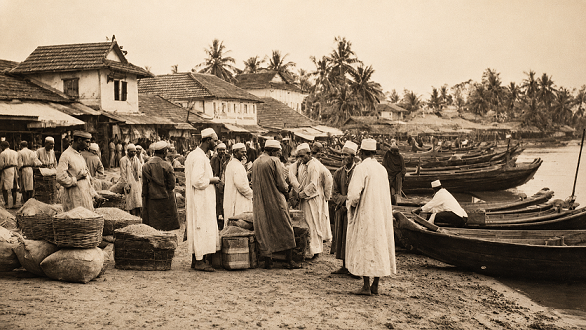
The seasonal monsoon winds made these voyages predictable but lengthy. Many Arab merchants stayed in Kerala for months while waiting for favourable winds to return home. Over generations, many settled permanently, married local women, and became an integral part of Kerala's multicultural society. These interactions contributed significantly to the emergence of the Mappila Muslim community, one of Kerala's oldest and most distinctive cultural communities.
Trade gradually evolved into friendship, cultural exchange, and mutual trust. Arab merchants were welcomed by Kerala's rulers, who recognised their importance in strengthening international trade networks. The relationship became one of cooperation rather than conquest, creating a remarkable model of peaceful cultural integration.
Experience Kerala's Living Arab Heritage with City Heritage
Today, this shared heritage remains visible across Kerala, and City Heritage offers immersive experiences that bring these stories to life.
For City Heritage, the Indo–Arab connection is not merely a history of merchants and spices. It is the story of how Kerala evolved into one of the world's most culturally diverse societies. It is a story of openness, hospitality, coexistence, and mutual respect. Kerala's rulers welcomed merchants from distant lands, allowing cultures to interact freely while preserving local traditions. This spirit of exchange transformed Kerala into one of the most important crossroads of the Indian Ocean world.
The renowned Moroccan traveller Ibn Battuta, who visited Kozhikode in the fourteenth century during his journey to China, described Calicut as one of the greatest ports in the world. He recorded seeing large fleets of Chinese ships anchored in its harbour, highlighting the city's importance as an international maritime centre where traders from Arabia, Africa, Persia, China, and Southeast Asia met and exchanged goods, knowledge, and cultures.
These accounts remind us that Kerala was once one of the world's great global ports long before the age of European colonialism. Many of these stories remain absent from conventional history textbooks. Yet they continue to live in Kerala's streets, homes, ports, kitchens, workshops, mosques, and communities.
Through carefully curated heritage walks, storytelling sessions, cultural and culinary experiences, and research-based explorations, City Heritage seeks to reconnect people with these forgotten narratives. The Indo–Arab heritage of Kerala is not simply about the past—it is a living legacy that continues to inspire cultural understanding, tourism, scholarship, and friendship between Kerala and the Arab world.
Indo- Arab Experiences in Kerala:
Maritime Heritage and the Beypore Uru Experience
Few symbols represent the centuries-old Indo–Arab connection better than the legendary Uru (Dhow) of Beypore. For generations, skilled craftsmen have built these magnificent wooden vessels using traditional techniques passed down through generations, preserving one of Kerala's oldest living maritime traditions.
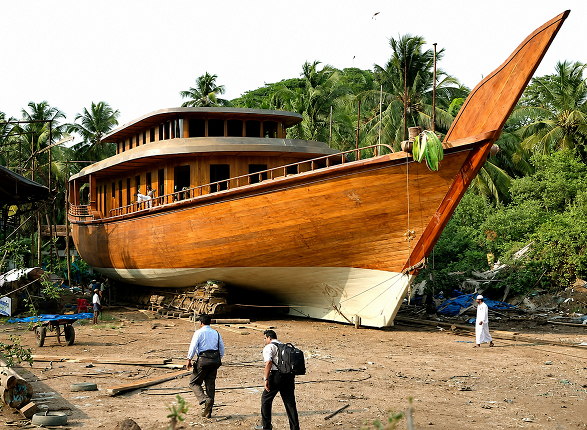
- Uru Yard in Calicut (Image: The New Indian Express)
The history of Uru building is closely intertwined with the Arab world. Arab merchants played a vital role in strengthening Kerala's maritime trade, and Beypore emerged as one of the Indian Ocean's renowned shipbuilding centres. Even today, handcrafted Urus continue to be commissioned by buyers from the Gulf, including members of prominent Arab and royal families, reflecting a tradition that has endured for centuries.
A visit to the Beypore Uru yards offers a rare opportunity to witness master craftsmen at work and experience a living heritage where Kerala's maritime history, exceptional craftsmanship, and enduring Indo–Arab friendship continue to sail across the Arabian Sea.
Experience the Hookah Heritage of Koyilandy
One of the lesser-known yet remarkable chapters of Kerala's Indo–Arab heritage is the traditional handmade Koyilandy Hookah (Sheesha). Crafted from Malabar coconut shells and handcrafted by generations of skilled artisans, these distinctive hookahs were exported to the Arab world for nearly four centuries, particularly to Yemen, Saudi Arabia, Oman, Qatar, and other Gulf countries.
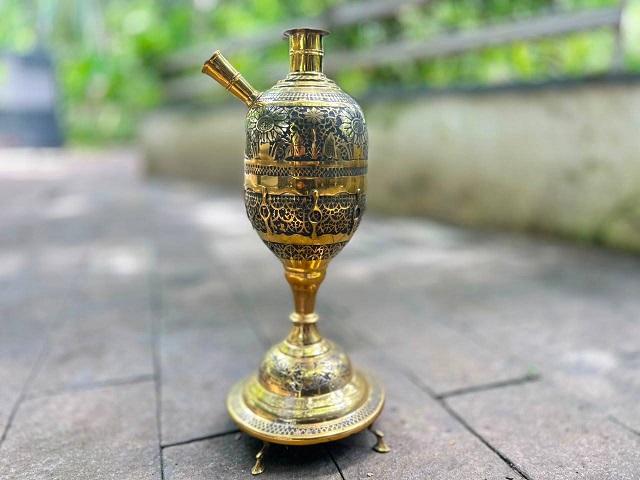
- The Koyilandi Hookah
Long before modern shipping routes, thousands of Koyilandy hookahs crossed the Arabian Sea, becoming treasured symbols of hospitality and social life in Arab homes, majlis, and royal households. Built on trust and long-standing commercial relationships, this thriving trade supported hundreds of artisans, metalworkers, carpenters, and exporters across Malabar.
Today, the story of the Koyilandy Hookah stands as a unique reminder of Kerala's enduring maritime trade, craftsmanship, and centuries-old cultural connection with the Arab world. Through City Heritage, visitors can explore this forgotten legacy and discover how a small coastal town became an important link in the shared history of Kerala and Arabia.
Historic Mosque and Architectural Heritage Trails
Kerala's centuries-old Indo–Arab connection is beautifully preserved through its historic mosques, which stand as enduring symbols of faith, and cultural exchange. According to long-held tradition, Islam first reached India through the Malabar Coast with peaceful Arab merchants, and the Cheraman Juma Masjid at Kodungallur - widely regarded as India's first mosque - was established in the 7th century by Malik ibn Dinar, an Islamic Scholar and traveller. From this coast, Islam gradually spread to other parts of the Indian subcontinent.
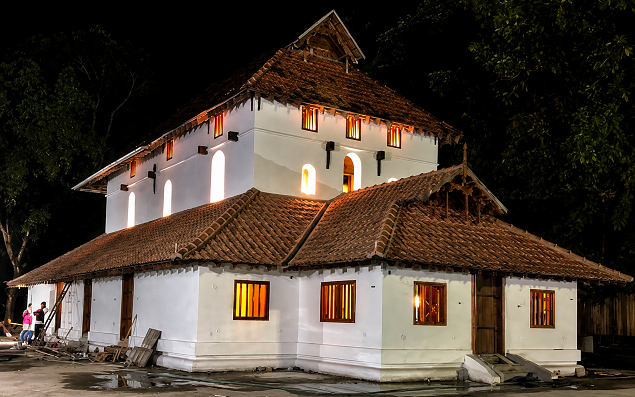
- The Cheraman Juma Masjid (Image: Malayala Manorama)
Over the centuries, Arab merchants and scholars established several important mosques across Kerala, many of which still preserve their original character. Among the finest examples are the Mishkal Mosque, built in the 14th century by the wealthy Arab merchant and shipowner Nakhuda Mishkal, along with Kuttichira Juma Masjid, Muchundi Palli, Hydros Palli, and many other historic mosques that continue to reflect Kerala's rich Islamic heritage.
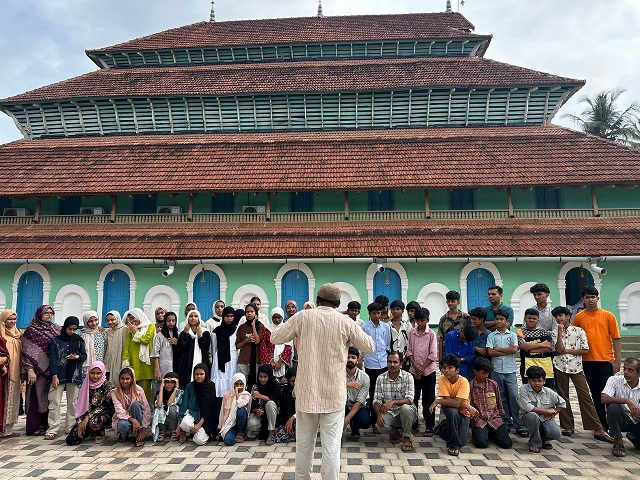
- City Heritage Founder Muhammed Shihad shares the stories from the courtyard of Mishkal Mosque, Kozhikode.
Unlike the domes and minarets common across the Islamic world, Kerala's early mosques were built by local artisans in the region's traditional architectural style. Constructed with timber, sloping tiled roofs, intricately carved wooden pillars, and exquisite craftsmanship, they represent a remarkable fusion of Arab Islamic traditions and Kerala's indigenous architecture.
Through City Heritage's guided mosque and architectural heritage trails, visitors can explore the historic streets across Kerala, walk through centuries-old trading quarters, and discover how Arab merchants, Islamic scholars, local communities, and the Zamorins of Calicut together transformed Kerala into one of the greatest multicultural maritime centres of the Indian Ocean. Every mosque, marketplace, and historic neighbourhood tells a living story of faith, commerce, craftsmanship, and the enduring friendship between Kerala and the Arab world.
Traditional Mappila Culinary Experiences
The centuries-old Indo–Arab connection is perhaps most deliciously experienced through the rich flavours of Mappila cuisine, where Arab culinary traditions blended with Kerala's local ingredients to create one of India's most distinctive food cultures. As Arab merchants settled along the Malabar Coast and married local women, generations of families developed unique recipes that are still lovingly preserved in homes across Kozhikode, Kannur, and Thalassery.
From the world-famous Thalassery Biryani, pathiri, unnakkaya, chattipathiri, kallummakkaya nirachathu (stuffed mussels), and muttamala to the elaborate 40-day post-marriage feast once prepared for Arab bridegrooms, every dish reflects centuries of cultural exchange, hospitality, and family tradition.
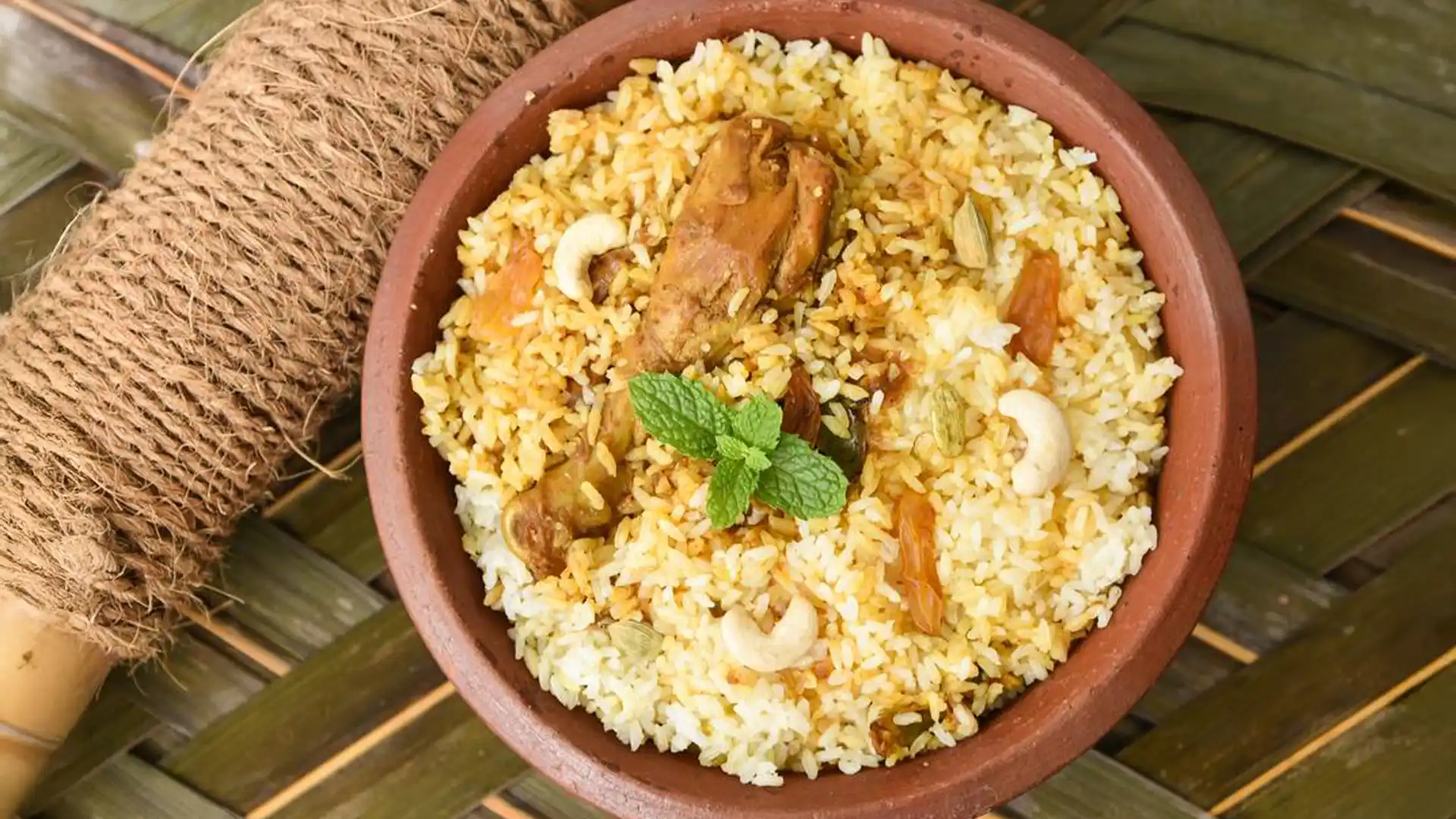
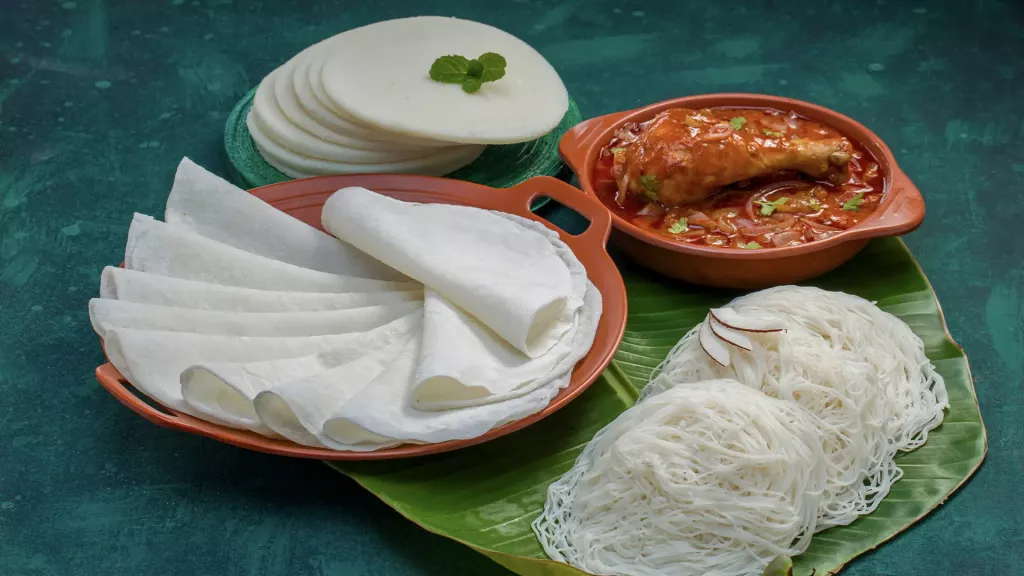
- Thalassery Dum Biryani and Traditional Mappila Breakfast Dishes (Image: Kerala Tourism)
Since 2018, City Heritage has been curating immersive Mappila Culinary Experiences, welcoming travellers into traditional Malabar homes to share authentic home-cooked meals and the stories behind them. Hosted by local families and home chefs, these experiences offer a rare opportunity to discover the living heritage of Malabar through its kitchens, recipes, and warm hospitality. During Ramadan, guests can also experience traditional Iftar feasts featuring a remarkable variety of seasonal delicacies that celebrate one of Kerala's most vibrant culinary traditions.
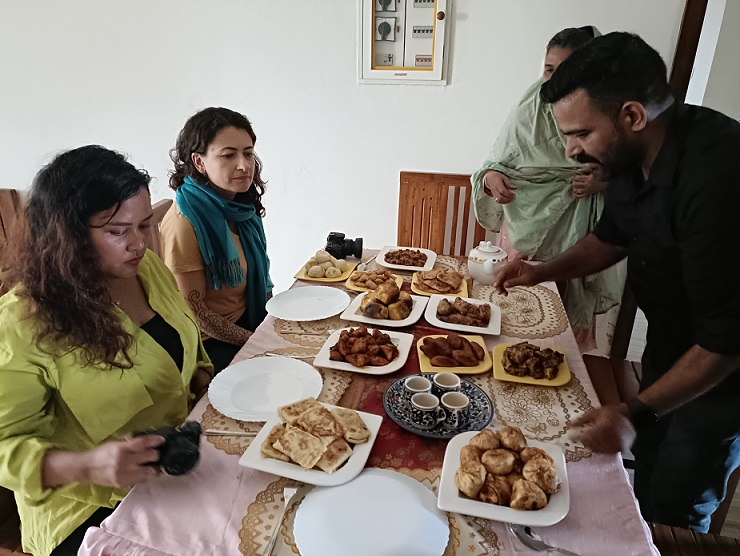
- Experiencing Traditional Mappila Cuisine in a Malabar Home
More than a meal, the Mappila Culinary Experience is a journey into the shared history of Kerala and the Arab world—where every recipe tells a story and every table reflects centuries of friendship across the Arabian Sea.
Explore Kerala's Islamic Scholarly Heritage
The Indo–Arab connection was not shaped by merchants alone. For centuries, renowned Islamic scholars from Hadhramaut (Yemen), Makkah, and other parts of the Arab world travelled to Kerala, bringing with them knowledge, scholarship, and spiritual traditions that continue to influence the region today.
Among them were the Jifri Sayyids of Hadhramaut, who were warmly welcomed by the Zamorins of Calicut and settled in Kozhikode, where their historic Jifri House remains a symbol of this enduring legacy. Other distinguished families, including the Makhdums of Ponnani and the Mamburam Sayyids, played a transformative role in shaping Kerala's religious, educational, and cultural landscape.
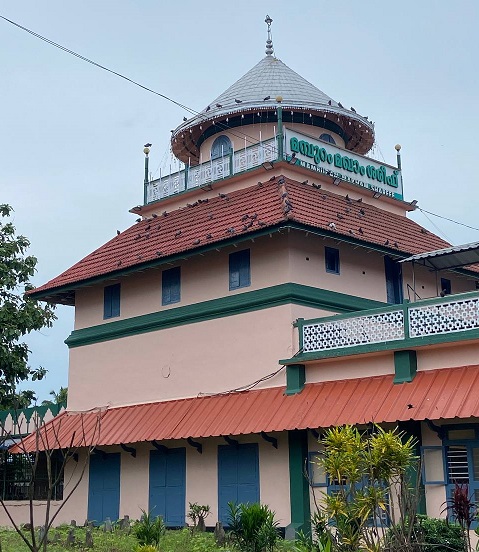
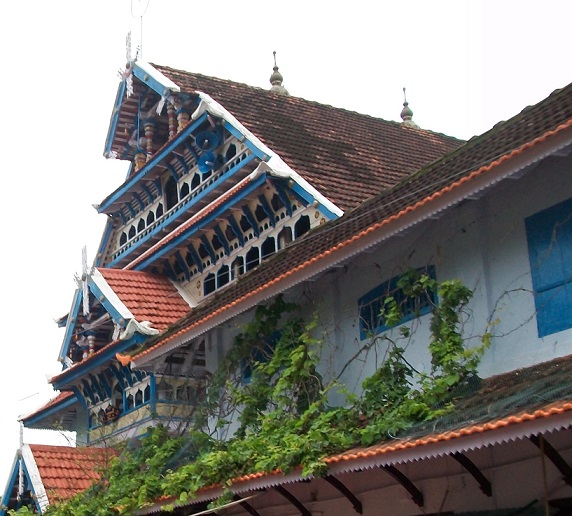
- Mamburam Maqam and Ponnani Juma Masjid
The renowned scholar Sheikh Zainuddin Makhdum II authored Tuhfat al-Mujahidin—one of the earliest historical works on Kerala written in Arabic—and strengthened the traditional Dars system of Islamic learning. Likewise, Sayyid Fadl Pookoya Thangal of Mamburam, a respected scholar and statesman, left a remarkable international legacy after being exiled by the British, later serving in the Ottoman Empire and contributing to the vision of the historic Hijaz Railway.
Through City Heritage's curated trails, visitors can explore these centres of learning, historic mosques, ancestral homes, and sacred sites, discovering how centuries of Arab scholarship helped shape Kerala's rich intellectual and spiritual heritage.
Stories of the Arab Trading Communities Along Kerala's Coast
Kerala's historic port towns are home to communities whose roots trace back to centuries of maritime trade with the Arab world. Merchant families from Hadhramaut (Yemen), the Baramis, the Dawoodi Bohra community, and several other Arab trading groups settled along the Malabar Coast, establishing thriving neighbourhoods, mosques, warehouses, and enduring cultural traditions.
One of the finest examples is Kuttichira in Kozhikode, where generations of Arab merchants made their homes while waiting for the seasonal monsoon winds to carry them back across the Arabian Sea. Many married local women, built magnificent ancestral tharavadu houses around the historic Mishkal Mosque and Kuttichira Juma Masjid, and became an integral part of Kerala's multicultural society. Over time, these interactions gave rise to unique social and cultural traditions that continue to define the character of the neighbourhood.
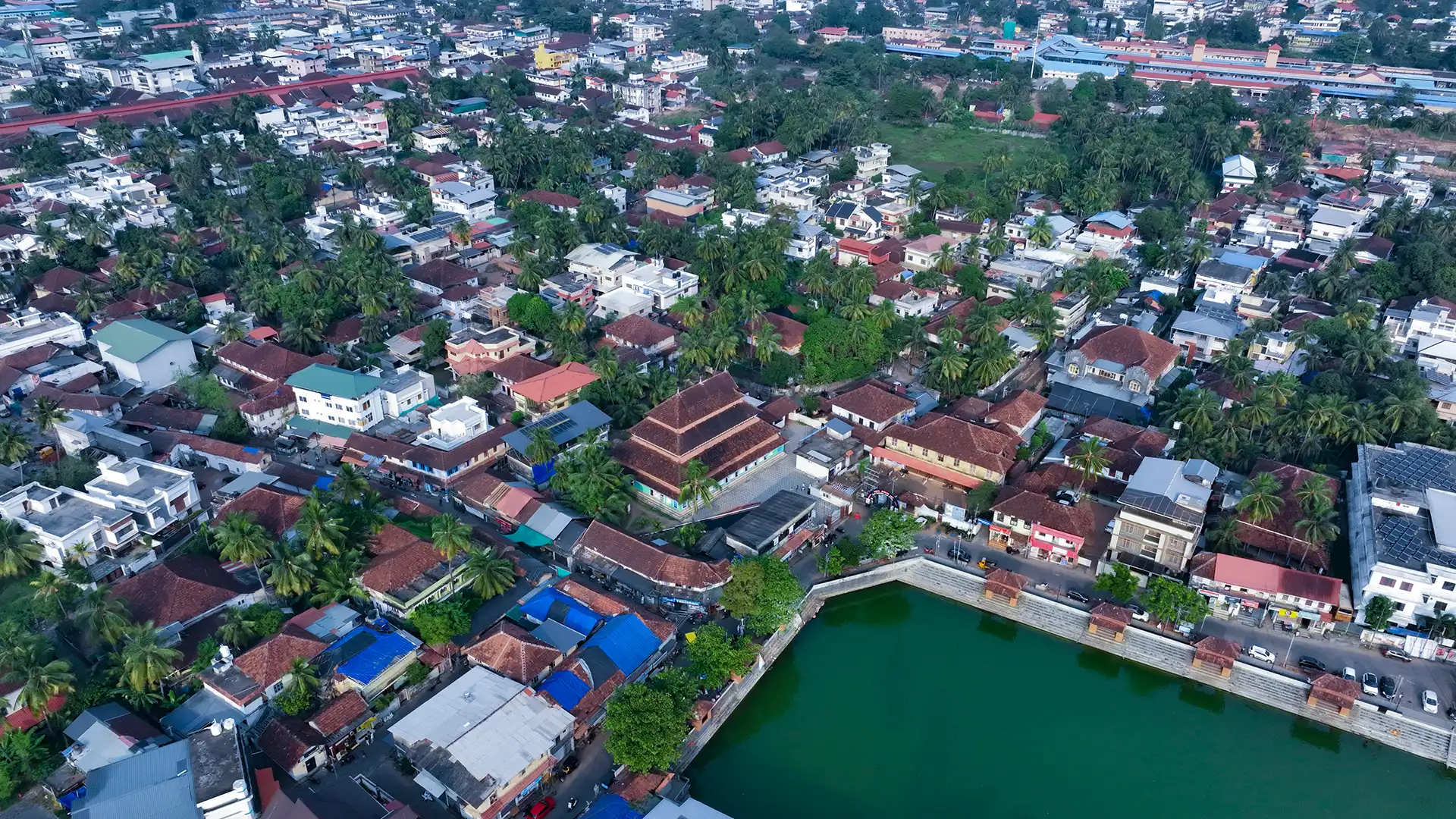
- Aerial View of Kuttichira with Mishkal Mosque, Kuttichira Pond, and Historic Ancestral Homes (Image: Kerala Tourism)
Through City Heritage's guided walks, visitors can explore these historic settlements, hear the stories of merchant families, and experience how centuries of trade, migration, and cultural exchange transformed Kerala's coastal towns into vibrant centres of Indo–Arab heritage.
Explore the Story of Arabi Kalyanam and the Ancestral Homes of Malabar
One of the most fascinating chapters of Kerala's Indo–Arab heritage is the tradition of Arabi Kalyanam (Arab marriages), which flourished during the height of maritime trade along the Malabar Coast. As seasonal monsoon winds delayed their return voyages, many Arab merchants settled in Kerala, married local women, and became part of the region's social and cultural fabric. These relationships contributed to the emergence of the Mappila community, paved the way for a matrilineal community, renowned for its rich culinary traditions, music, and folk arts such as Arabanamuttu and Kolkali.
The prosperous merchant families built magnificent ancestral tharavadu homes in traditional Kerala architectural style, many featuring spacious courtyards and numerous rooms designed for large matrilineal joint families. These remarkable houses can still be found in historic neighbourhoods such as Kuttichira in Kozhikode, as well as in Kannur and Thalassery, where they continue to preserve the stories of generations of Arab–Malayali families.
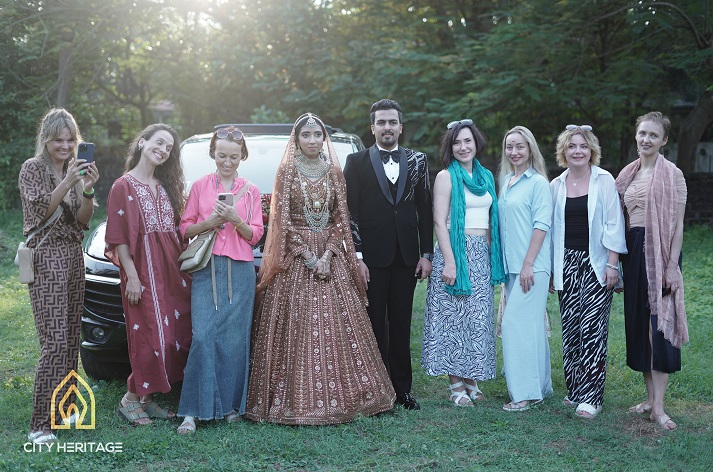
- A Malabar Wedding Experience
Through City Heritage's heritage walks, visitors can explore these historic homes, wander through the old Arab quarters, and discover how maritime trade, family traditions, and cultural exchange shaped a unique way of life that remains an enduring part of Kerala's living Indo–Arab heritage.
Experience the Traditional Music and Cultural Performances of Malabar
The Indo–Arab connection is not only preserved in Kerala's architecture, cuisine, and maritime traditions—it also lives on through the vibrant performing arts of the Malabar Coast. Over centuries of cultural exchange, Arab musical influences blended with local traditions to create distinctive art forms that continue to be performed during weddings, festivals, and community celebrations.
Among the most celebrated are Duff Muttu, Oppana, Kolkali, and Arabana Muttu. Performed with rhythmic frame drums, graceful movements, poetic songs, and energetic choreography, these art forms reflect the rich cultural heritage of Kerala's Mappila community. Oppana, traditionally performed during Mappila weddings, celebrates the bride through music, dance, and joyful gatherings, while Duff Muttu and Arabana Muttu showcase rhythmic performances deeply influenced by Arab musical traditions. Kolkali, though rooted in Kerala's indigenous culture, evolved within the Mappila community to become an important expression of its shared heritage.
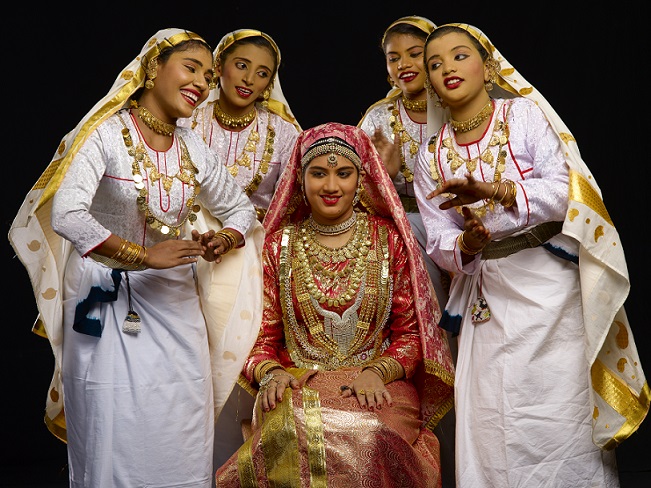
-Oppana Performance During a Mappila Wedding (Image: Kerala Tourism)
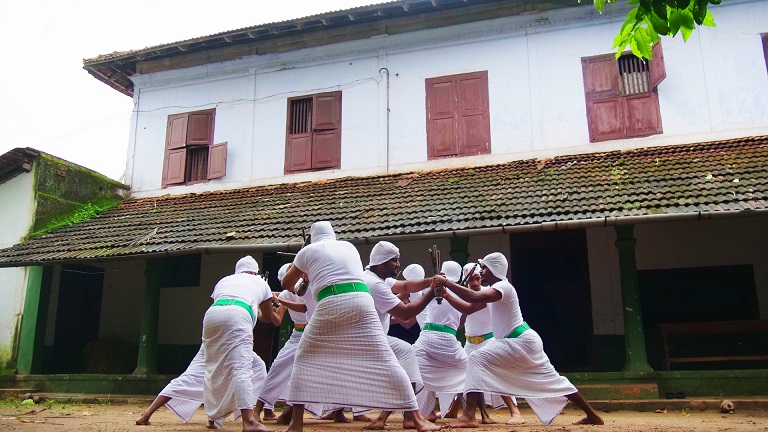
- Kolkkali Performed by the Mappila Community (Image: Kerala Tourism)
Through City Heritage's curated cultural experiences, visitors can witness these living traditions performed by local artists, gaining a deeper understanding of how centuries of interaction between Kerala and the Arab world gave rise to a unique cultural identity that continues to thrive across the Malabar region.
Storytelling Walks Through the Historic Streets of Kozhikode and Kannur
Step into the historic streets of Kozhikode and Kannur, where every lane, marketplace, and waterfront tells a story of Kerala's centuries-old relationship with the Arab world. Through City Heritage's guided storytelling walks, visitors journey through former trading quarters, historic neighbourhoods, royal legacies, and living communities that shaped the Malabar Coast into one of the great maritime centres of the Indian Ocean.
In Kozhikode, explore the historic quarters of Kuttichira, once home to prosperous Arab merchants who settled along the Malabar Coast. Wander through its centuries-old mosques, ancestral merchant houses, bustling market streets, and hidden lanes while discovering stories of maritime trade, cultural exchange, and the emergence of the vibrant Mappila community.
In Kannur, discover the remarkable legacy of the Arakkal Kingdom, the only Muslim royal dynasty in Kerala. Renowned for its close maritime and diplomatic ties with the Arab world, the Arakkal family played a significant role in the Indian Ocean trade network. The dynasty also followed a distinctive matrilineal tradition, with succession passing to the eldest member of the royal family, whether male or female. While male rulers were known as Ali Raja, female sovereigns ruled as Arakkal Beevi, making the kingdom a unique chapter in Kerala's political and cultural history.
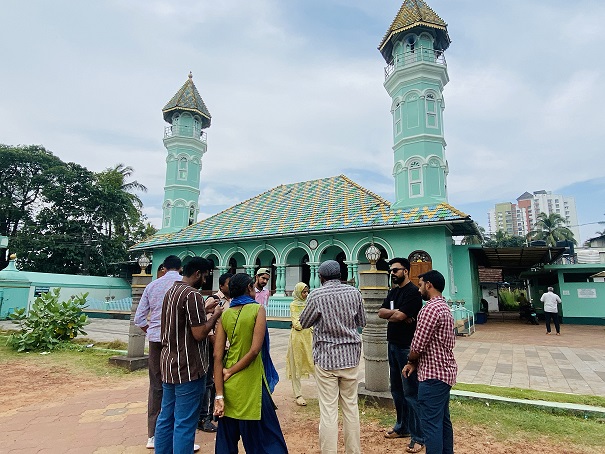
- Heritage storytelling session at the Ayikkara Muhiyudheen Masjid, built by the Arakkal Royal Family, Kannur.
These storytelling experiences reveal how the ports, palaces, markets, and communities of Malabar became enduring symbols of the friendship between Kerala and the Arab world—where history is not only remembered but continues to be lived every day.
Academic Sessions on the Indo–Arab Heritage of Malabar
Beyond heritage walks and cultural experiences, City Heritage is committed to promoting research and public understanding of Kerala's centuries-old Indo–Arab connection through academic lectures, seminars, workshops, and heritage discussions. These sessions explore the maritime history, trade networks, cultural exchanges, Islamic scholarship, architecture, and living traditions that shaped the Malabar Coast.
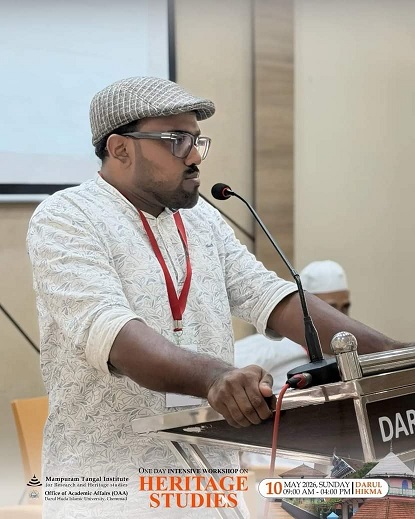
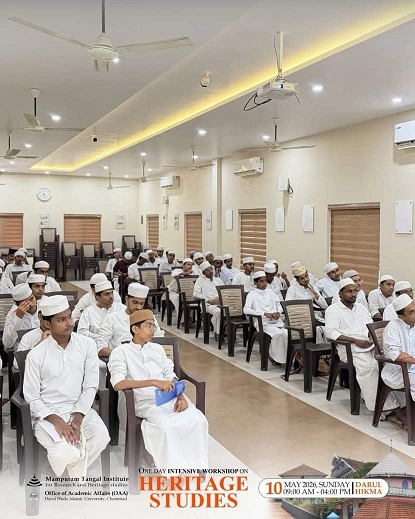
- An Academic discussion led by City Heritage Founder Muhammed Shihad, organised by Darul Huda Islamic University and the Mamburam Thangal Institute for Research and Heritage Studies.
In collaboration with institutions such as Darul Huda Islamic University, Mamburam Thangal Institute for Research and Heritage Studies, Jamia Markaz Saqafathi Sunniyya, the Malabar International Spice Route Society, and leading historians, researchers, and heritage professionals, City Heritage has organised numerous academic programmes that bring together students, scholars, and the public to rediscover the rich Indo–Arab legacy of Kerala.
These initiatives bridge academic research with public storytelling, inspiring a deeper appreciation of Malabar's role as one of the most important cultural and maritime crossroads of the Indian Ocean.
Modern Indo–Arab Relations and Contemporary Arab Influences in Kerala
The centuries-old relationship between Kerala and the Arab world did not end with the spice trade—it continues to flourish in new and dynamic ways. Since the Gulf migration of the 1970s, generations of Keralites have lived, worked, and studied across the Middle East, strengthening cultural, social, and economic ties that remain deeply woven into everyday life in Kerala.
This modern relationship is visible throughout the state—from the architecture of contemporary mosques and Islamic institutions to cuisine, fashion, education, business, and urban development. Inspired by the prosperity brought through Gulf migration, Kerala has witnessed the construction of magnificent mosques influenced by Middle Eastern architecture, including the Jami'ul Futuh at Markaz Knowledge City, whose design reflects the grandeur of the Sheikh Zayed Grand Mosque while serving as a landmark of modern Islamic architecture in Kerala.
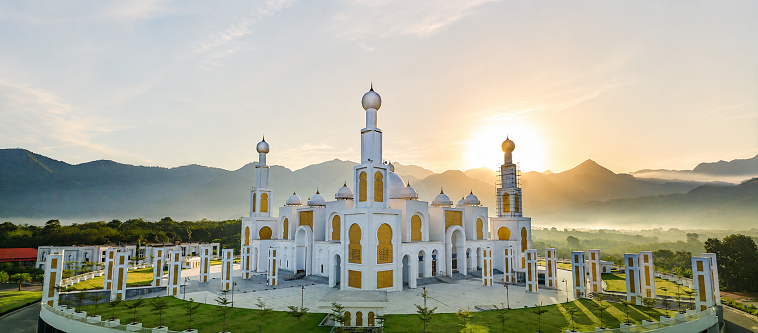
- Jami'ul Futuh, the Grand Mosque at Markaz Knowledge City (Image: Facebook)
The influence of the Arab world is equally evident in Kerala's evolving food culture. Today, Mandi, Shawarma, Al Faham, Kunafa, and many other Middle Eastern dishes have become everyday favourites across the state. Adapted with local ingredients and flavours, these foods represent a modern continuation of the culinary exchange that began centuries ago through the spice trade. Walking through the streets of Kozhikode, Malappuram, Kochi, or Kannur, visitors can experience vibrant Arabian restaurants, cafés, and bakeries that celebrate this living connection.
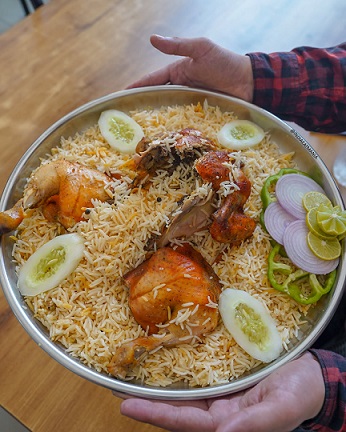
- Kerala-Style Chicken Mandi (Image: Facebook)
Modern Kerala has also emerged as a centre of Islamic education with internationally recognised institutions such as Darul Huda Islamic University, Markaz Saqafathi Sunniyya, Ma'din Academy, Jamia Nooriyya, Al Jamia Al Islamiya, and JDT Islam, many of which maintain strong academic and cultural links with the Arab world.
Even everyday lifestyles reflect this enduring relationship. Contemporary modest fashion, including the widespread use of the abaya, changing architectural styles, Arabic calligraphy, and Gulf-inspired commercial spaces all demonstrate how Kerala continues to embrace and reinterpret Middle Eastern influences while preserving its own cultural identity.
Through City Heritage's curated experiences, visitors can explore both the historic foundations and the modern expressions of Kerala's Indo–Arab relationship—discovering how a friendship that began across the Arabian Sea over two thousand years ago continues to shape the culture, heritage, and everyday life of Kerala today.
Welcome to Kerala—where over two thousand years of Indo–Arab heritage continue to shape everyday life.
Journey with City Heritage to explore the stories, traditions, architecture, cuisine, and communities that keep this extraordinary legacy alive.
Visit us and Contact:
Visit: www.cityheritage.in
Email: mail@cityheritage.in
Instagram: cityheritage.in
Phone: +91 7356569573, +91 8377024979




 (1).png)
© Copyright 2026 City Heritage. All rights reserved.
Website designed by TNM Online Solutions.
If you have any enquiry, feel free to ask, and we'll provide you with a prompt and concise response.