
Yasin Asharaf P | Published on 03/02/2026
The Sea: Where the Story Begins
The sea, which covers the vast majority of our living planet, is known as the origin of all life on Earth. It is also from the sea that the story of Uru began. From the very origins of humankind, humans have been deeply connected with the sea, which accounts for two-thirds of our world’s surface.Across early civilizations, humanity’s relationship with the sea is clearly evident.
Accounts from the Abrahamic religions, particularly the story of ‘Noah’s Ark’, reflect the early history of wooden ship construction. Early societies depended on the sea for fishing and maritime trade. Initially, they used simple wooden rafts for fishing, and later began experimenting with wooden structures capable of traveling across the sea.
Inspired by the effortless movement of fish through water, early boat builders shaped their vessels accordingly. Over time, these experimental wooden forms evolved into sophisticated seafaring crafts—one of which would later be known as the Uru, or dhow.
As maritime trade expanded, connecting distant lands and cultures, vessels like the Uru flourished. The Greeks, Romans, Mesopotamians, Egyptians, Arabs, and Chinese undertook long sea journeys for trade and exchange. It can be understood that with the beginning of these maritime trade activities, the flourishing era of the Uru(Dhow) also began around the world.
Beypore: A Maritime Crossroads of the Indian Ocean
Identified by many historians with the ancient port of Tyndis, the Beypore–Chaliyam–Kadalundi region in Kozhikode district of Kerala was one of the earliest and most important maritime centres on the Malabar Coast, second only to Muziris in trade with the Roman world. Classical sources such as Pliny the Elder, the Periplus of the Erythraean Sea, and Ptolemy describe Tyndis as the northern gateway to Limyrike, a pepper-rich region that formed the backbone of Rome’s Indian Ocean commerce.
From the early centuries CE, Beypore welcomed Roman, Arab, Chinese, and later European traders, evolving into a vibrant port town shaped by the movement of goods, people, and ideas. With the rise of Arab trade networks, Beypore became closely linked to ports in Yemen, the Red Sea, and the Persian Gulf, contributing to the early spread of Islam along the Malabar Coast. Nearby Chaliyam is traditionally associated with some of the earliest mosques in the Indian subcontinent, reflecting these deep maritime connections.
During the medieval period, Beypore was governed by the Parappanad royal family under the Zamorins of Calicut and functioned as a semi-free port with minimal trade restrictions. Its strategic location and abundant timber established Beypore as a major centre of shipbuilding, a tradition that flourished from ancient times and expanded through the centuries. This long maritime history laid the foundation for the world-renowned Beypore Uru, making the port city a living testament to Malabar’s oceanic heritage.
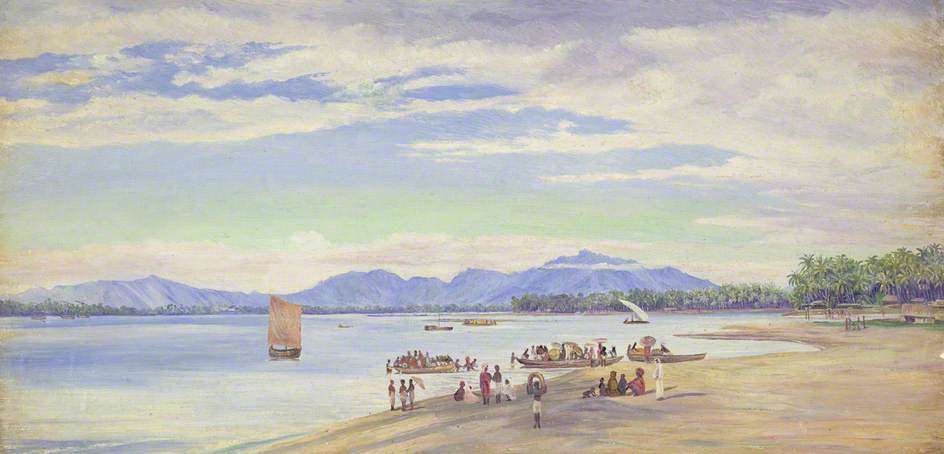
'Beypore - A Painting by Marianne North (1830–1890)
Where It All Took Shape: The Beypore Uru Yards
As we walked into the Uru-making yard at Beypore in Kozhikode, we reached the meeting point where the Chaliyar River embraces the Arabian Sea. As Sathyan Edathodi, the master craftsman (Mestary), reminds us “Beypore has been a centre of Uru construction for centuries.”
Uru-making at Beypore carries a legacy stretching back nearly 2,000 years, beginning in the early centuries AD. The exact origins of the Uru (dhow) are lost to history, though most scholars believe it originated in India between 600 BC and 600 AD. In those days, Urus were not symbols of luxury but lifelines of survival and exchange. “They were used for trade, transportation of goods, and fishing activities,” Sathyan recalls. “Only in recent times has Uru-making shifted towards luxury and tourism.”
The Chaliyar River played a decisive role in shaping this tradition. Its waters carried teakwood from Nilambur and the dense forests of Malabar, delivering the finest timber required to build these massive vessels. This natural supply chain made Beypore a strategic hub—wood floated downriver to the yard, and once completed, the Urus could sail straight into the Arabian Sea, beginning long voyages through the Indian Ocean.
Trade links with the Arab world were deeply personal and enduring. “Arabs have a long history of trade relations with Beypore,” Sathyan says. “In our childhood, Arab traders used to come here as seamen, captains, and they were also the owners of the Urus.” They arrived carrying dates and returned with spices, rice, and other treasures of the Malabar coast—cementing Beypore’s place in the maritime history of the Indian Ocean.
For centuries, the Yemeni Hadhrami people and Omanis travelled to Beypore in Kerala, India, to commission their dhows. This was due to the abundance of high-quality timber from Kerala’s forests, the availability of strong coir rope, and the exceptional skill of local shipwrights. In earlier times, the planks of a dhow’s hull were stitched together using coconut fibre rope.
Historically, Beypore was not alone. “Ponnani and Kannur were also the centres of Uru construction,” Sathyan notes. “Today, only Beypore remains.” This makes the yard not just a workspace, but the last living stronghold of an ancient craft.
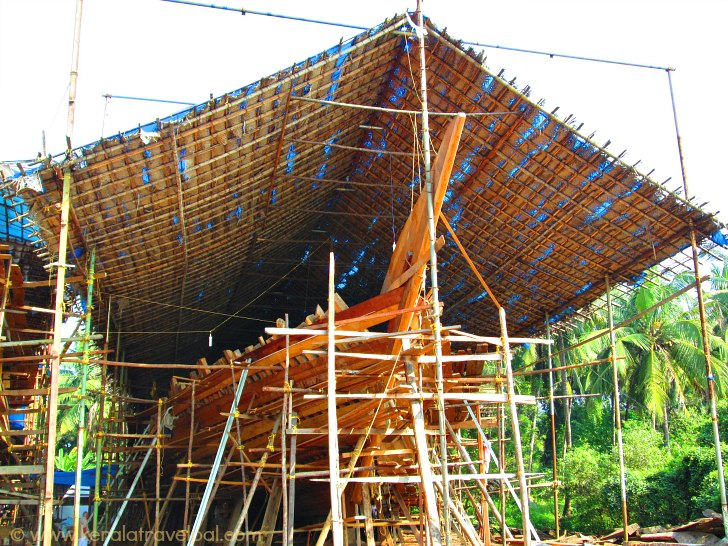
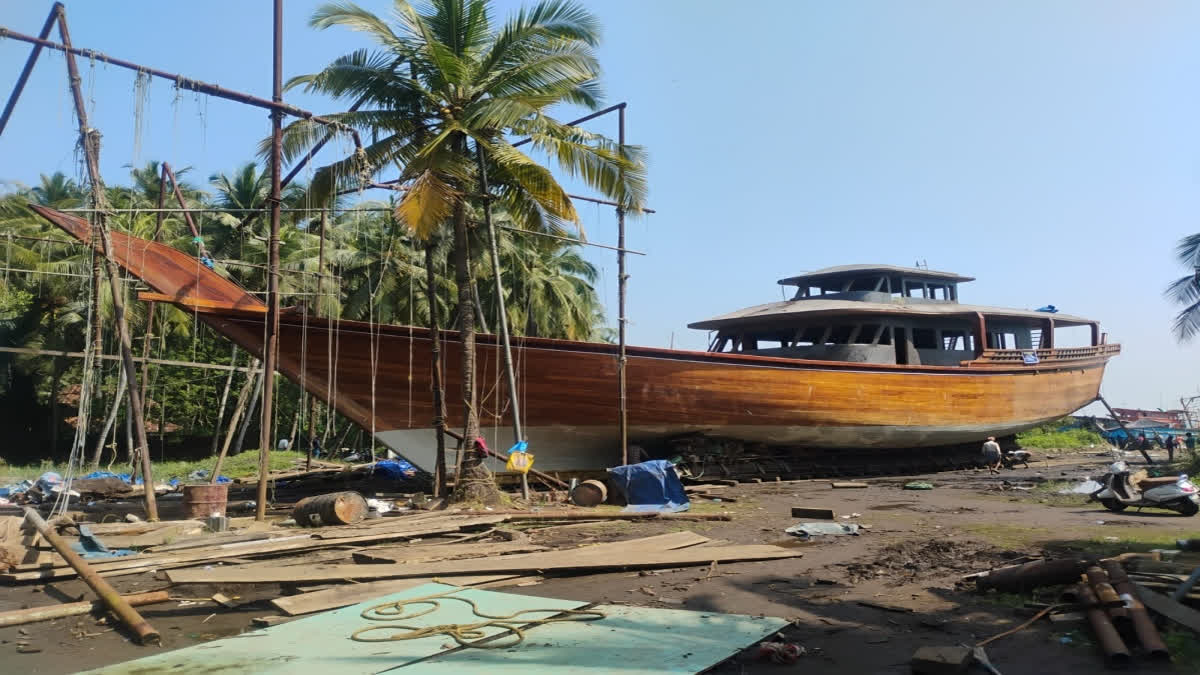
Beypore Uru Yard
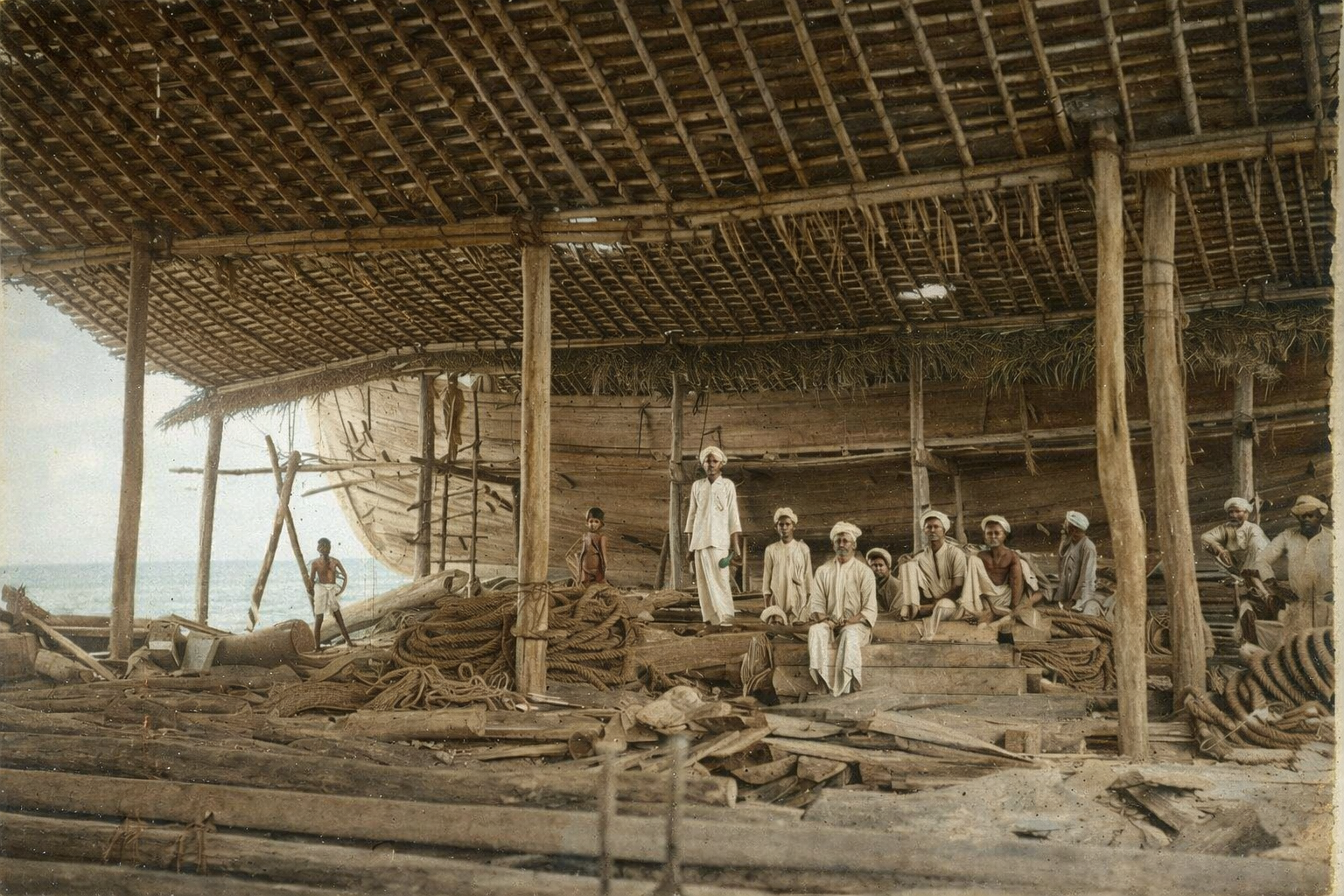
The yard itself is far from a modern, polished facility. Nestled beneath towering trees and coconut palms, it feels raw and elemental. Yet the sheer scale of the Urus taking shape here is awe-inspiring. Teams of skilled craftsmen work patiently on different parts, and through a slow, deliberate process, a massive vessel gradually emerges.
There are no blueprints or written designs to be seen. Instead, guided entirely by the wisdom of the Mestarys, each Uru is born from memory, experience, and collective knowledge passed down through generations—standing as a powerful reminder of the brilliance of this living craft tradition.
The Craft of Uru Making
Sathyan Edathodi, a native of Beypore, stands today as one of the last master craftsmen of the legendary Uru-making tradition of Malabar. In his early sixties, he is the Chief Craftsman of the Uru Yard run under the name Alsafeena Enterprises, located on Cheruvannur Road, Beypore. His journey with the Uru began in 1983, guided purely by practice, patience, and ancestral wisdom. Today, the eleventh Uru under his leadership is taking shape.
In the 1990s, Sathyan carried this heritage beyond Indian shores to Qatar, where he worked until 2011. During those years, he was involved in the maintenance of nearly ten Uru vessels and constructed Urus of different forms for various clients. Around ten to fifteen Urus were built in Qatar during that period, marking an important chapter in the global journey of Beypore’s traditional craftsmanship.
“When a client orders an Uru, only the length is given. We do the remaining calculations.”
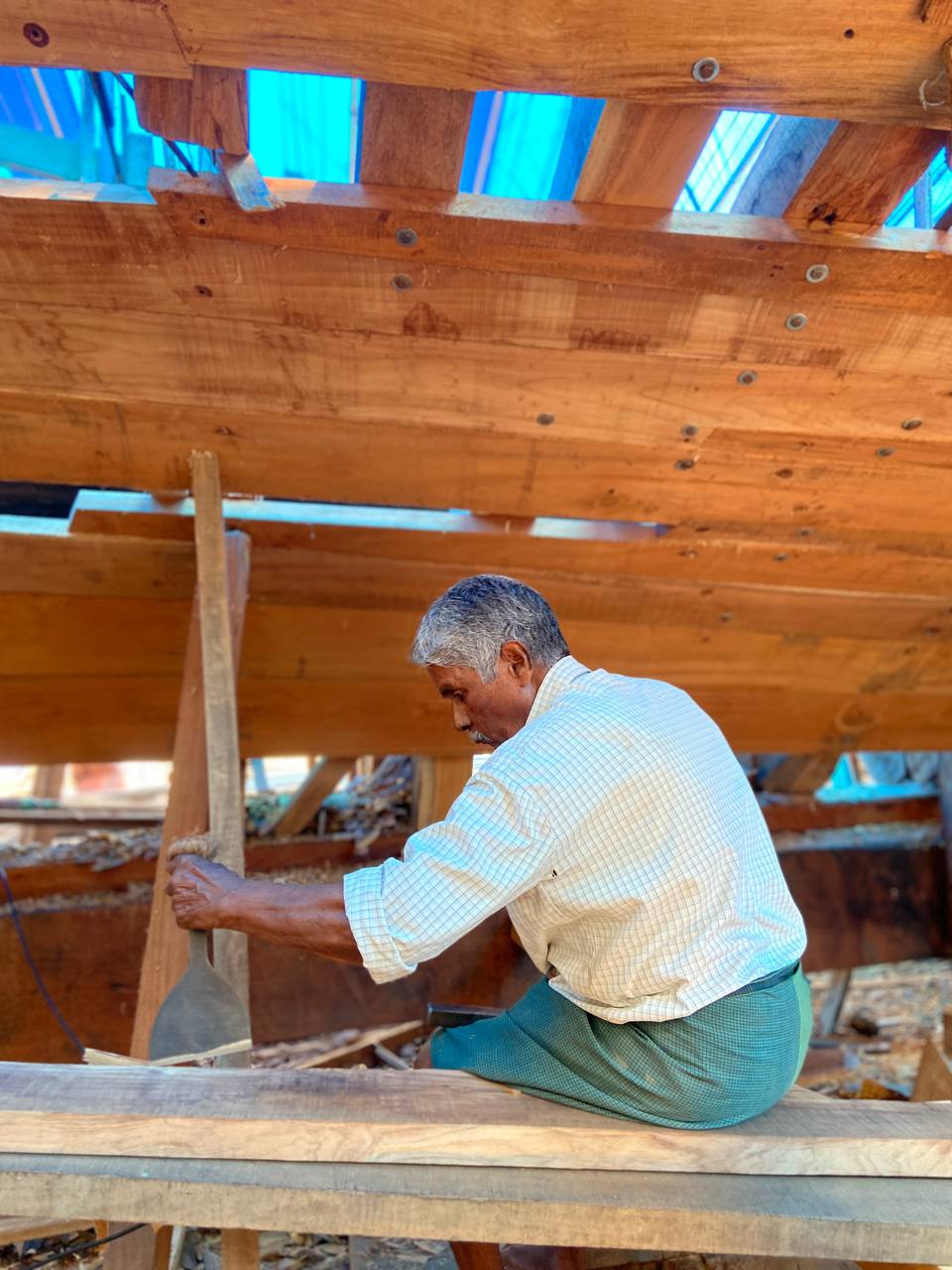
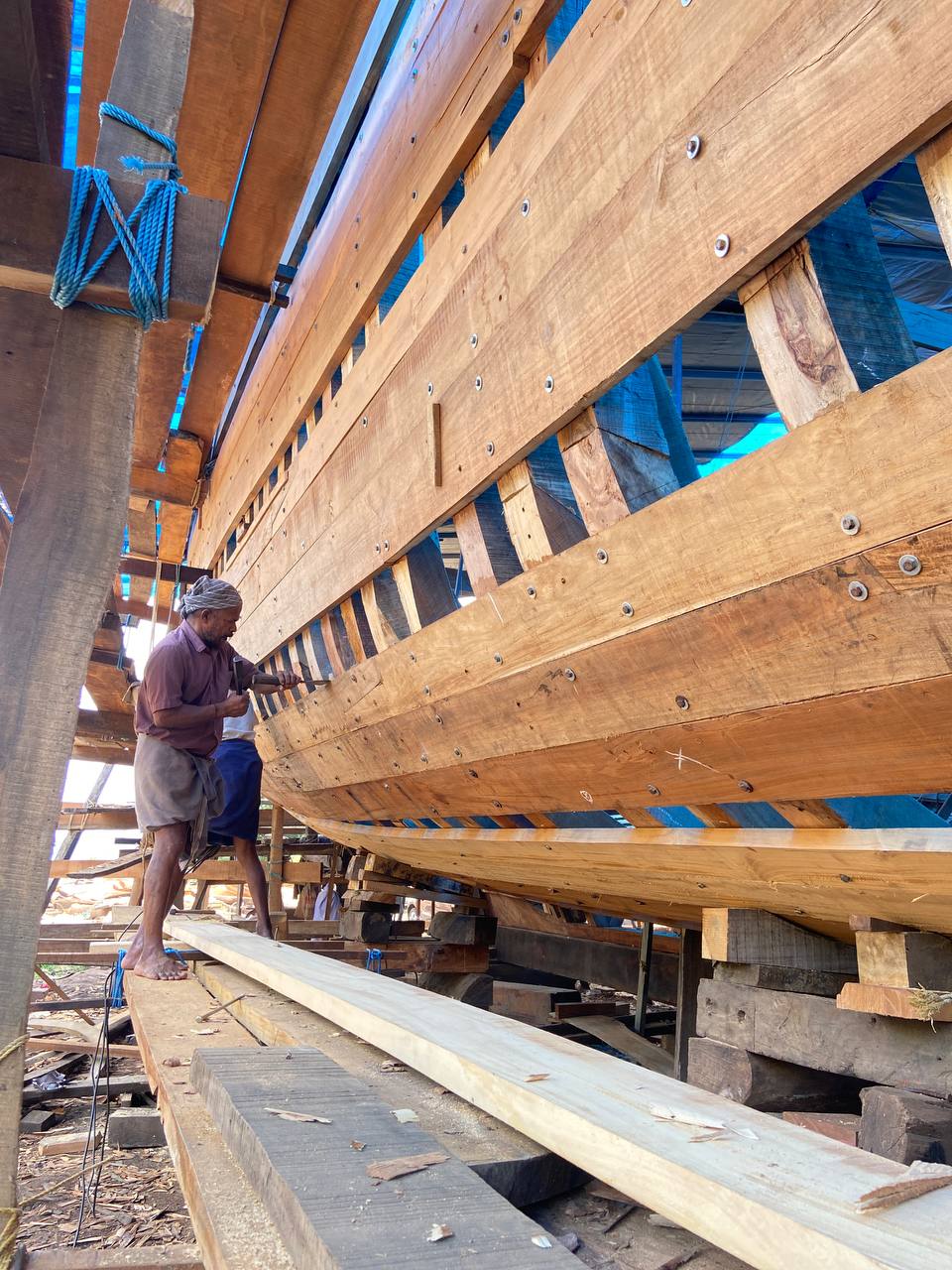
The craftsmen of Beypore are skilled in designing and constructing a wide range of traditional wooden dhows, or Urus, including Boum, Sambuk, Jalboat, and Batil. Uru construction follows a strictly custom-made process, with vessels built one by one according to client orders. Today, most requests come from the Middle East, primarily for luxury and tourism rather than trade. The present Uru under construction is commissioned by the Al-Kuwari family of Qatar, a prominent and influential family with members holding key roles in government, diplomacy, culture, and business. Earlier, the team had also built Urus for the Al-Sada family of Qatar.
“Construction began in July 2024, with a contract period of one year. Fifteen permanent, highly skilled craftsmen are engaged in the work. The Uru under construction measures 105 feet in length, and the estimated cost—including engine installation—is approximately ₹4 crore. The final cost, however, will be determined upon completion.”
Jishnu, Sathyan’s son, who is actively involved in the shipyard, explains the process and craftsmanship behind the Uru currently under construction.
They recently completed a 140-foot traditional wooden Sambuk (Uru), measuring 33 feet in beam and 12.5 feet in moulded depth. Custom-built for Mr. Ahmed Hussain Al Al Sada of the Al Sada Group, Qatar, the vessel is a private commission that seamlessly blends heritage craftsmanship with technical precision. More than a seaworthy craft, this Sambuk stands as a statement of personal legacy and enduring maritime tradition.
There was a time when nearly 200 craftsmen worked in the yard, during the period when Sathyan’s grandfather led the enterprise.
“It’s a team effort. There is no hierarchy here. Everyone knows the entire work, including the seniors in the team.”
The knowledge behind Uru making is entirely practical, passed down orally through generations.
“Our ancestors taught us the methods of calculation. Whatever the length may be, we can calculate the remaining dimensions.”
The proportions are determined mentally: the width is one-third of the length, and the height is half of the width. With this ancestral logic, the craftsmen shape vessels of any size without written drawings or digital plans.
Creativity plays a vital role in shaping each Uru. The exterior is built using teak wood, while the interior relies on local woods such as jackfruit, Karimaruth (Arjuna), and similar varieties.
“Now it’s difficult to get trees locally. We import from other states and countries. There was a time when we were exporters of wood. The teak from Nilambur and the forests of Malabar was the best in the world.”
The base of the Uru is constructed using Malaysian Kwila wood, known for its strength and durability. Teak is currently sourced from regions like Muvattupuzha, Kannur, and Kalady. Construction always begins from the base, which is made exceptionally strong to ensure balance. The long central beam forming the backbone of the vessel is called the ‘Keel’ or ‘Pandi’ in Malayalam and is crafted only from thick, sturdy trees.
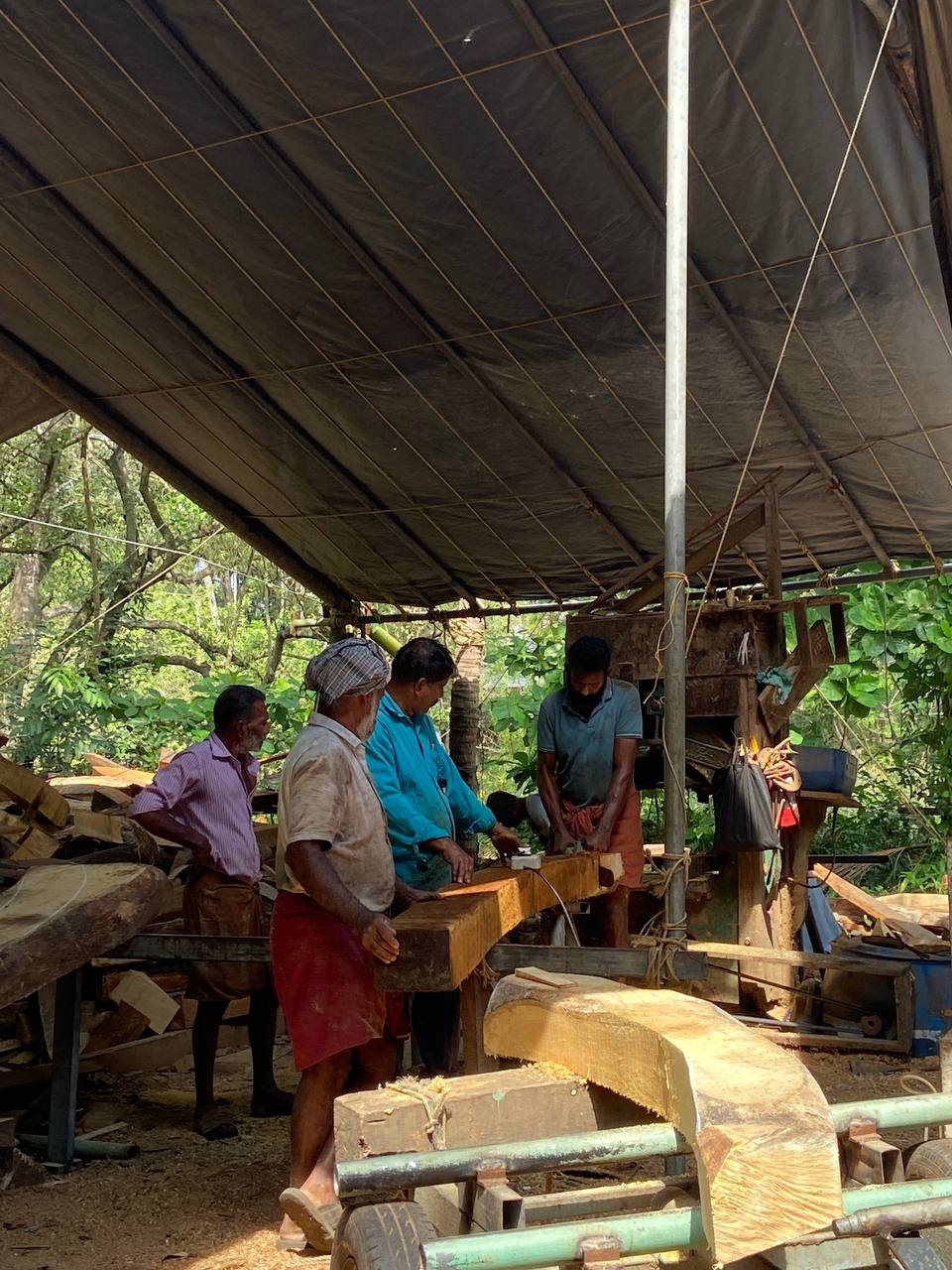
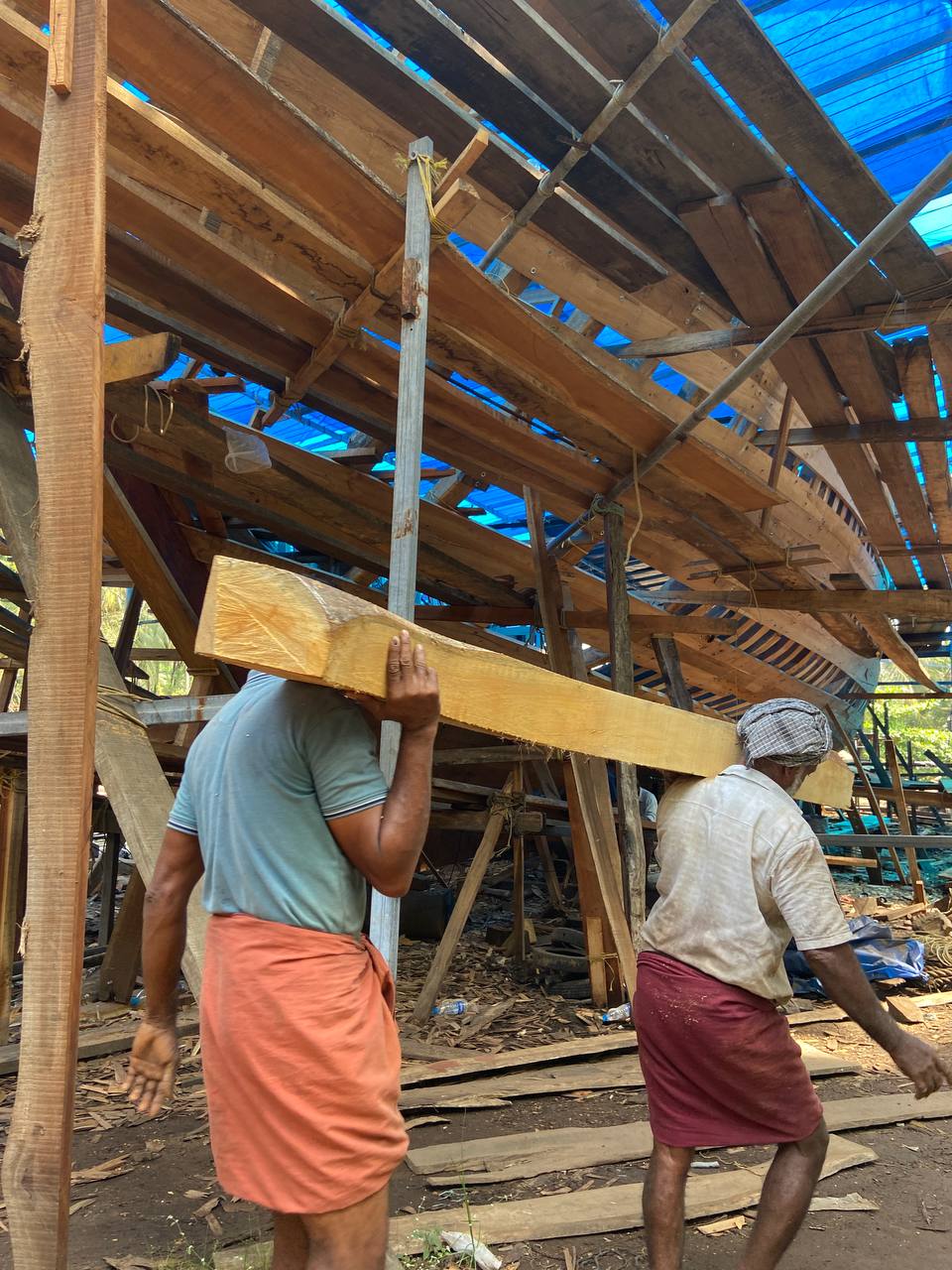
Naturally bent wood is preferred for the curved sections. If such wood is unavailable, straight timber is carefully cut and shaped. While modern electric machines are now used for cutting, drilling, and planing, the essence of the work remains unchanged.
“When we were kids, there was no electricity. We worked at night under the light of petromax kerosene lamps.”
The craft demands immense skill and caution.
“Without proper practice and experience, this work can injure your eyes, teeth, face—everything. The wood tightens with clamps and can strike your face.”
Traditionally built Urus are known for their longevity.
“An Uru can live for more than 100 years, but modern ships last only 40 or 50 years.”
In earlier times, Urus sailed purely with the power of wind. Today, engines have been introduced, yet the soul of the vessel remains deeply rooted in tradition. Each Uru that emerges from Beypore is not merely a boat—it is a living testament to centuries of maritime wisdom, collective craftsmanship, and the enduring legacy of families like that of Sathyan Edathodi, who continue to shape history with wood, and the memory.
Kalpath (Coking): The Traditional Art of Waterproofing
In the timeless craft of building the majestic wooden vessels of Beypore — the famous Uru — every stage carries centuries of inherited wisdom. Among these traditions is Kalpath, also known as the Coking Method, an age-old technique used to make the vessel completely waterproof before it touches the sea.
Kalpath is more than a technical process; it is a ritual of craftsmanship passed down through generations of master shipbuilders. Though similar techniques exist in different maritime cultures across the world, the Beypore method carries its own unique character.
The process begins with soft cotton fibers, carefully soaked in a rich blend of coconut oil and fish oil, traditionally including shark oil. This oil-infused cotton is then pressed deeply into the narrow seams and gaps between the wooden planks of the vessel, sealing the tiny spaces that could otherwise allow seawater to enter.
But the process does not end there. To strengthen the seal, craftsmen prepare another remarkable ingredient. Frankincense is slowly burned and melted until it transforms into a thick, aromatic resin. This molten mixture is then carefully pasted as a protective layer that hardens with time.
Together, the oil-soaked cotton and the resinous frankincense create a powerful natural barrier — allowing the great wooden Uru to face the endless waters of the Arabian Sea with strength and resilience.
From Shore to Sea: The Launching of the Uru and the Strength of the Khalasis
For months — sometimes years — the great wooden Uru takes shape on the sandy shores of Beypore. Plank by plank, the vessel rises under the hands of skilled craftsmen. But the final and most dramatic moment of its journey is still to come: the launch, when this enormous wooden dhow must travel from the shore into the waters of the Chaliyar River.
Preparing for this moment is itself a carefully planned craft. At the base of the Uru, large wooden planks are arranged to create a sliding path. Beneath the vessel, two massive wooden rollers are placed on either side, forming the main support. Between them, dozens of smaller wooden rollers known as Tharikas are positioned. These act like moving bearings, allowing the immense weight of the vessel to roll forward slowly.
As the movement begins, the weight of the Uru gradually settles onto the two large rollers, while the smaller rollers beneath help guide the motion. One by one, the earlier supports are removed, leaving the great vessel balanced on the rolling logs that will carry it forward.
Thick ropes are then secured on both sides of the Uru and connected to large wooden wheels called Balus. Standing beside them are the Mappila Khalasis — the legendary dockyard workers of Beypore, known for their extraordinary ability to move immense weights using little more than skill, rhythm, and physical strength.
With coordinated effort, the Khalasis begin to rotate the Balus. As the wheels turn, the ropes tighten, and the massive Uru slowly begins its journey. Inch by inch, the vessel rolls forward over the wooden logs. Whenever the Uru moves ahead, the rollers and the position of the Balus are carefully adjusted, ensuring the movement continues smoothly.
This is not a quick process. Moving such a colossal wooden ship can take nearly three days before it finally reaches the waters of the Chaliyar River.
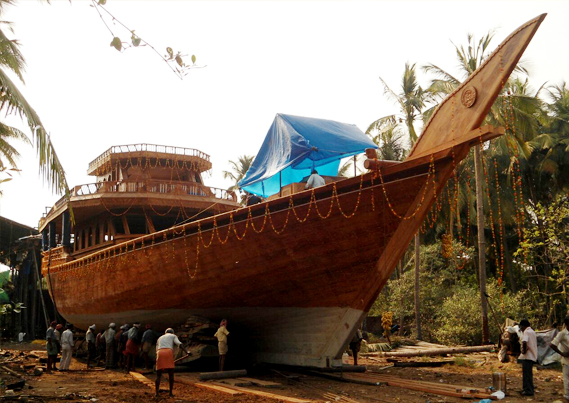
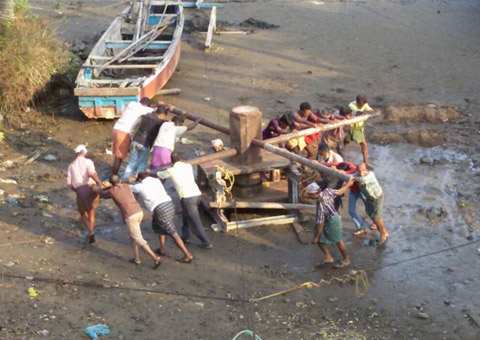
The launching of Uru
The launching of an Uru is always a moment of celebration. Crowds gather along the shore to witness the spectacle — a tradition that has lived on for centuries. The Khalasis, sometimes also called Manchukkar (a term derived from mancu, meaning “large vessel” in the northern Malabar dialect of Malayalam), work together in perfect rhythm.
As they pull, push, and turn the heavy wheels, the air fills with chants and verses — poetic shlokas, Arabic lines, Hindi couplets, and local dialect songs. The voices rise and fall with the movement of the ropes, turning hard physical labour into a powerful rhythm of community and tradition.
Eg. for such native songs are:
Hele maali ….. yaa Allah
O bala maale …. aisaa
amaram thattikkodu … aisaa
randu koodi thttikkodu … aisaa
porattangane … aisaa
O’ thinabe … aisaa
aalaath thangale … aisaa
othorume pidikkeda … aisaa
Another one is : Allahu Rabbee … ya Allah
Ya Rabbi swallee … yaa Allass
Swallee swalathee … yaa Allass
Moosa bhayee … yaa Allass
Aalath lingaru … yaa Allass
hele maalee … yaa Allass
Aalee maalee … yaa Allass
One more is : Jorse … yaa Allaah
Jallaa … jorsee
Jallaa jorse… maalee jorsee
And then, after days of effort, the moment finally arrives. The great Uru gently slides forward, touches the water of the Chaliyar River, and slowly begins to float — ready to begin its life upon the sea, carrying with it the strength, skill, and spirit of the people who built it.
M/S. Haji P. I. Ahamed Koya (HPIAK) Company & The Uru Museum in Calicut:
Founded in 1885, M/S. Haji P. I. Ahamed Koya (HPIAK) - the Dhow Construction Company began as the vision of Kamakantakath Kunhammed Koya Haji — a renowned timber merchant and commission agent whose name echoed across Calicut and the Arab world. At a time when the sea was the great highway of trade, he built not just ships, but trust, craftsmanship, and enduring relationships across shores.
After his demise, his son, Haji P. I. Ahamed Koya, took charge in 1919, carrying the legacy forward with the same spirit and dedication. Over the past century, the company has nurtured deep and lasting connections with Arab businessmen and royal families from Kuwait, Bahrain, Qatar, UAE, Oman, Iran and beyond. Their mastery in crafting traditional wooden dhows — majestic booms and elegant sambouks — continues to be admired across the Gulf waters.
On the banks of the Chaliyam River, where it meets the Arabian Sea, their dhow yard stood as a symbol of heritage and maritime excellence. From this sacred confluence of river and sea, magnificent vessels were born — including a grand 150-foot ‘Sambouk’ dhow built for His Highness Sheikh Tamim bin Hamad Al Thani, the Amir of Qatar. Even today, the legacy sails on, carried by timber, tide, and timeless craftsmanship.
An Arab Warehouse, Now a Dhow Museum in Calicut
Nearly a century ago, the shores of Kozhikode was alive with the rhythm of trade. Along the Arabian Sea stood the Arab Pandyala—the Arab warehouse—built around 1885. It was more than a building; it was a meeting point of oceans and cultures. Arab traders in white turbans moved through its corridors, while their majestic wooden Urus lay anchored along the coast. Nearly seventy great vessels rested offshore, and smaller boats ferried goods between sea and shore.
Time, however, changed the tides. By the 1960s, the era of Arab maritime trade through the Kozhikode Seashore had faded. The grand Urus no longer lined the horizon as they once did, and the warehouse slowly slipped into silence and neglect.
Years later, Hashim, son of Ahmed Khoya, saw not a forgotten structure—but a story waiting to be retold. Inspired by the Dhow Museum in Muscat, he dreamed of creating a similar space in Calicut, where the timeless legacy of Beypore’s Uru craftsmanship could be honoured. He travelled across the Gulf, to Kuwait, Africa, and Iran, tracing archival records and maritime memories of the Beypore Uru that once sailed the world’s oceans.
Piece by piece, he gathered rare photographs, historic documents, and remarkable narratives. What was once the Arab warehouse was transformed into India’s first Dhow Museum. Within its walls, you can see intricate models of traditional vessels—the ‘Sambouk’ and cargo vessels used for trade and fishing, the ‘Baglah’ that once dived into deep seas for pearls and coral. Each model carries the spirit of the craftsmen who shaped wood into ocean-going giants.
“The company has a centuries-old history of dhow construction, and it must be shared with the next generation,” Hashim says.
In just 300 square feet, the museum preserves two thousand years of maritime heritage—models of Urus, naval tools, manuscripts, old photographs, and even a miniature replica of the original Arab warehouse. It tells the story of ancestral craftsmanship that still breathes along this coast.
As you walk down Beach Road towards Kuttichira, a quiet door opens—leading you not just into a museum, but into the living memory of the Arabian Sea.
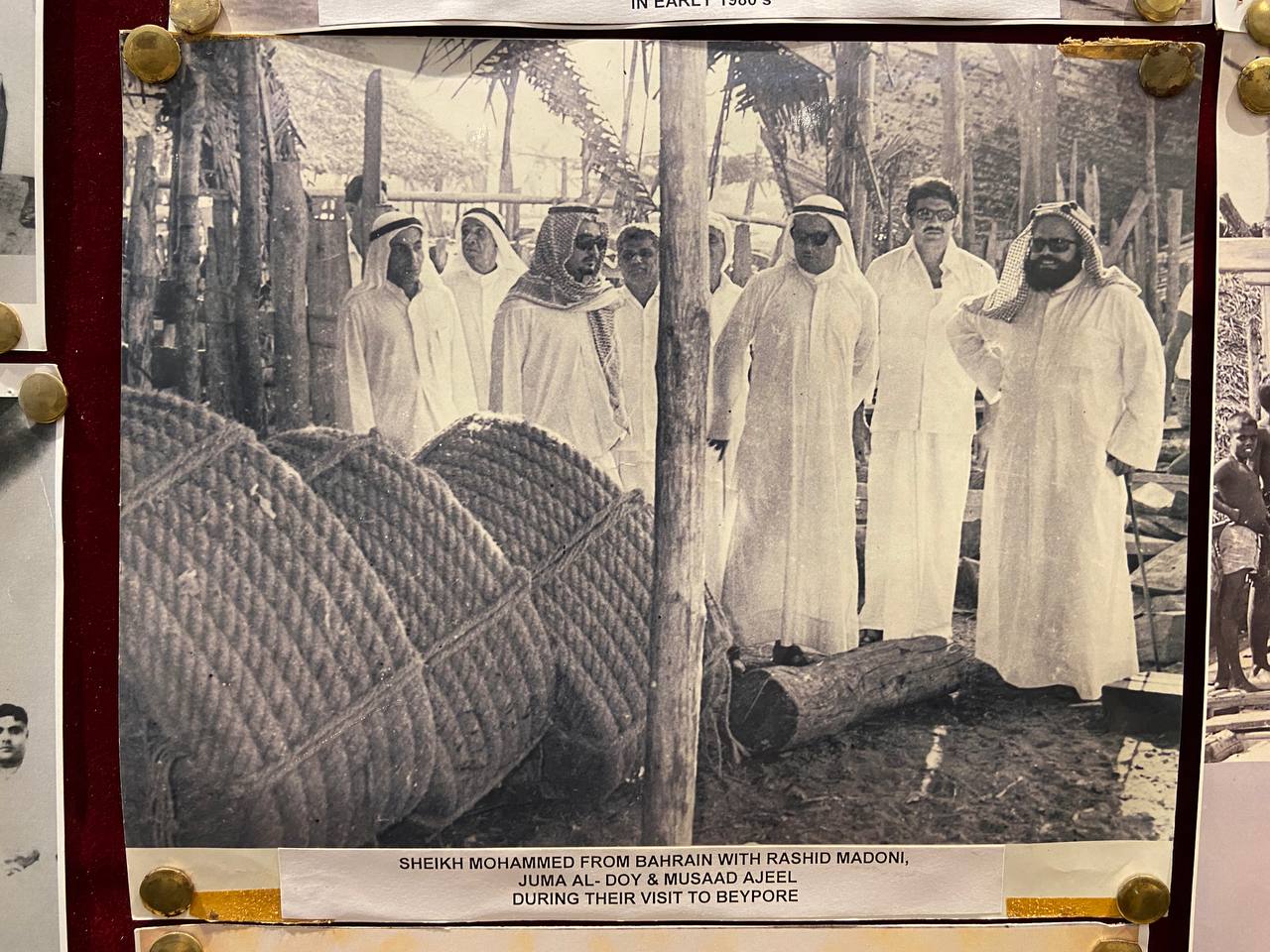
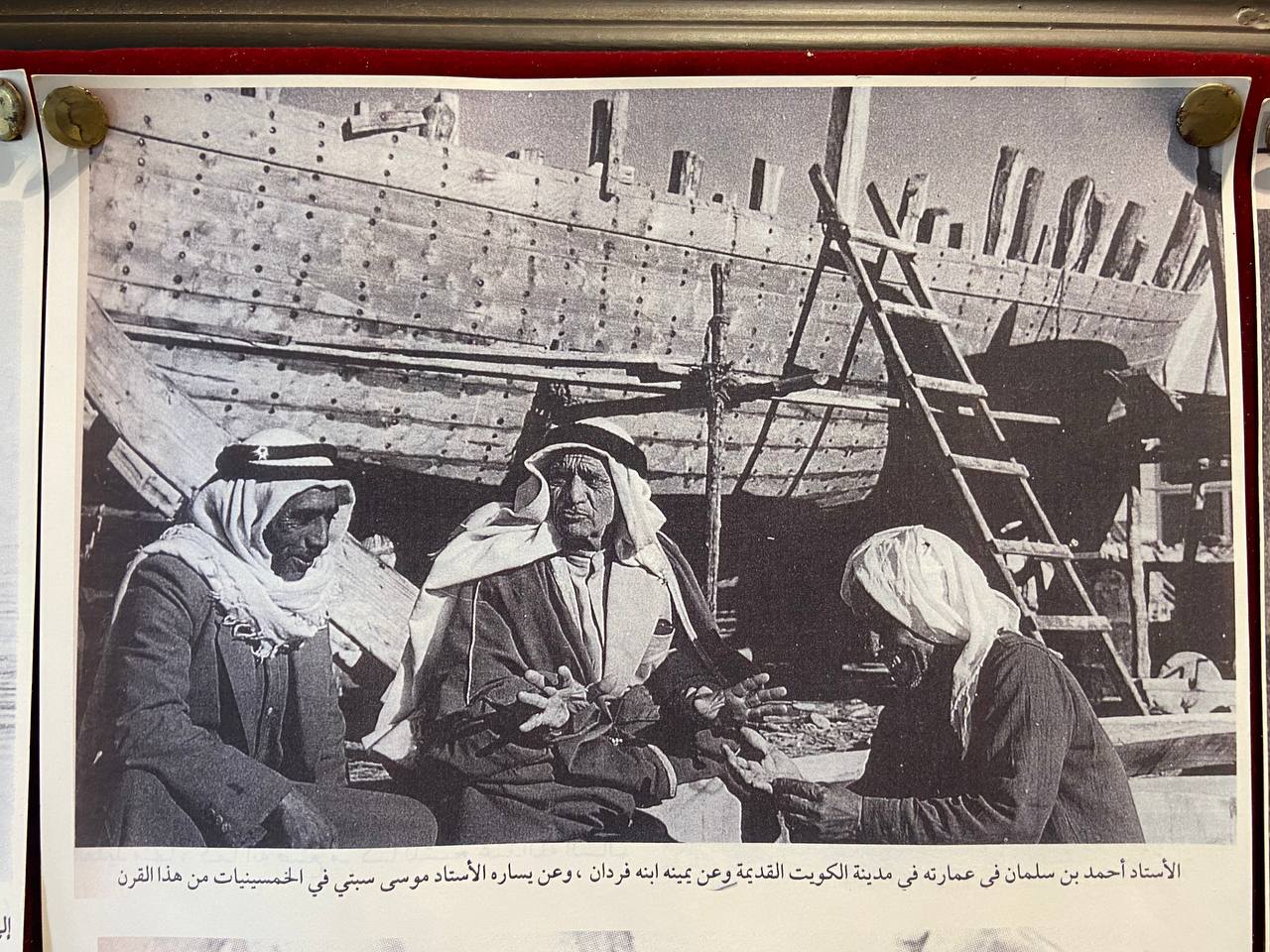
Old Images from Dhow Museum in Calicut
Arabs and a Shared Maritime Legacy
Arab traders have shared deep maritime ties with Kerala for centuries. During the reign of the Zamorins of Calicut, these connections flourished, as the rulers extended protection and patronage to Arab merchants. This enduring relationship shaped the cultural, commercial, and seafaring identity of the Malabar Coast.
That legacy continues today in the historic Uru shipyards of Beypore. Arabs remain the principal patrons of Urus, though their purpose has evolved over time. Once vital vessels of oceanic trade, Urus are now primarily commissioned for luxury, leisure, and cultural tourism, especially by buyers from the Middle East and Dubai.
Today, most luxury Urus are built for Arab families—reflecting not only a sense of heritage pride, but also deep admiration for the aesthetics, craftsmanship, and legacy embodied in these wooden vessels.
As Sathyan Edathodi recalls:
“Beypore Urus are still known across the world. In the 1990s, when I was working in Qatar, I maintained an Uru that had been built in Beypore. The vessel still carried the name and address of the family who built it, along with its launch date from Beypore. By then, it was already 95 years old.”
A striking example of Beypore’s global presence is the dhow ‘Bhagla’, built at Chaliyam in Beypore and later anchored at a FIFA World Cup venue in Qatar. Measuring 27 feet in length, the vessel was crafted entirely using traditional techniques—wood and coir rope—without any modern synthetic materials.
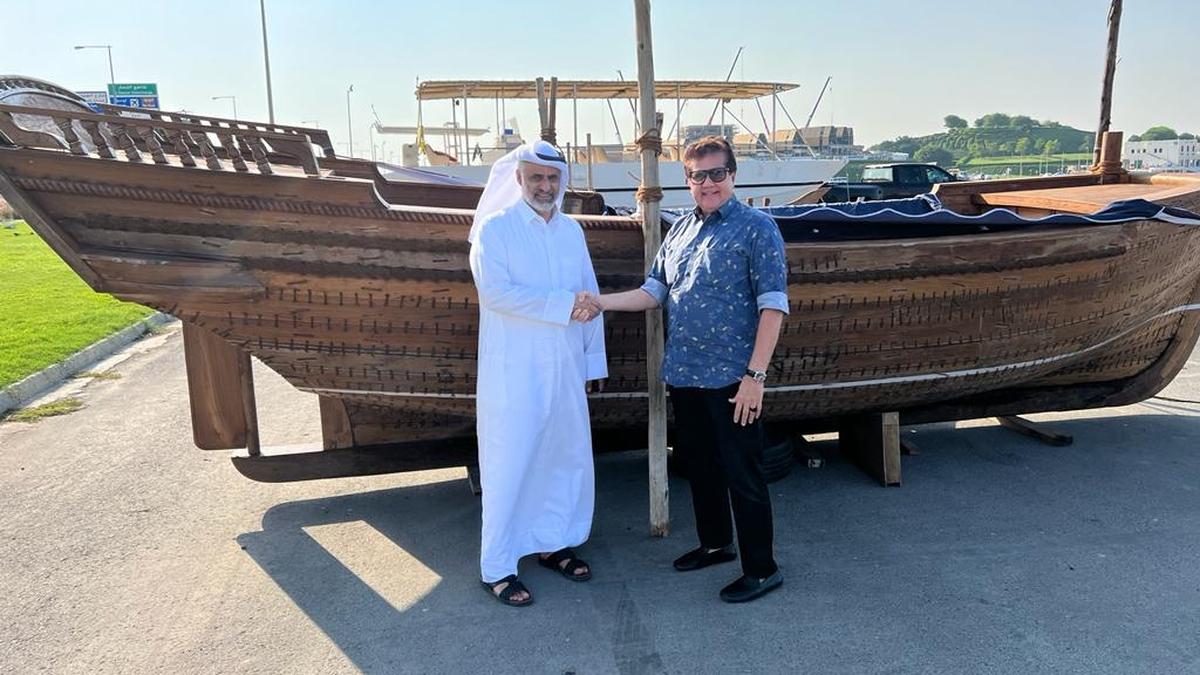
P.O. Hashim, MD, MS Haji PI Ahmed Koya, Kozhikode, handing over the dhow made by their company to Ahmed al-Hitmi, director, Katara beach department, in Doha, Qatar (Source: The Hindu)
Displayed as part of Qatar’s cultural celebrations, the Bhagla stood as a powerful symbol of the deep maritime bonds between the Arab world and the Malabar Coast. Its presence at a global event like the FIFA World Cup reaffirmed the international recognition of Beypore Urus and their enduring craftsmanship.
More than a vessel, it represented a living legacy—showing how Arab–Malabar relations continue to thrive today through the commissioning and purchase of Urus from Beypore, carrying forward a centuries-old connection from ancient trade routes to modern cultural platforms.
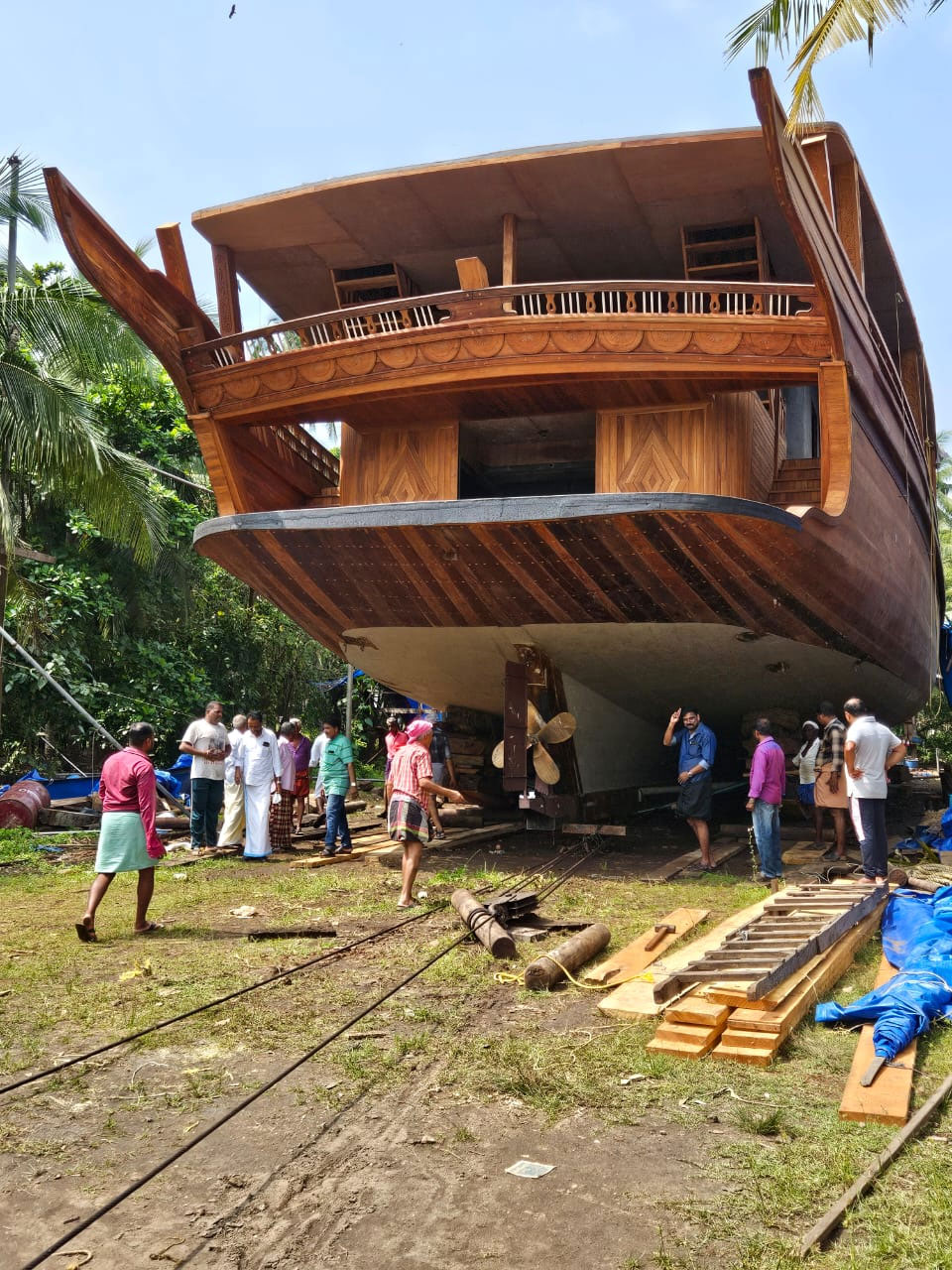
Recently built Uru for Mr. Ahmed Hussain Al Sada of the Al Sada Group, Qatar
Carrying the Legacy Forward
Today, many educated young people dismiss Uru-making as mere carpentry. As a result, very few choose to enter the craft, unaware of its depth, history, and cultural value. The Uru is far more than a wooden vessel—it is a living archive of maritime knowledge and collective memory.
Yet there are sparks of hope. Jishnu, Sathyan’s son, has embraced the profession with commitment and pride. For him, the Uru is not just a livelihood but a legacy.
“This should become a new kind of school for the next generation. The government must take the initiative,” says Sathyan.
Despite many challenges, the tradition survives. The future of the Uru now depends on whether this heritage can be valued, taught, and reimagined. With thoughtful integration of modern technologies and renewed public support, the Beypore Uru can continue to sail forward—not as a memory, but as a living heritage.
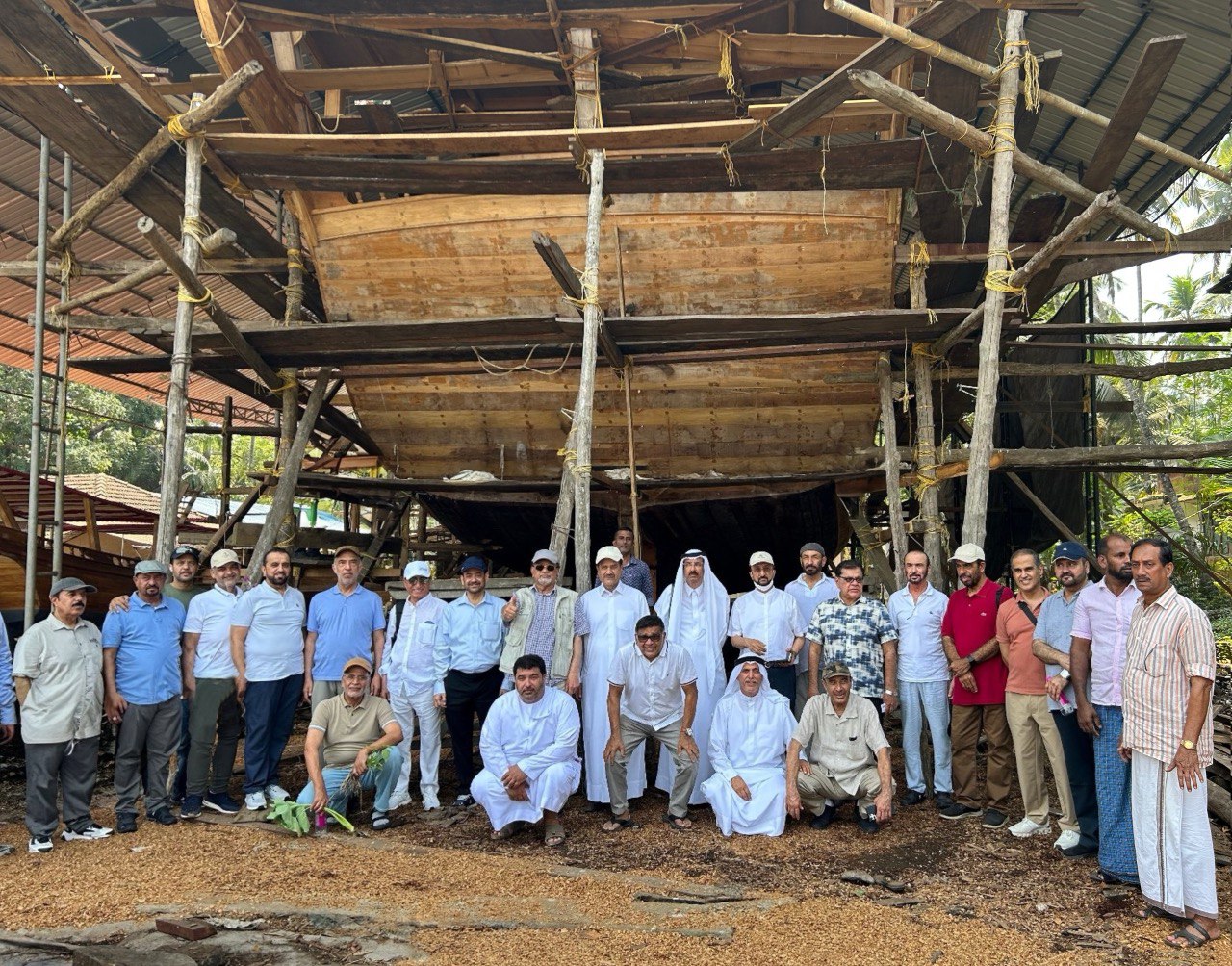
- An Arab team explore Chaliyam Uru Yard with City Heritage
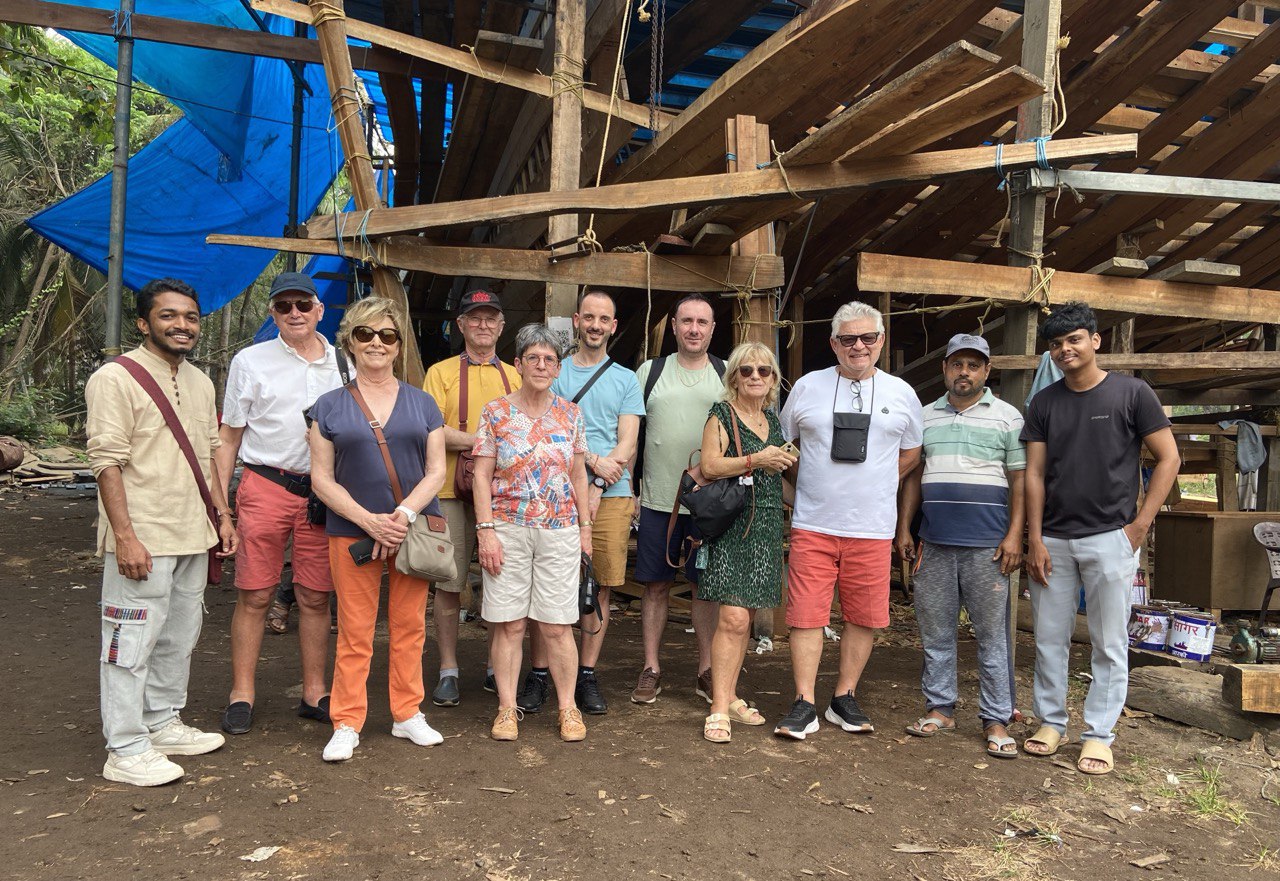
- A Team from France explore Beypore Uru(Dhow) Yard with City Heritage
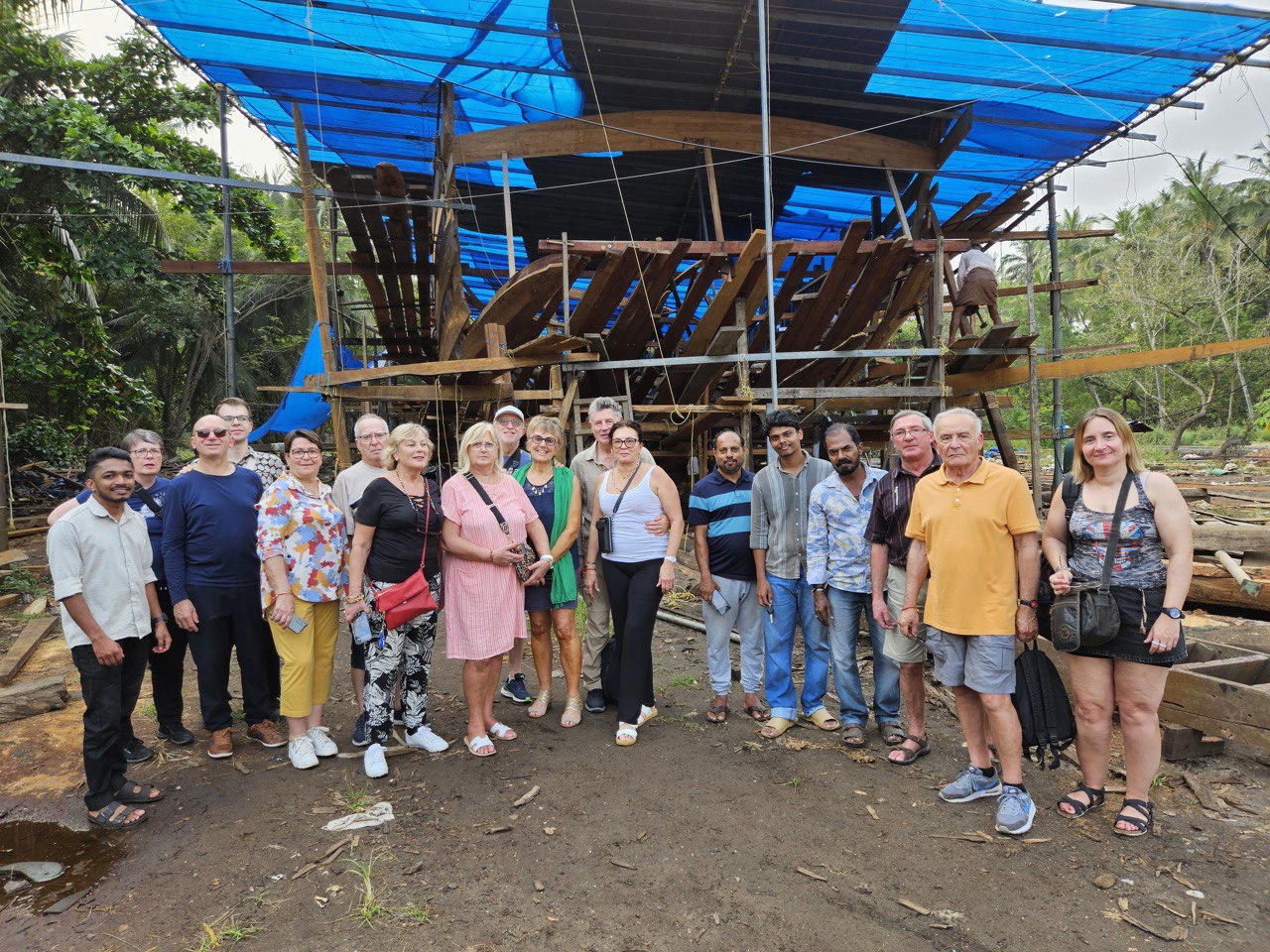
- Another Team from France explore Beypore Uru(Dhow) Yard with City Heritage
Dhow Construction Sites in Calicut
1. Beypore
2. Chaliyam
Dhow Museum in Calicut:
1. M/S. Haji P. I. Ahamed Koya (HPIAK) Dhow Museum (Private Museum- Permission Required)
Film:
1. Uru (Dhow) is a 2023 Indian Malayalam-language drama film written and directed by E. M. Ashraf
References:
1. BEYPUR URU PREVAILS: http://www.sahapedia.org/beypore-uru-prevails
2. THE ART OF URU MAKING: https://spaindustrialdesign.wordpress.com/2020/12/20/the-art-of-uru-making-the-largest-handcraft-in-the-world/
3. Ship(Uur) Building in Beypore: https://shameeralimankada.wordpress.com/2018/04/05/ship-uru-building-in-beypore/
4. A community on the move: Munchakkar- The Khalasis: https://www.ayurvedajournals.com/article/kr-sunil-seafarers-of-malabar-02
Beypore ‘Uru’ docks at FIFA World Cup venue Qatar: Mathrubhumi News:https://english.mathrubhumi.com/special-pages/fifa-world-cup-2022/beypore-uru-docks-at-fifa-world-cup-venue-qatar-qatar-cultural-international-dhow-festival-4574a794
5. Center for Uru Building Practice – Keeping Afloat a Traditional Craft of Shipbuilding in Kerala, India | Architecture Thesis:https://archidiaries.com/academic-projects/center-for-uru-building-practice-keeping-afloat-a-traditional-craft-of-shipbuilding-in-kerala-india-architecture-thesis/
6. Uru | History and Making of the World’s Largest Handmade Ship | afterImages | Documentary: https://www.youtube.com/watch?v=tkTTF8Fp4ns
7. Al Safeena Enterprises website: https://www.alsafinaenterprises.com/index.html
8. M/S. Haji P. I. Ahamed Koya (HPIAK) company website: https://woodendhow.com/
Visit us and Contact:
Explore the fascinating history of Beypore Uru (Dhow). Contact us for an unforgettable heritage walk & story telling.
Get in Touch:
Visit: www.cityheritage.in
Email: mail@cityheritage.in
Instagram: cityheritage.in
Phone: +91 7356569573, +91 8377024979




 (1).png)
© Copyright 2026 City Heritage. All rights reserved.
Website designed by TNM Online Solutions.
If you have any enquiry, feel free to ask, and we'll provide you with a prompt and concise response.