
Yasin Asharaf P | Published on 31/12/2025
A Glimpse into a Unique Royal Legacy: The Arakkal Museum
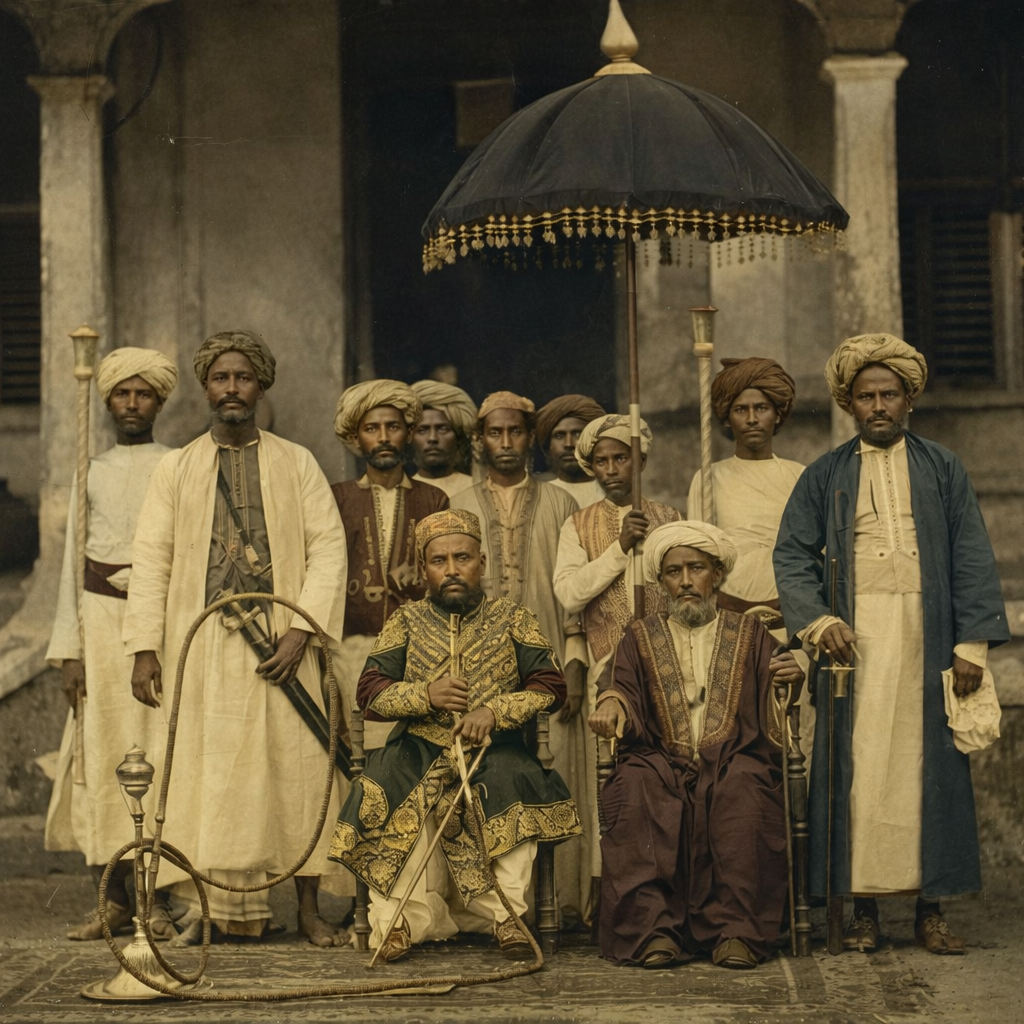
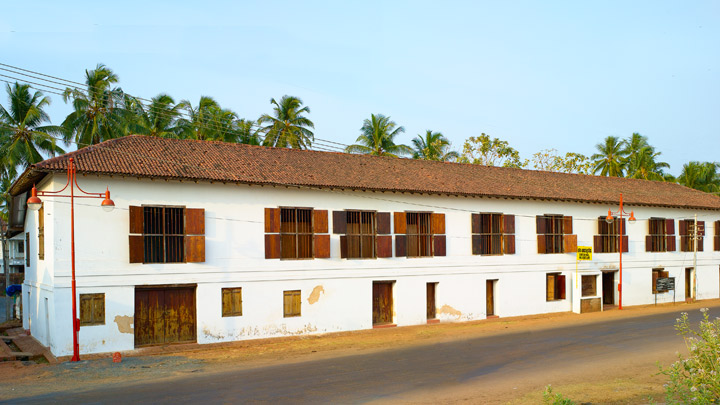
Welcome to the Arakkal Museum! a living tribute to Kerala’s only Muslim royal family and their remarkable legacy. Nestled within a section of the historic Arakkal Kettu, this museum invites you to journey through centuries of heritage, leadership, and maritime competence. The Arakkal Museum is dedicated to preserving and showcasing the heritage of the Arakkal dynasty, Kerala's only Muslim royal family. Housed within their ancestral palace, the museum offers an insight into the history of seafaring power, trade connections, and cultural harmony that defined the Malabar coast’s rich history.
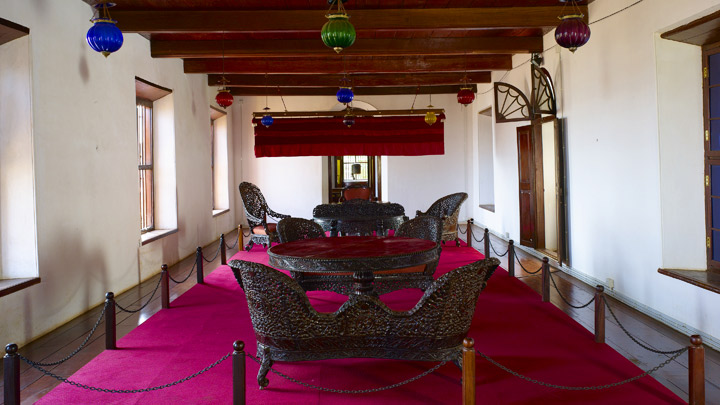
As you explore, you will discover artefacts that tell the story of the Adiajas and Arakkal Beevis—the male and female rulers of the dynasty. The collection includes royal copies of the Holy Quran, antique furniture, weaponry, and items that highlight their significant maritime and colonial trade connections. This museum stands as a symbol of the region's rich and diverse history.
A Brief History of the Museum
The Arakkal Kettu palace complex has been the official residence of the Arakkal family for centuries. The dynasty itself rose to prominence by the 15th century, ruling the region of Kannur and the Lakshadweep islands, with a legacy known for its unique matriarchal system of succession.
The museum was inaugurated in 2005, following a major renovation by the Government of Kerala. The Durbar Hall (the King's court) and the former administrative block were meticulously restored to create the museum you see today. While the museum is managed in partnership with the Arakkal Family Trust, surviving members of the royal family still reside in other parts of the palace, making this a living heritage site.
We invite you to step inside and journey through the history of this remarkable royal family.
The 'Arakkal' Kingdom: Kings of the Sea
Centuries ago, the waves of Malabar carried ships laden with pepper, cardamom, and silk — and at the heart of this bustling maritime world stood the Arakkal dynasty. This royal house was unlike any other in Kerala: not just for its faith, but for its unique matrilineal system, where power flowed through the women of the family. Arakkal dynasty followed a distinctive system of inheritance based on primogeniture. The eldest member of the family—regardless of gender—ascended the throne. Male rulers bore the title Ali Raja, while female rulers reigned as Arakkal Beevi, reflecting a legacy of inclusive and progressive leadership.
Legends of Origin
Every royal house begins with a legend — and the Arakkal story has two. One tale reaches back to the time of Cheraman Perumal, the last emperor of the Cheras. When Perumal embraced Islam and left for Arabia, he sent word to his beloved nephew, Mahabali. The young prince followed his uncle’s path, embraced Islam, and took the name Mohammed Ali — the first Ali Raja of Kannur. Through this story, the Arakkal dynasty tied its roots to Kerala’s most ancient royal bloodline.
Another legend is more intimate. Long ago, a princess of the Hindu Kolathiri royal family was saved from drowning by a kind Muslim merchant. Offering his mundu (cloth) to her, he unknowingly entered into a traditional marital bond. A new house was born from that act — one that would blend royal heritage with seafaring courage. Historians today suggest a more grounded version that the Arakkal rulers descended from the Arayankulangara Nair nobility who accepted Islam and rose as traders and naval powers under the Kolathiri kings — before stepping beyond their masters to rule in their own right.
The Power of Trade and the Sea
Walk through the museum’s corridors and you’ll see reminders of that maritime supremacy: maps, navigational tools, heirlooms of trade, and elegant gifts from distant allies. The Arakkal rulers commanded fleets that sailed to the Lakshadweep Islands and beyond, dealing in spices, pearls, and Arabian horses. They stood toe-to-toe with the Portuguese, the Dutch, and the British — sometimes as rivals, sometimes as partners.
Alliances with mighty leaders like Hyder Ali and Tipu Sultan strengthened their power. Look for the gleaming silver table once gifted by Hyder Ali himself — a testament to the respect the Mysore Sultans held for the House of Arakkal.
From Sovereignty to Legacy
By the dawn of the 20th century, British colonial power began to eclipse the old maritime kingdoms. After long negotiations, the Arakkal rulers ceded control over the Lakshadweep Islands in 1908, securing pensions and privileges in return. Though their sovereignty faded into history, their influence never vanished.
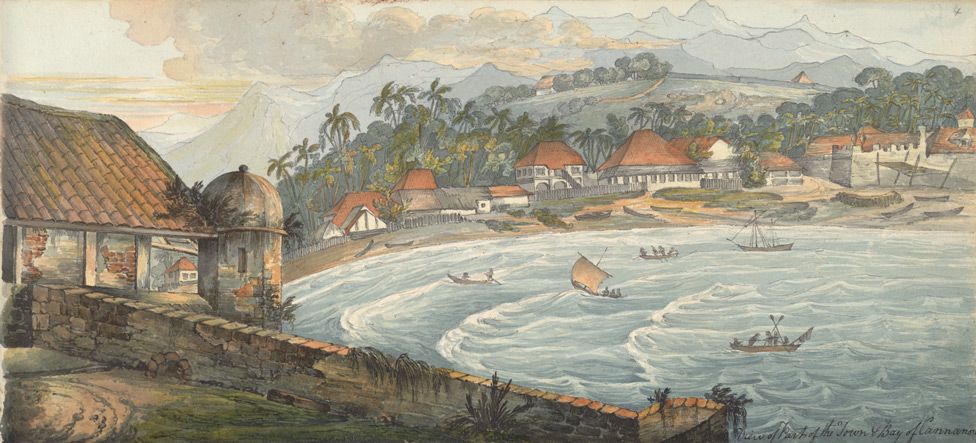
Today, their ancestral home — this very building — stands as a museum, preserving letters, seals, portraits, and weapons that once shaped Kerala’s coast. Step outside, and you’ll see the Mappila Bay, where Arakkal ships once anchored, and the imposing St. Angelo Fort, the silent guardian of their era.
As you wander through these halls, you aren’t just visiting a museum — you’re walking through the story of a dynasty that sailed with kings, ruled with queens, and forever changed the course of Malabar’s history.
Arakkal Adirajas & Beevis
Adiraja 1st: Muhammed Ali
Based on the traditional stories, the first Adi Raja of Arakkal, Saifudheen Muhammed Ali (also referred to as Mahabali), was the nephew of Cheraman Perumal—the legendary Chera king who is said to have embraced Islam after traveling to Arabia (as one of the legends). At a time when traditional Hindu beliefs prevented rulers from crossing the sea and participating in overseas trade, Muhammed Ali’s conversion to Islam opened a unique gateway to maritime commerce with Arab traders and other global merchants on the Malabar Coast.
Muhammed Ali, as the first Ali Raja, became renowned for his active engagement in sea trade, venturing beyond the confines of his fortress into bustling seaports. This proactive approach earned him the title "Aazhi Raja" (King of the Sea), symbolizing his pioneering role in securing coastal trade routes and alliances with influential Arabian merchants, including those from Hijaz. The strengthened ties were such that he appointed a family member from the Arabian kingdom to serve as his port officer, further cementing these transoceanic connections.
The shift toward Islam and maritime trading not only elevated the status of the Arakkal dynasty but also reshaped the commercial and social landscape of Malabar. The dynasty soon emerged as sovereign naval chiefs and independent rulers, with the Ali Rajas known for their leadership in both commerce and regional diplomacy.
Adiraja 2nd: Husain Ali
Husain Ali, the Arakkal Adiraja 2nd’s reign was marked by the strategic control of the Dharmapattanam Port in Kannur, which became a significant hub under Muslim traders, granting Husain Ali substantial influence over sea trade routes. This facilitated prosperous commercial exchanges across the Arabian Sea and enhanced the economic stature of the Arakkal Kingdom.
Concurrently, the northern part of India witnessed the historic Arab conquest of Sindh led by Muhammad bin Qasim, commissioned by the Umayyad Caliphate. The campaign was initiated after an Arab trading ship was robbed off the Indian coast ruled by the Sindhi king, Raja Dahir.
The Umayyad governor of Iraq, Al-Hajjaj, wrote to Raja Dahir requesting the release of the captured women, but Dahir claimed he was unable to recover the hostages. In response, Al-Hajjaj dispatched a military expedition to Sindh, which led to the defeat of the local Hindu ruler and marked the beginning of Muslim expansion in the region.
The Rise and Dominance of Arakkal:
Trade, Maritime Power, and the Era Before Vasco da Gama
Arakkal Adiraja III, played a significant role in expanding the trade networks of the Arakkal kingdom. During this period, the Adiraja focused on broadening trade ties beyond local and Arabian markets, amidst shifting political dynamics worldwide. The emergence and empowerment of the Abbasid Caliphate in the Islamic world, particularly after AD 750, marked a transformative phase that influenced trade across the Mediterranean and Indian Ocean.
The Abbasids, after overthrowing the Umayyads and taking control of key regions including Spain in AD 756, shifted the center of Islamic power to Baghdad. Under their rule, trade routes spanning North Africa, the Middle East, and Central Asia flourished. The Islamic conquest and subsequent control over Egypt and the Mediterranean region significantly altered the political landscape. The Arakkal Adirajas expanded their trade activities, exporting local goods like spices, handcrafts, and Arabian horses.
The Arakkal kingdom rose to prominence as a major power controlling maritime trade routes in the Indian Ocean from around the 8th century AD onward. By the time of the 4th and 5th Arakkal Adirajas, ruling up to 832 AD, the Abbasid Caliphate's expansion and flourishing of Islam coincided with a rise in Malabar’s commercial and cultural importance, making the Arakkal rulers key players in Indian Ocean trade.
During the early 9th century, the 2nd Chera Kingdom established Kodungallur as its capital near the port of Muziris, further catalyzing trade. Arab traders spread Islam along the coast and beyond from Southeast Africa to China, with the Arakkal Adirajas trading spices, ivory, pearls, and precious stones to diverse markets including Egypt, Rome, Greece, Turkey, Arabia, Mesopotamia, and Persia. By the 6th Adiraja’s period, many Malabar ports such as Badfathan, Naura, Tyndis, and Muziris were effectively under Arab-Muslim control, reinforcing Arakkal dominance in trade.
Under the 8th Adiraja, Arakkal extended influence over Lakshadweep and the Maldives, making these islands vital in their maritime network. Lakshadweep workers contributed to fisheries and sea product collections, part of the Arakkal trade commodities. Arab sailors traveling through Lakshadweep recognized the Arakkal Adirajas as ‘Mamlakathul Bahari’ or ‘King of the Sea.’
The 10th century saw disruptions in European-Indian trade due to growing hostilities between Christians and Muslims, as well as the rise of new Islamic powers like the Seljuks in Turkey, which strengthened trade ties between Malabar and Southwest Asia. Meanwhile, local kingdoms in Malabar fragmented following the decline of the Chera rule, resulting in intensified battles among regional rulers.
During the 12th-century reign of the 14th Adiraja, the Arakkal courts embraced Sufism, reflecting harmonious Hindu-Muslim relations in Malabar despite global Christian-Islam conflicts like the Crusades. Around the period of the 16th Adiraja Kunji Moosa (1156–1184), Arab-European conflicts intensified alongside local power struggles.
In the late 12th century, the 17th Adiraja dispatched military forces to the Maldives to restore the local king, gaining control over the islands’ trade. This facilitated the Arakkal’s strengthening trade dominance in the Indian Ocean throughout the 13th century, trading extensively with Egypt, Jidda, and Turkey, thus becoming the foremost maritime power in Malabar.
Under the 20th Adiraja Isa Aboobakar (1284–1335), rising powers like the Zamorins of Kozhikode allied with Arab traders consolidated regional influence through commerce and conflict. By the 15th century, European powers, starting with the Portuguese, eyed Malabar’s wealth. The Arakkal rulers capitalized on their unique position as Muslim rulers, immune to Hindu restrictions from crossing the sea, earning titles such as ‘Arakkal Sulthan Aliraja’ from Turkish and Arab allies.
Through these centuries, the Arakkal Adirajas maintained a powerful maritime kingdom, deeply intertwined with the Indian Ocean trade network connecting Africa, Arabia, Persia, and Southeast Asia, right up to the arrival of the Portuguese at the Malabar coast, signaling a new era in the region’s history.
The Arrival of Vasco da Gama and the Dawn of Portuguese Influence in Malabar
During the late 15th century, Malabar's fame as the spice hub drew the attention of European powers, especially Portugal, eager to bypass Arab traders and access pepper and other spices directly. The Portuguese, led by Vasco da Gama, commenced their historic voyage from Lisbon on July 8, 1497, navigating around Africa's Cape of Good Hope and reaching Malabar in May 1498 thanks to crucial assistance from the ruler of Melinda and local pilots. Upon landing at Panthalayani Kollam, da Gama attempted to forge trading ties with the Zamorin of Calicut by displacing Arab influence, but was rebuffed and redirected towards Kannur.
At Kannur, Vasco da Gama established friendly relations with the Kolathiri ruler, leading to the opening of Portuguese trading operations. Portuguese expeditions continued, including Pedro Álvares Cabral’s armed fleet in 1500, which built a warehouse in Kozhikode only to see it destroyed after violent clashes with Muslim and Nair traders. The ensuing strife among local rulers, particularly between the Zamorin and the Kochi kings, gave the Portuguese opportunities for deeper influence and the establishment of strategic forts and warehouses, especially in Kochi and Kannur. Successive expeditions—such as those led by João da Nova and further missions by Vasco da Gama—reinforced Portugal's growing military and commercial presence, often through brutal suppression of rivals and enforcement of permit systems for shipping along the coast.
Portuguese Attack Against the Arakkal Ships
The Arakkal kingdom of Kannur, prominent in regional maritime trade with Lakshadweep and the Maldives, became a primary target for Portuguese aggression. Following the arrival of Francisco de Albuquerque in 1503, and later Zuares de Meneses in 1504, Portuguese forces attacked Arakkal trading vessels, committing acts of violence that included the killing of traders and family members of the Arakkal Adiraja. These hostilities resulted in direct conflict between Arakkal supporters and Portuguese-aligned Kolathiris, though the technological superiority of Portuguese cannons limited local resistance.
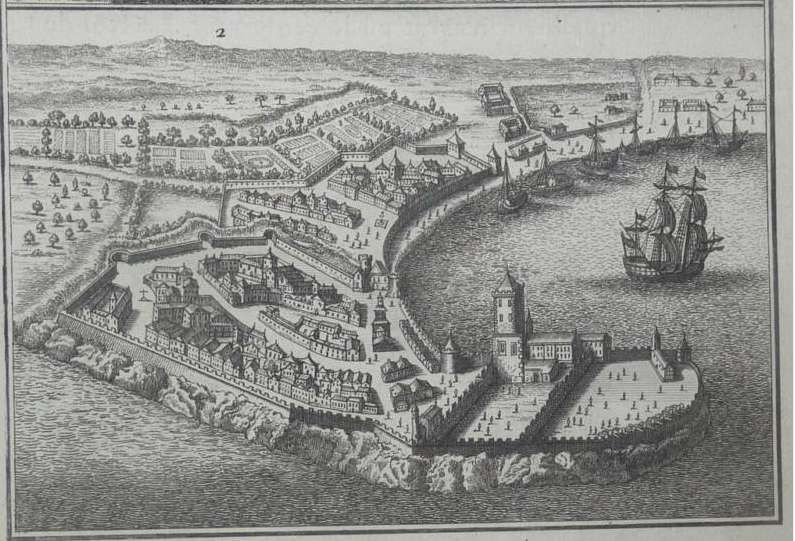
Portuguese consolidation reached its peak under the viceroy Francisco de Almeida, who oversaw the construction of forts to secure Portuguese interests. Most notably, St. Angelo's Fort (built in 1505 in Kannur) served as a crucial stronghold, facilitating control over naval traffic and enforcing the permission-letter system for all ships traversing Malabar’s coast. Despite attempts by the Arakkal and the Egyptian navy led by Hoja Amber to challenge Portuguese naval power, frequent attacks and superior weaponry assured Portuguese dominance, deeply impacting the sociopolitical landscape of Malabar for centuries to come.
Joined Attack against the Portuguese Fort at Kannur
The Attack against the Kannur Portuguese Fort in 1506 stands as one of the most remarkable coalition efforts in Malabar’s history, with local rulers and powerful regional allies banding together to confront Portuguese expansion.
When the Portuguese constructed St. Angelo’s Fort (Kannur Fort) in 1505, they failed to consider the prevailing regional dynamics. Similarly, the British later became adversaries of the Kolathiris, the rulers of the influential Kolathunad family, failing to leverage alliances and instead becoming their enemies. Discontent spread to the Zamorin of Calicut—another major power in northern Kerala—who historically opposed Portuguese trade dominance. Both rulers were keen to curtail Portuguese influence and reclaim strategic and commercial control of the coast.
Recognizing the threat, the Kolathiris and Zamorins forged an alliance with the Arakkal family, Kannur’s Muslim rulers who controlled sea trade routes and possessed maritime might. The Portuguese fort’s location was strategically vital for Arakkal as well, intensifying their stake in the conflict. Arakkal’s ruler sought reinforcements from Muslim powers overseas, successfully enlisting naval support from the Ottoman Turks and Egyptians, who were alarmed by Portugal’s rising control over Indian Ocean trade routes.
On March 15, 1506, this formidable coalition launched a combined assault on St. Angelo’s Fort. Approximately 200 ships, marshaled by the Turkish, Egyptian, and Arakkal navies, encircled the fort, while Kolathiri and Zamorin forces attacked from the land. The attack was intense, creating a blockade that lasted nearly a month. The Portuguese army faced severe shortages and imminent defeat as their supplies dwindled and opposition mounted.
The siege was abruptly halted when Portuguese reinforcements arrived—the main fleet from Portugal landed on the Malabar coast, supported by another force from Kochi. Facing fresh resistance and mounting casualties, the allied coalition was compelled to lift the siege and retreat, preserving Portuguese control over St. Angelo’s Fort but demonstrating the strength and unity of Malabar’s anti-colonial alliances at the time.
Baliya Hassan: The Brave Arakkal Army Chief
Baliya Hassan was a courageous and legendary army chief of the Arakkal dynasty in Malabar during the early 16th century. As the trusted military commander and lieutenant to the Arakkal Ali Raja, he led the valiant resistance against the Portuguese colonial forces who aimed to control the Malabar coast for trade monopoly. Alongside the Kunjali Marakkars, commanders of the Zamorins of Calicut, Baliya Hassan commanded a formidable Mappila army that fiercely challenged and defeated the Portuguese in many battles near Kozhikode, Kodungallur, Kochi, Sri Lanka, and the Maldives.
He united Mappila forces from various regions such as Purakkad, Ponnani, and Tanur to strengthen the resistance. The Portuguese, despite their superior cannons and ships, were unable to suppress this combined Mappila resistance. In 1522 and 1523, Baliya Hassan's army, often in alliance with the Kunjali Marakkars, effectively attacked Portuguese camps and captured several Portuguese ships, severely weakening Portuguese presence in Malabar.
However, the Portuguese, led again by Vasco de Gama in 1524, resorted to treachery. They used alliance with the Kolathiri ruler to invite Baliya Hassan unarmed to a fake honoring ceremony. He was captured, handed to the Portuguese, and imprisoned in Kannur Fort.
The Arakkal Adiraja (Ali Raja) had planned a full-scale attack on the Kannur Fort with the entire force of his army. Seeing the formidable military power of the Arakkal forces, Vasco da Gama feared the strength of Arakkal's army and fled to Kochi. Deeply affected in spirit and wounded physically, Gama died at a pepper warehouse in Kochi on December 24, 1524.
Execution of Baliya Hassanat Kannur Fort
Following the death of Vasco da Gama, Dr. Henrique de Meneses assumed the position. Understanding the volatile situation in Kannur, he devised plans to execute Baliya Hassan, the brave army chief of Arakkal. Despite fierce resistance from the Arakkal dynasty and the local people, Baliya Hassan was betrayed, arrested, and subsequently hanged at St. Angelo Fort in Kannur on January 7, 1525. This event significantly weakened the military power of the Arakkal Ali Raja and altered the regional power dynamics.
Baliya Hassan remains remembered as a brave captain and leader of the Arakkal army, symbolizing the fierce Mappila resistance to Portuguese colonial rule on the Malabar coast.
Arakkal's Battles Against the Portuguese Power (AD 1526 to 1545)
The period from 1526 to 1545 marked a phase of intense and bloody conflict between the Portuguese Empire and the Arakkal Kingdom of Cannanore, a key naval power on the Malabar Coast.
In 1526, the newly appointed Portuguese Viceroy, Lopo Vaz de Sampaio, initiated a campaign against the Arakkal Kingdom. The well-prepared Arakkal forces successfully repelled the Portuguese, forcing Sampaio to divert his efforts towards attacking the Canara region. At the request of their ally, Sultan Adil Shah of Bijapur, the Arakkal fleet pursued the Portuguese, engaging in a series of naval battles that spread southwards. The alliance with the formidable Kunjali Marakkars bolstered Arakkal's strength, creating significant anxiety within Portuguese ranks.
Despite the arrival of fresh Portuguese reinforcements, the conflict culminated in the death of the 25th Arakkal Adiraja in 1527 after 28 years of resisting Portuguese expansion. He was succeeded by Pokkar Ali, the 26th Adiraja, who defiantly continued trade with Arabia, Northeast Africa, Bengal, Gujarat, and Bijapur, ignoring Portuguese threats and restrictions.
Strategic Shifts and a Portuguese Defeat (1529-1531)
The combined pressure from the Arakkal and Kunjali forces placed the Portuguese in a precarious position. The news of these setbacks disappointed the Portuguese king, who recalled Viceroy Sampaio and appointed a new one, Nuno da Cunha, in 1529. Da Cunha adopted a new strategy of diplomacy, successfully forging an alliance with the Zamorin of Calicut. This partnership resulted in the construction of a strategic Portuguese fort at Chaliyam in 1531.
However, Portuguese aggression continued. An attempt to capture a merchant ship under Arakkal protection was decisively defeated by the kingdom's navy. In a further blow, the Kunjali Marakkars attacked the Portuguese stronghold in Kochi, causing such panic that the Portuguese exhumed and transported the body of Vasco da Gama back to Portugal for safekeeping. This retreat was seen as a major disgrace for Portuguese power in Malabar.
Escalation and Tragedy (1542-1545)
In 1542, the newly appointed Portuguese Governor, Martim Afonso de Sousa, escalated tensions by launching raids on temples across Malabar. This sacrilegious policy turned the powerful Zamorins and Kolathiris against the Portuguese. The Kolathiri Raja requested military aid from the Arakkal Kingdom, which was promptly granted.
The initial Arakkal assault defeated De Sousa's forces. In a brutal retaliatory strike while the Adiraja was away from Kannur, the Portuguese attacked the Arakkal base, killing the Adiraja's father, Kunji Sooppi, and his uncle, Aboobakar Ali, in 1545. Upon his return, the enraged Adiraja launched a counterattack and defeated the Portuguese. However, in a subsequent engagement later that same year, the 26th Adiraja, Pokkar Ali, was tragically killed in battle.
During the reign of the 27th Adiraja (1545–1570), conflicts persisted as the Portuguese intensified their efforts to conquer Lakshadweep, which was under Arakkal control. This period saw several significant battles between the Arakkal and the Portuguese.
With the cooperation of the Kolathiries, the Portuguese attempted to seize the islands and planned to establish a fort on Amini island (Amini Deep) in Lakshadweep. Simultaneously, the Portuguese successfully attacked and conquered Kannur. Following this victory, they implemented the 'Cartaz' system—a mandatory consent letter or license—for ships sailing along the Malabar Coast, controlling maritime traffic in the region. They also began large-scale religious conversion activities in Kannur.
The Portuguese, again supported by the Kolathiries, also conquered the Maldives in 1558. Their control lasted until 1563. The Arakkal ruler then strategically planned the return of the Maldives by supporting a local revolutionary, Muhammad Thakurufaanu Al-A'zham, who led a massive civil protest. This uprising ultimately resulted in the withdrawal of the Portuguese army from the Maldives.
In 1565, the Arakkal army played a role in the joint attack by the Deccan Sultanates against the Vijayanagara Empire. The defeat and subsequent killing of the Vijayanagara King at the Battle of Talikota marked the end of the empire, which had previously allied with the Portuguese and aided their expansion along the Indian coastline. This pivotal event led to the formation of an alliance between the Zamorin of Calicut, the Kunjali Marakkars, and the Deccan Sultanates.
The Reign of the Arakkal Beevis: Women in Command
Due to war injuries, the 27th Adiraja transferred the ruling power. In 1570, the first woman ruler, the Arakkal Bibi, assumed power as the 28th Arakkal Beevi (1570–1591) and actively engaged in battles against the Portuguese.
Bibi's elder son was tragically killed by the Portuguese Army at sea while en route to Mecca for pilgrimage. In response, the Bibi called on all Muslims to wage a struggle (Jihad) against the Portuguese.
The Arakkal also supported the Siege of the Portuguese Chaliyam Fort in 1571, which was part of the War of the League of the Indies between the Zamorin of Calicut and the Portuguese Empire. The Zamorin led this siege with significant support from the Nair Army and the Mappila forces from Panthalayani to Ponnani. The joint army successfully attacked and completely demolished the Chaliyam Fort in 1571.
After the fall of the Portuguese Fort at Chaliyam, the Arakkal Bibi also besieged the Kannur Fort, resulting in a fierce battle. In retaliation, the Portuguese attacked Kannur and Arakkal, causing considerable damage to the Arakkal forces.
The Reign of Adiraja Aboobakar (1591–1607)
During the reign of Adiraja Aboobakar (1591–1607), the Arakkal Kingdom successfully resisted the Portuguese, resulting in the withdrawal of the Portuguese army from Lakshadweep . This resistance effort also extended to the Maldives.
In the later years of the 16th century, the Arakkal rulers established a friendly relationship with the Portuguese to facilitate the expansion of their trade activities.
This era was also marked by the decisive end of the Kunjali Marakkar resistance. The Zamorin of Calicut also maintained a friendly relationship with the Portuguese during this time. Through a planned deception, the Zamorin captured Kunjali Marakkar IV and handed him over to the Portuguese. The Portuguese executed the brave Kunjali Marakkar IV in Goa in 1600. His head was subsequently brought to Kannur, where it was impaled on a spear and publicly displayed in the city. This brutal act brought an end to the era of the powerful Kunjali Marakkars on the Malabar Sea coast.
On the international stage, European powers, specifically the Dutch (Netherlands) and the British, were actively making plans to establish a presence in Malabar.
Arrival of the Dutch and British in Malabar
The Dutch East India Company
The Dutch arrived in Malabar in 1604, initially landing at Cannanore (Kannur) and subsequently signing a treaty with the Zamorin of Calicut. Lacking the anticipated support from local Malabar rulers, the Dutch East India Company (VOC) shifted its focus to Java, establishing its first major capital in the Asian subcontinent there.
In the second half of the 17th century, the VOC grew immensely powerful, conquering numerous Portuguese-held forts and establishing dominance in Sri Lanka and the Malabar Coast. The capture of the Kochi Fort by the Dutch in 1663 officially marked the end of the Portuguese era in Malabar.
Initially, the Dutch maintained a friendly relationship with the Arakkal Sultanate. The 33rd Adiraja (1655–1675) signed a treaty with the Dutch, but this alliance was short-lived. The resulting Battle between Arakkal and the Dutch saw the Arakkal army defeat the Dutch, killing approximately 200 soldiers, and successfully retaining the trade monopoly of Kannur.
The British and the Arakkal Kingdom
The British reached the Indian coast at Surat, Gujarat, in 1608. By 1669, they also arrived at Valapattanam near Kannur and established a church there. A major conflict arose when the Arakkal Kingdom demanded a tax for the church, which the British denied. This refusal became a direct cause for hostilities, resulting in the Arakkal Kingdom's temporary loss of Dharmmadam Island to the British. However, the 34th Adiraja (1675–1691) successfully recaptured Dharmmadom in 1683. In 1682, the British established a warehouse in Thalassery with the support of the Kolathiri Rajas.
Fortification and the Rise of the Arakkal Kingdom
During the reign of Adiraja Kunji Hamsa (36th Adiraja: 1704–1720), a fort was established in the Arakkal region. He also standardized the Power structure of the Arakkal Kingdom by appointing numerous officials for governance. This included creating departments for finance, installing law officers, and appointing religious leaders to establish the Sharia Law. This reorganization resulted in a powerful and efficient governing structure.
In the reign of the 37th Adiraja (1720–1728), he actively worked to empower and expand the kingdom's trade centers, including Malideep, Lakshadweep, Dharmadam, and Kannur. He successfully established a monopoly on trade along the Arabian Sea coast of Malabar.
The Arakkal Kingdom later faced an attack by a joint army composed of forces from the Kolathiris, the British, and the Pazhassi Raja of Kottayam. This conflict resulted in the loss of Dharmapattanam and the destruction of Arakkal's ships. The French also landed in Mahe (Mayyazhi), near Thalassery in Kannur, in 1725.
Succession by the Arakkal Beevi
The 37th Adiraja undertook a pilgrimage to Jeddah (Jidha) and passed away there after completing the Hajj ritual. Following his death, the power transferred to women.
The 38th Arakkal Beevi, Arabichi Kadavu Beebi Sultana, had already been actively engaged in governance since the time the previous Adiraja departed for his pilgrimage. As a ruler, the Arakkal Beevi established a fort in the northern part of the Valapattanam river, near Madayi.
Junuma Beebi (1732–1745) and Interactions with European Powers and Neighboring Rulers
Junuma Beebi succeeded to the throne as the Arakkal Beevi (Queen of Arakkal). Her reign was marked by continuous power struggles involving the European trading companies on one side and the local Malabar rulers on the other.
The Karnataka forces captured the fort at Madayi, which had been under Arakkal control. With the covert support of the English, Junuma Beebi recaptured the fort, and a large number of people settled there.
However, the Karnataka forces soon launched a powerful counterattack, resulting in the massacre of thousands of people, including a respected Sufi Saint. Deeply grieved by this atrocity, Junuma Beebi galvanized thousands of Mappila soldiers from Kozhikode (Calicut) and led a retaliatory attack against the Karnataka.
Interactions with the Dutch and English
The Dutch openly supported Karnataka in their efforts to seize the Kadalayi Fort in 1734. The Dutch further provoked Arakkal by capturing the Maldives, which were a key possession of the Arakkal Kingdom.
These actions by the Dutch and the Karnataka prompted the English East India Company (EIC) to sign a treaty with Arakkal on October 5, 1734. Unfortunately, the East India Company soon betrayed Arakkal by using an agent as a spy within the court. This deceit led Arakkal to sever all ties with the English.
Later, the British captured Junuma Beebi's husband. To secure his release, Beevi was forced to guarantee to the East India Company that Arakkal would cease all secret activities against the English. Upon this assurance, her husband was freed.
Simultaneously, in the northern part of India, the English East India Company’s growing military power was evident. They defeated the Nawab of Bengal, Siraj-ud-Daulah, in the decisive Battle of Plassey on June 23, 1757, officially marking the beginning of British colonial rule in India. This victory further strengthened the already established presence and influence of the English in Malabar.
Junuma Beebi’s Defiance Against the English
Due to the continuous deceptive practices of the English East India Company, Junuma Beebi issued a strong declaration, proclaiming that no future agreements would be made with the English, and designating them the chief enemy of the Arakkal Kingdom.
Demonstrating her resolve, the Beevi dispatched an army to Mamamkunnu in Dharmadam, laying siege to the English position there. Although this particular action failed, the Arakkal army succeeded in a subsequent operation, capturing Kottakkunnu from English control. They also arrested the English soldiers, including the spy who had previously infiltrated Arakkal.
In 1745, the courageous Junuma Beebi died while actively planning her next military operation—an assault on the English-controlled Madakkara fort.
Adiraja Ali 40th (1745–1777) and the Carnatic Wars
The reign of Adiraja Ali 40th coincided with significant international conflicts, particularly the Carnatic Wars fought between the French and the British for dominance in India. These global rivalries profoundly impacted the political landscape of the Malabar Coast.
Arakkal's Alliance with the French
The First Carnatic War (1746–1748), initially an extension of the War of Austrian Succession in Europe, soon escalated into a major conflict on the Indian subcontinent, with battles also taking place along the Malabar coast.
The Arakkal Kingdom strategically aligned itself with the French. During this war, the French successfully captured the Madras Presidency from British control, achieving a temporary position of superiority. After the hostilities subsided, the French forces returned to Mahe (their main settlement on the coast).
To celebrate the French victory and reinforce the alliance, Arakkal's forces, comprising hundreds of soldiers, arrived in Mahe on February 27, 1747, to meet and congratulate the French leader.
Shifting Alliances
Following the conclusion of the First Carnatic War and in the aftermath of the Second Carnatic War (1749–1754), which centered on control over the Arcot region in Karnataka, the Arakkal Kingdom also signed a treaty with the English.
Despite Arakkal's earlier support for France, the conflicts ultimately shifted the balance of power. By the end of the Second Carnatic War in 1753, the English had secured a position of superior power over the French in the region.
The Conflicts in the Maldives
The Arakkal Kingdom sought to expand its commercial influence into the Maldives. When the Maldivian ruler resisted engaging in trade with Arakkal, this rejection led to a military campaign.
Arakkal forces were victorious, successfully attacking the islands and capturing the Maldivian King and his son. They were imprisoned in the Arakkal jail at Kannur. Following the King's death in prison, the Maldives descended into a civil conflict, which the Arakkal Kingdom quickly suppressed to maintain control.
However, the resistance to Arakkal rule in the Maldives soon intensified dramatically. Eventually, Arakkal's authority over the islands collapsed. The new Maldivian Queen sought assistance from the French against Arakkal, but the French refused to intervene. Despite the temporary setback, Arakkal ultimately managed to reassert its influence over the islands.
European Powers and Political Instability in Malabar
The political atmosphere in Malabar was in constant flux, characterized by rapidly changing alliances where former enemies became friends and vice versa. The primary beneficiaries of this continuous instability were the European powers who had established a presence in Malabar.
The European trading companies, particularly the English East India Company (EIC), expertly exploited this situation to advance their colonial ambitions. The EIC profited immensely from its political machinations, selectively supporting local rulers to achieve a specific goal before abandoning them and forming new alliances as needed.
The decisive shift in European power occurred when the English captured Pondicherry and Mahe from the French in 1761. The protracted Carnatic Wars formally concluded with a treaty signed by France in 1763. These wars and the resulting battles left Malabar a politically unstable and vulnerable region, perfectly set up for future colonial conquest by the dominant British power.
Mysore Invasion to Malabar & Arakkal's Interactions
Hyder Ali, initially the Army Chief and later the ruler of the Kingdom of Mysore, recognized the strategic value of the Malabar Coast, which was shared and contested by the European powers: the English, Dutch, and French.
The Mysore army first entered Malabar at Palakkad (Palghat) in response to a request from the local ruler for protection against the attacks of the Zamorin of Kozhikode (Calicut). Following this, Hyder Ali established a fort at Palakkad. Recognizing an opportunity, Arakkal Adiraja sought an alliance with the powerful Mysore ruler. Adiraja met with Hyder Ali in Mangalore. Hyder Ali immediately grasped the necessity of a strong naval force, which the Arakkal Kingdom could provide. This led to the formation of a favorable diplomatic and military relationship between them.
When Hyder Ali launched his full-scale military campaign against the various principalities of Malabar, the Arakkal Kingdom provided crucial support. The region’s divided local rulers unintentionally facilitated Hyder Ali's conquest. In a powerful joint operation, a combined force of 12,000 Mysore soldiers and an equal number of Arakkal soldiers advanced on the region, with the attack reaching Kannur.
The Conquest of Malabar (1766)
By 1766, the Mysore forces had reached Kolathunadu. The local ruler, the Kolathiri Raja, was defeated and killed. Hyder Ali also subdued the ruler of Kottayam, Pazhassi Raja, and finally advanced to Kozhikode.
Fearing capture and humiliation, the Zamorin chose to burn his palace (court) and commit suicide within the flames, effectively ending the era of the Zamorin's rule. The fear of the Mysore invasion triggered a mass southward migration of people. Hyder Ali then entrusted the administration of Malabar to a governor named Madhanna.
The Arakkal Adiraja cemented his connection with Hyder Ali, who appointed the Adiraja as the Naval Commander of Mysore. The Arakkal Kingdom subsequently provided a well-equipped naval army to the Mysore Kingdom. Leveraging the instability and the opportunities created by the Mysore invasion, Arakkal also benefited by conquering and expanding into neighboring regions.
Anglo-Mysore Wars Begin
In 1767, the conflict for political dominance and trade monopoly on the Malabar Coast began between Mysore and the English East India Company (EIC). This marked the start of the Anglo-Mysore Wars. The first phase of the war was temporarily halted by a treaty signed between the English and Hyder Ali.
Kannur Fort Under the Arakkal Kingdom
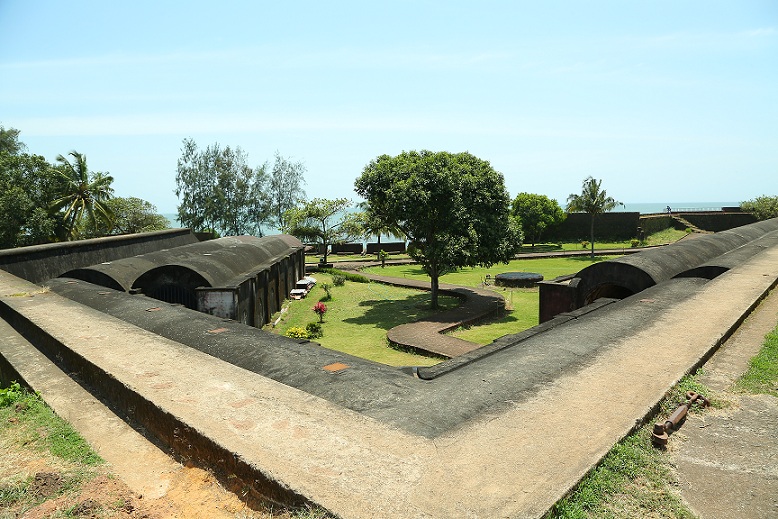
As the political situation in Malabar grew increasingly precarious for the Dutch, they made the strategic decision to withdraw from the region. As part of their departure, they planned to sell the Kannur Fort (St. Angelo Fort), which was under their control.
The Arakkal Kingdom agreed to purchase the fort for a sum of 1 Lakh (rupees). However, Arakkal was only able to pay a portion of the price upfront, leaving the remaining amount as a debt owed to the Dutch.
Effective from 1772, the Kannur Fort came under the full control of the Arakkal Kingdom. The Beevi utilized this significant acquisition to strengthen the Arakkal military forces and reorganize and bolster the existing police system.
The outstanding debt to the Dutch remained an issue. The Dutch repeatedly requested the payment of the balance. In a partial settlement, Arakkal did pay a portion of the debt using the profits earned from the trade of a goods ship belonging to the Arakkal Kingdom.
Junuma Beebi II (1777–1819) and Battles Against the English
The reign of Junuma Beebi II was characterized by increasing confrontation with the European powers, particularly the English.
The Dutch reignited the issue of the unpaid debt for the Kannur Fort. However, Junuma Beebi II took a firm stand, declaring that the Arakkal Kingdom owed no further payment. She argued that the fort had originally been built by the Portuguese, thereby invalidating the Dutch claim to full ownership and compensation. This decisive proclamation effectively ended the dispute with the Dutch.
The Arakkal Kingdom maintained its strong alliance with Mysore. In 1780, after the Mysore ruler Hyder Ali captured Mahe from the English, he dispatched a delegation led by Sardar Khan to the Arakkal court. Junuma Beebi II readily agreed to provide the Mysore Kingdom with comprehensive support.
Naval Victory Against the English
The Arakkal Beebi's naval forces planned an attack on Valapattanam. While en route, they encountered a formidable English naval ship, the Superb. The Arakkal navy engaged the enemy, successfully capturing all the English soldiers, including their commanding officer. Furthermore, they decisively destroyed the English warship.
Support for Tipu Sultan
Following Hyder Ali's death, his son, Tipu Sultan, ascended to the throne of Mysore. During the Second Anglo-Mysore War (1780–1784), the Arakkal army under Junuma Beebi II provided unwavering support and direct military assistance to Tipu Sultan's forces against the English East India Company (EIC).
The Decline of the Arakkal Kingdom (1784–1819)
The political landscape in Malabar drastically changed in 1784 when Tipu Sultan signed a new treaty with the English, temporarily halting all military actions against them. This left the Arakkal Kingdom as virtually the sole military resistance to the growing English power on the Malabar Coast.
At this point, the southern states of Travancore and Kochi had already become tributaries or were under the political influence of the British. The English East India Company (EIC) then mounted a major military expedition, drawing forces from both the Madras and Bombay Presidencies, to target and capture Arakkal, which was centered at Kannur.
First Capture of Junuma Beebi II (1783)
From December 9 to 14, 1783, the English launched a six-day continuous assault. Their forces breached the Arakkal court, resulting in a devastating capture.The English soldiers plundered the court and killed the male members of the royal household. They finally captured the brave Arakkal Junuma Beebi II.
However, the Beevi was released through a subsequent treaty, for which Arakkal was forced to pay the English a large indemnity of more than two lakh rupees.
Renewed Resistance and Naval Defense
Despite the setback, Junuma Beebi II immediately resumed her fight against the English. She launched an attack on the English forces stationed in Thalassery. In retaliation, the English planned a naval attack on the Kannur Fort under Arakkal control. However, the attack resulted in a decisive English defeat. A powerful defense mounted from the Arakkal-controlled Kannur Fort repulsed the invasion, inflicting heavy casualties and killing many of the English attackers.
Second Capture and Submission (1790)
The continuous and successful resistance from the Arakkal Beevi prompted the English army in Bombay to plan a definitive action. On November 5, 1790, the Bombay Governor personally arrived in Malabar with the goal of ending Junuma Beebi's power.
In a secret operation in 1790, the English forces stealthily entered the Arakkal court by killing the guards. They subsequently killed the soldiers and the Arakkal Beebi's husband, capturing Junuma Beebi II for the second time. During her imprisonment, the Beevi was forcefully compelled to sign treaties, including the transfer of the Kannur Fort to the British.
Total English Control of Malabar
The fate of Arakkal was sealed by broader events: In 1792, Tipu Sultan was defeated by the English, ending the dominance of the Mysore Kingdom in Malabar. The region subsequently came entirely under the direct control of the East India Company through the Madras Presidency.
All former local rulers, from the Kolathiris to the Zamorins, were marginalized, leaving the English in total control. The kingdoms of Kochi and Travancore, however, were permitted to continue as princely states under English suzerainty.
Development projects initiated by Tipu Sultan in Malabar were halted by the English, who instituted a new power structure. From 1793 onward, the Arakkal Beebi was subjected to the indignity of a monthly tax levied by the new British administration.
The final blow to Mysore and Arakkal's territorial claims came when Tipu Sultan was killed in 1799. The English expanded their control, seizing the Amini Deep (Aminidivi islands) and the regions surrounding Kannur that were previously under Arakkal's influence. This event further strained the relationship between the East India Company and the Beevi.
Legacy of Arakkal
The lineage of the Adirajas of Arakkal continued, though only nominally, after the English conquest. The succession continues to the present day, with Adiraja Husain Koyamma (from 2022) holding the ceremonial title, marking the end of the Arakkal Kingdom's sovereignty but the continuation of its royal family.
The Arakkal Coins
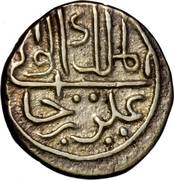
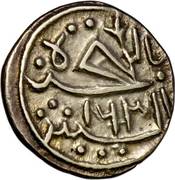
(The coin bears Arabic script with the lettering “الملك علي رجا” (Al-Malik Ali Raja) on the obverse, while the reverse carries the Arabic legend “Praised be God” with the date inscribed below—1631.)
Arakkal coins were historic currencies issued by the Arakkal Ali Rajas and Bibis of Kannur, Kerala, mainly between the 16th and 18th centuries. These coins reflect the kingdom’s strong maritime and trade connections, often bearing Persian legends, elegant Arabic calligraphy, and inscriptions such as “Al-Mulk Al-Wali Ali Raja” (Guardian of the Kingdom, Ali Raja).
The coinage included gold pagodas and silver coins, and notably, some issues were commissioned by female rulers as well—such as Bibi Junumabe II—highlighting the unique matriarchal traditions of the Arakkal dynasty.
New Academic Studies on Arakkal Kingdom
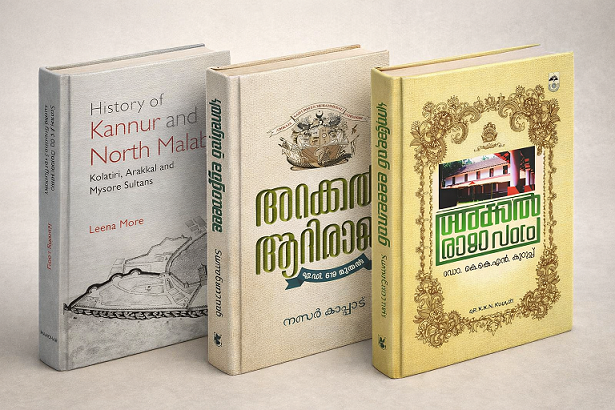
Books:
History of Kannur and North Malabar: Kolatiri, Arakkal and Mysore Sultans (2024): Leena More
Arakkal Adiraja - From AD 619 (2023): Naser Kappadu
Lords of the Sea: The Ali Rajas of Cannanore and the Political Economy of Malabar (1663-1723): Binu John Mailaparambi
Arakkal Rajavamsam: Dr. K.K.N. Kurup
Vasco da Gama and the Unknown Facts of History: Sathyan Edakkad
Research Works:
Arakkal swaroopam: Matriliny, Trade and Politics (1723-1907): Muhammad Sirajudhin K
ALI RAJAS OF CANNANORE, ENGLISH EAST INDIA COMPANY AND LACCADIVE ISLANDS: K.K.N. Kurup
ANTIQUITY OF LEGENDS THROUGH THE EYES OF ARAKKAL ROYAL FAMILY IN CANNANORE: Anish V.D
Visit Us To:
Explore the fascinating history of the Arakkal Kingdom. Contact us for an unforgettable heritage walk to 'Arakkal Museum and the Palace'.
Get in Touch:
Visit: www.cityheritage.in
Email: mail@cityheritage.in
Instagram: cityheritage.in
Phone: +91 7356569573, +91 8377024979




 (1).png)
© Copyright 2026 City Heritage. All rights reserved.
Website designed by TNM Online Solutions.
If you have any enquiry, feel free to ask, and we'll provide you with a prompt and concise response.